
‘King of the Darters’ Removed from Endangered Species List
The Roanoke logperch is delisted but ‘not out of the woods’ due to regulatory, funding and pipeline development concerns
The Roanoke logperch, a striking, large freshwater fish found in a handful of watersheds in Virginia and North Carolina, is no longer on the U.S. Fish and Wildlife Service’s endangered species list. It’s a sign of the fish population’s improvement. But some individuals and environmental and conservation organizations see its removal from Endangered Species Act protections — rather than moving from “endangered” to “threatened” status — as premature.
At the time of its listing in 1989, the Roanoke logperch was only found in 14 streams in Virginia. Now, the species is found in 31 streams, including Virginia’s upper Roanoke, Smith, Pigg, Otter and Nottoway river systems, as well as Goose Creek and North Carolina’s Dan, Mayo and Smith river systems, and Big Beaver Island Creek.

The darter species can grow up to six inches long and has an average lifespan of five or six years. With the scientific name Percina rex — rex means “king” in Latin — it is colloquially referred to as “the king of the darters.”
To feed, the fish will cruise along the bottom of a stream, flipping over pebbles and rocks with its snout and consuming small bugs that are hiding underneath. While cute to watch, this feeding behavior makes the species particularly sensitive to poor riverbed or stream conditions, such as heavy silt cover and water contamination.
“We call them the canaries in the coal mine,” explains Bo Baxter, director and senior conservation biologist at Conservation Fisheries, a nonprofit that contributed to the species’ recovery. He noted that Roanoke logperch and other darters are particularly sensitive to water pollution.
For many years, the species has drawn attention from conservation groups, including during the fight over the Mountain Valley Pipeline. Advocates are also concerned about the long-term recovery of the species due to federal cuts and policy changes for conservation work more broadly.
‘We’re not going to put fish where they won’t survive’
The U.S. Fish and Wildlife Service worked with the Virginia Department of Wildlife Resources, North Carolina Wildlife Resource Commission and conservation organizations and individual landowners to move the Roanoke logperch off the endangered species list.
The steps involved in moving a species from endangered to recovered are complex and usually take years, explains William “T.R.” Russ, aquatic wildlife diversity, survey and monitoring supervisor at the North Carolina Wildlife Resources Commission.
“Typically, a lot of information about any given species is needed in order to understand its life history, threats to its populations and how to reestablish or reintroduce populations,” Russ says. “This research can take many years and dedicated funding.”
Under the Endangered Species Act, the Fish and Wildlife Service must create a recovery plan for every endangered or threatened species.
“The plan itself has specific criteria that has to be met in order to be delisted,” explains Mike Pinder, an aquatic biologist at the Virginia Department of Wildlife Resources. “It kind of puts the cards on the table up front, saying, you have to do this, this and this — and it’ll be delisted.”
The Roanoke logperch’s recovery plan was created in 1992 and did not mention North Carolinian populations. In 2008, Duke Energy biologists discovered the first Roanoke logperch in North Carolina in the Dan River near Eden.
Due to the age of the recovery plan, the Fish and Wildlife Service relied on information presented in the 2022 Species Status Assessment Report to make its final determination, according to the agency.
Factors that significantly contributed to the Roanoke logperch’s decline were water pollution from chemical spills, sediment deposition, increased urbanization and poor land-use practices, and dams that cut off connectivity between populations.
“In general, a species is recovered when it meets the recovery goals,” Russ explains. “Key recovery goals often include a certain number of secure populations and when looking into the foreseeable future, the threats that once existed have been eliminated or reduced.”
Some habitat restoration work outlined in the delisting notice includes “reestablishing the riparian zone, fencing livestock out of streams, and placing lands in conservation easements to prevent deforestation.”
To restore habitat connectivity, at least four dams within the range of the Roanoke logperch were removed between 2009 and 2020, according to a Department of the Interior spokesperson. These include the Wasena Dam on the upper Roanoke River, Veteran’s Park Dam on the Pigg River, Rocky Mount Power Dam on the Pigg River and the Lindsey Bridge Dam Barrier on the Mayo River.
Dam removal takes a long time due to regulatory and funding factors, explains Pinder, noting that many of these smaller dams that are removed aren’t “useful anymore” and past their prime.
“But the great thing about dam removal is that it’s permanent,” Pinder says.
Once habitats are cleaned up and barriers are removed, organizations like Conservation Fisheries, which has a captive propagation facility, get involved to help raise and release species back into the wild. The nonprofit first began working with the species from 2008 to 2011 in order to create protocols for propagation and academic research.
“We’re not going to put fish where they won’t survive,” Baxter says. “So there’s usually a lot of work that has to go into recovering those habitats before Conservation Fisheries even gets involved.”
Since 2019, Conservation Fisheries has been reintroducing the fish into habitats restored by the Fish and Wildlife Service, the North Carolina Wildlife Resources Commission, Virginia Department of Wildlife Resources and other partners.
“They’ve done barrier removals and stream cleanups — pollution mitigation to the point where they feel these fish or where they were right about these fish being able to survive in the wild,” Baxter says. “We’re farming fish to give to those state folks to put back in the streams.”
Conservation groups raise concerns
The Fish and Wildlife Service delisted the Roanoke logperch after what it calls a “review of the best scientific and commercial data available,” according to the federal delisting report. During the public comment period about the potential delisting, several environmental and wildlife organizations and individuals raised concerns about this decision. For instance, some urged the agency to reclassify the species as threatened, rather than fully remove it from the list.
When asked for comment, a Department of the Interior spokesperson referred to evaluations from the Fish and Wildlife Service’s 2022 Species Status Assessment, writing that the “review indicated that the threats to the Roanoke logperch have been eliminated or reduced to the point that the species no longer met the definition of an endangered or threatened species.”
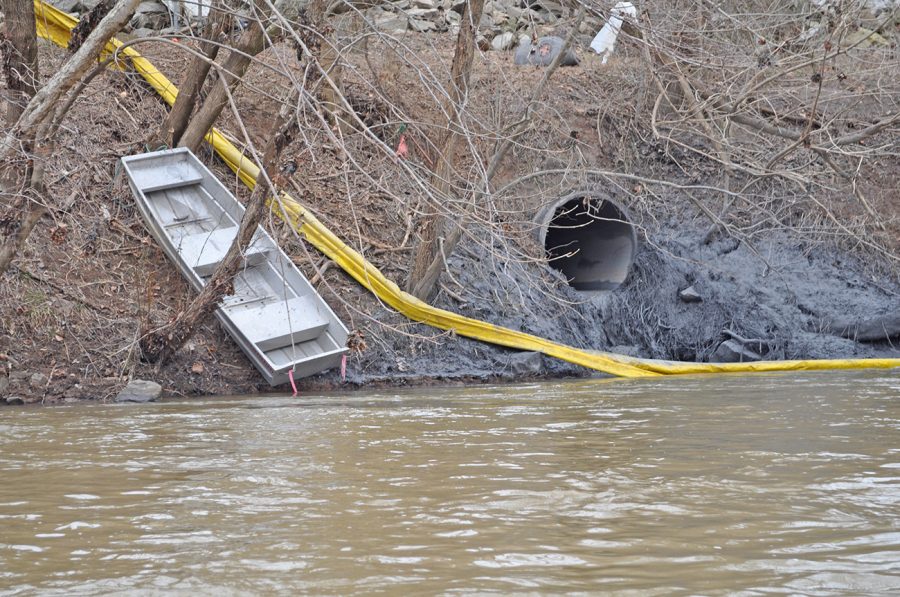
Several commenters, including the Center for Biological Diversity, Sierra Club and Wild Virginia, wrote that the Fish and Wildlife Service did not adequately consider the impacts of the controversial 303-mile Mountain Valley Pipeline project on the species.
The same spokesperson referred to evaluations from the 2022 SSA report and 2023 biological opinion for MVP, writing that the agency’s analysis “concluded that the MVP project is not anticipated to reduce appreciably the suitable habitat available for recovery or the recovery potential for the species.”
Appalachian Voices, the nonprofit that publishes The Appalachian Voice, and its partners have been involved in previous litigation against the Fish and Wildlife Service and MVP about the pipeline. In 2023, the U.S. Court of Appeals for the 4th Circuit issued a stay of the biological opinion and incidental take statement under the ESA — the federal appeals court had already twice rejected the Fish and Wildlife Service’s authorizations of the pipeline project.
The 2023 Fiscal Responsibility Act, passed by Congress and signed by President Joe Biden, forced approval of this and other permits for the pipeline and prohibited further judicial review — an unprecedented move. The pipeline began operating in June 2024.
Currently, the Mountain Valley Pipeline is seeking to build a 31-mile, high-pressure methane gas pipeline, called MVP Southgate, through Pittsylvania County, Virginia, and Rockingham County, North Carolina. This project would connect the previously mentioned pipeline that runs through West Virginia and Virginia. This section would impact the Dan River, one of the homes of the Roanoke logperch. Appalachian Voices and its partners are currently asking North Carolina regulators to deny the pipeline developer a water quality permit.
“The efforts and investment from agencies and organizations to reconnect and reintroduce the Roanoke logperch to former habitats should be celebrated, but full delisting seems premature as threats to the region from pipeline construction and hurricane flooding remain,” says Appalachian Voices North Carolina Program Manager Ridge Graham. “It is difficult to relist a species once it has been removed.”
Delisted but not ‘out of the woods’
The Roanoke logperch’s delisting does not mean it is entirely “out of the woods,” Pinder cautions. For instance, Virginia is looking to keep it listed as an endangered species at the state level to continue additional recovery and restoration activities.
In North Carolina, the species will remain on its state-protected animal list until it can be evaluated by the North Carolina Wildlife Resources Commission with advice from the North Carolina Nongame Advisory Committee for state protection.
“The threats are still out there,” Pinder explains. “There’s more threats coming — no doubt — and so we’ve got to be forever vigilant to make sure we don’t backslide on the gains that have been made.”
Additionally, recent federal funding and policy changes have caused concern not only about this species’ long-term recovery, but the future of all conservation work.
Baxter is most concerned about the potential redefinition of the term “take” in the Endangered Species Act. The term “take” means to “harass, harm, pursue, hunt, shoot, wound, kill, trap, capture, or collect, or to attempt to engage in any such conduct.”
Earlier this year, the Fish and Wildlife Service and the National Oceanic and Atmospheric Administration issued a proposed rule to remove the regulatory definition of “harm” from the “take” rule, which appears aimed at enabling the destruction of endangered species’ habitat.
The Fish and Wildlife Service defines “harm” as “an act which actually kills or injures wildlife. Such an act may include significant habitat modification or degradation where it actually kills or injures wildlife by significantly impairing essential behavior patterns, including breeding, feeding, or sheltering.”
Baxter outlines a grim new reality that could face many beloved species under the revised definition of “take,” sharing that “if you shoot a bald eagle, that’s ‘take.’ If you catch one of these fish and kill it, that’s direct ‘take.’ But that’s not what is harming these animals — It’s habitat loss.”
“You’ve got to protect the habitat, or you have no hope of protecting the species,” Baxter continues.
Additionally, Baxter shares that a lot of funding that Conservation Fisheries and its partners depend on is “on the chopping block” at the federal level.
“As much as I hate that it comes down to money, it comes down to money,” Baxter says. “If I can’t care for and feed my staff, then we can’t do this work — so a lot of concern right now about how we keep this work going that we’ve been doing for 39 years.”
The Trump administration’s 2026 budget request for the Fish and Wildlife Service is $1.1 billion, which is down from $1.9 billion in 2025. Notably, the president requests no funding from Congress at all for several vital conservation programs, including the State and Tribal Wildlife Grant Program that supports research, habitat management and other key conservation projects.
Related Articles
Latest News

Leave a comment
Your email address will not be published. Required fields are marked *
Leave a Comment