Follow Us on Twitter: Appalachian Voices | iLoveMountains.org

Posts Tagged ‘Office of Surface Mining’

Impoundment Safety Called Into Question | Stream Buffer Zone Delay

Wednesday, February 13th, 2013 - posted by Davis Wax

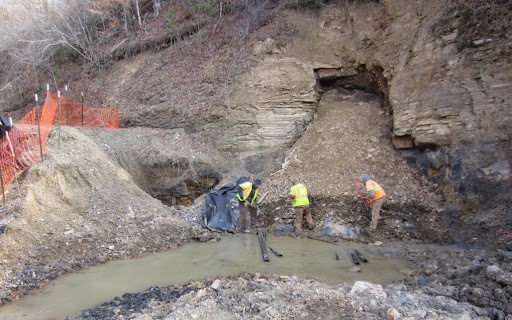
Questions and criticism followed a Nov. 30 accident at a CONSOL Energy-operated coal slurry impoundment in West Virginia that left one worker dead. A few days after the incident, The Charleston Gazette reported that records “outlined company concerns that construction to enlarge the dump had not been moving fast enough to keep up with slurry waste generated by the preparation plant at CONSOL’s nearby Robinson Run Mine.”

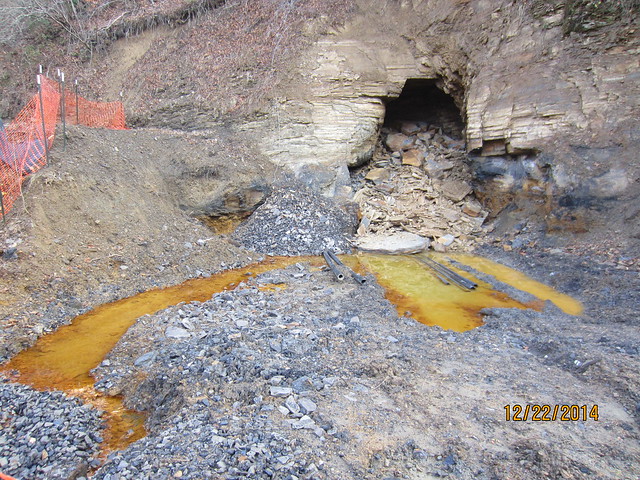
On Jan. 10, the Office of Surface Mining reported that regulators had not done enough to prevent impoundment breakthroughs into abandoned underground mines. In response, the West Virginia Department of Environmental Protection announced new regulations for impoundment construction.

OSM plans to conduct similar studies in six other states including Kentucky, Tennessee and Virginia.

Interior Department Under Fire for Stream Buffer Zone Delay

A coalition of environmental groups reopened litigation against the U.S. Department of Interior for its inaction on a rule to protect streams from mountaintop removal mining that was removed in the final weeks of the Bush administration.

While the Interior Department and the Obama administration agreed the removal of the “stream buffer zone rule” was unlawful, a new rule has not been issued. Under the stream buffer zone rule, surface mining was prohibited within 100 feet of streams.

Environmental groups say the Bush repeal allowed coal companies to place valley fills and waste impoundments, byproducts of surface mining, directly into streams.

Subcommittee Hearing A “Dog and Pony Show” With Your Ringmaster, Rep. Bill Johnson

Tuesday, March 6th, 2012 - posted by brian

Welcome to the Subcommittee Circus

I’ll admit, this morning’s Subcommittee on Energy and Mineral Resources hearing had my head spinning. Similar to the committee’s previous hearings on the stream buffer zone rule, statements made by the Republican majority committee members could cause concerns as to who exactly they’re representing.

The hearing seemed staged to give committee members yet another opportunity to barrage Director of the Office of Surface Mining Joseph Pizarchik with criticism over the Obama administration’s proposed budget for OSM, which includes proposed changes to the Abandoned Mine Lands amendments of 2006, and the highly contested handling of a rewrite of the stream buffer zone rule, a controversial topic dating back several years. On a second panel, Appalachian Voices’ Director of Programs Dr. Matt Wasson gave testimony in support of the Administration’s rewrite of the stream buffer zone rule, using data on job creation to turn some committee members’ claims of regulations as job-killers on their head. (more…)

AV Testifies in Congress

Tuesday, March 6th, 2012 - posted by Appalachian Voices

Today, Appalachian Voices’ Director of Programs, Dr. Matt Wasson, is testifying before the Congressional Subcommittee on Energy and Mineral Resources.

The hearing begins at 10 a.m. EST, and you can view the hearing homepage and watch the LIVE video feed here.

The majority of this committee has been pushing a coal-industry agenda this session, and we don’t expect this hearing to be much different. The topic is “Effect of the President’s FY 2013 Budget and Legislative Proposals for the Office of Surface Mining on Private Sector Job Creation, Domestic Energy Production, State Programs and Deficit Reduction,” and discussion will center around the Stream Protection Rule.

Matt Wasson will submit testimony as to why a strong Stream Protection Rule is necessary, and will counter industry disinformation about its effect on jobs and domestic energy protection. Rather, he will show data supporting the fact that previous oversight by the U.S. Department of Environmental Protection and the Office of Surface Mining have had no negative impact on jobs or domestic energy prices.

His testimony argues that pro-industry predictions of the impact of the Stream Protection Rule are based on faulty assumptions and non-existent data.

Stay tuned to our twitter feed (visible on our homepage) for more!

BLM/OSM Merger Postponed | Newsbites

Tuesday, December 20th, 2011 - posted by molly

Interior Secretary Ken Salazar has announced a postponement of a merger between the Bureau of Land Management and the Office of Surface Mining and Reclamation Enforcement to Feb. 15, 2012.

In late October, Salazar announced the proposal and received immediate and staunch criticism. Some argued that the two agencies have little overlap and expressed doubts over whether the merger would be effective. Others questioned if Salazar’s proposal is legal, since both the BLM and OSMRE were created by acts of Congress.

At a hearing held by the Energy and Natural Resources Committee, panelists gave testimony questioning the effects of the merger. West Virginia University College of Law Professor Patrick McGinley noted the order was made with no prior notice or consultation of Congress, coalfield citizens or the coal industry and argued that mingling OSMRE employees with those of agencies that promote development or use of coal is explicitly prohibited by the Surface Mining Control and Reclamation Act.

The BLM is the federal agency tasked with administration of the United States’ public lands, while the OSMRE, an unrelated branch of the Department of the Interior, is entrusted with implementation and enforcement of 1977’s SMCRA legislation.

Mine Agency Releases Inspection Results, Audited for Poor Fine Collection

In the wake of the 2010 Upper Big Branch mine disaster in Raleigh County, W.Va., the Mine Health and Safety Administration announced a plan to increase their presence in monitoring mine sites for safety hazards in Appalachia. The results of the October impact inspections were announced Nov. 22.

The eight inspected coal mines were issued 145 citations and 18 orders. A mine in Pike County, Ky., operated by Viper Coal LLC., received eight citations for mining in excess of the 20-foot maximum cut depth and exposing miners to potentially fatal roof falls.

Impact inspections target mines that have poor compliance history and require “increased agency attention and enforcement.” Since they began, 6,383 citations, 614 orders and 22 safeguards have re- sulted from 383 inspections.

Nearly a week after the inspection results were announced, the Department of Labor released an audit documenting MSHA’s failure to effectively enforce and collect fines for violations under the Federal Mine Safety and Health Act of 1977.

MSHA is scheduled to release its official report on the Upper Big Branch Mine Disaster on Dec. 6.

The full audit report concerning MSHA’s fine collection can be found on the Office of the Inspector General‘s web- site: oig.dol.gov/auditreports.htm

Delays and Setbacks for EPA Clean Air Rules

The U.S. Environmental Protection Agency (EPA) has announced another delay of new standards limiting the greenhouse gas emissions from coal-fired power plants and oil refineries. The delay is the latest setback for proposed clean air rules governing everything from smog to mercury pollution.

As the EPA plans safer air pollution rules, some in Congress have criticized the EPA’s proposed regulations, alleging they would kill jobs and hamper economic recovery. The delay comes despite new data showing the largest increase in atmospheric carbon dioxide emissions (for the year 2010) since the start of the industrial revolution – 564 million tons more than 2009 – a six percent increase.

EPA administrator Lisa Jackson reports that the finalized plan for power plants will roll out early next year. The new deadline to finalize rules concerning oil refinery emissions is now mid- November, 2012.

Surface Mines as Military Training Facilities

Military personnel bound for Afghanistan will be making a stop in West Virginia to learn to operate Mine Resistant Ambush Protected vehicles. The trainings will take place on reclaimed surface mine land adjacent to the West Virginia National Guard training complex. The terrain was chosen for its similarities to eastern Afghanistan.

Baard Energy Drops Plans for Coal-to-Liquids Plant

Due to sustained and outspoken citizen opposition and financial setbacks, Baard Energy has cancelled a proposed $5.5 billion coal-to-liquids plant in Columbiana County, Ohio. The coal-to-liquids facility would have used 9.3 million tons of coal a year, including Ohio high-sulfur coal.

West Virginia Gov. Tomblin Sworn in, Swears to fight EPA

On Nov. 13, the 35th Governor of West Virginia, Earl Ray Tomblin, was sworn into office at the state capitol in Charleston. Tomblin has continuously denounced EPA regulations. In September, as acting Governor, Tomblin gave testimony at a Subcommittee on Energy and Mineral Resource hearing where he decried the EPA’s “anti-coal” agenda and claimed West Virginian’s owe their financial health partially to coal.

Coal Industry Wants Homeland Security Exemption

The Department of Homeland Security recently accepted public comment on a 2008 rule proposing the regulation of the sale and transfer of ammonium nitrate. Traditionally a farm fertilizer, the compound can be used to create bombs via widely available instructions. The National Mining Association has requested an exemption for the purchase of ammonium nitrate used solely for the production of explosives. A letter from Tawny A. Bridgeford, the association’s deputy general counsel, claims the mining industry’s ammonium nitrate purchases are adequately regulated by the Bureau of Alcohol, Tobacco, Firearms and Explosives and that “[The] Department of Homesland Security should have a more accurate accounting for the costs of its regulatory program before finalizing its proposed rule.”

Investor Backs Away from Carbon-Capture Program

Ameren, a Midwest power company and a primary investor in an effort to implement commercial scale carbon capture and sequestration, backed out of the venture over financial concerns. Originally created in 2003, the venture FutureGen 2.0, received $1 billion through the American Recovery and Reinvestment Act for the conversion of one power plant.

Appalachian Coal Mining Jobs Reach 14-year High

Tuesday, December 20th, 2011 - posted by molly

Increase Comes Despite Arguments that Regulations Kill Jobs

Some congressional representatives claim that federal oversight of mountaintop removal mining in Appalachia threatens domestic coal production and the regions coal mining jobs, but new government data indicates the opposite is true.

Data released by the Mine Safety and Health Administration show that the number of jobs at Appalachian coal mines in the first three quarters of 2011 is at its highest level since 1997. In contrast to previous predictions by coal industry supporters, the number of miners in Appalachia has increased by six percent since the Obama Administration announced plans to strengthen the U.S. Environmental Protection Agency’s scrutiny of mountaintop removal permits in June of 2009.

Since the April 2010 issuance of an interim guidance on surface mine permitting in Appalachia by the EPA, the number of Appalachian miners has grown by 10 percent. Based on this correlation, environmental groups contend that strengthened enforcement of mine safety and environmental rules is creating jobs in Appalachia.

Congress has held numerous hearings this year suggesting that government regulation of surface mining leads to fewer mining jobs. A Subcommittee on Energy and Mineral Resources hearing in November involved legislation introduced by Representative Bill Johnson (R-OH) called the “Coal Miner Employment and Domestic Energy Infrastructure Protection Act.” Johnson’s bill would stop the federal Office of Surface Mining Reclamation and Enforcement from rewriting the federal stream buffer zone rule. The bill would also greatly restrict the surface mining agency’s ability to regulate coal mines by prohibiting it from tak- ing any actions that would reduce coal mine employment, reduce the amount of coal available for mining, consumption, or export, or designate an area as unsuitable for surface mining techniques such as mountaintop removal.

Some members of Congress have claimed that deregulation of coal mining is necessary to increase domestic coal production. But, according to the Federal Reserve data released in November, the capacity of active and permitted coal mines is the highest it has been in 25 years. At the same time, coal mine capacity is being utilized at its lowest rate in 25 years.

Congressional Hearing on Stream Buffer Zone Neglects Residents

Thursday, October 13th, 2011 - posted by brian

By Jamie Goodman

On Sept. 26, a Congressional hearing took place in Charleston, W.Va. to discuss proposed revisions to the controversial stream buffer zone rule designed to further protect waterways in Appalachia.

Conducted by Representatives Doug Lamborn (R-CO) and Shelley Moore Capito (R-WV) from the Subcommitte on Energy and Mineral Resources in Charleston, W.Va., the hearing featured testimony from eight panelists with ties to the coal industry on the economic impacts of a buffer zone rule change. Only two panelists were invited to stand up for human health and communities affected by surface mining.

The original rule — created by the Office of Surface Mining in 1983 to outlaw the dumping of mining waste within 100 feet of streams — was changed during the Bush administration to lift restrictions and make dumping easier for mining operations.

But at the hearing, dubbed “Jobs at Risk: Community Impacts of the Obama Administration’s Effort to Rewrite the Stream Buffer Zone Rule,” the mostly pro-coal committee and panel made the case that the proposed revisions constitute a direct attack on the coal industry and mining jobs.

A press release circulated by the Committee about the hearing failed to include mention of Webb’s testimony or their appearance on the panel.

Central Appalachian Coal: In Short Supply and Hard to Get To

By J.W. Randolph

Last year, the Mine Safety and Health Administration (MSHA) reported that around 44 percent of United States coal production came from one place — the Powder River Basin (PRB). Spread underneath Wyoming and Montana, PRB coal has significantly increased its share of our national coal production in the last decade. The expansion of western coal has coincided with a steep decline in the production of coal in the region known as Central Appalachia, an area that includes southern West Virginia, eastern Kentucky, Virginia, and Tennessee.

According to MSHA, Central Appalachian coal (CAPP) production is down 20 percent since 2008, and the federal Energy Information Administration expects another 50 percent drop in production by 2015.

The decline in CAPP production is partially due to the increasing competitiveness of western coal and natural gas. But many experts in the region attribute the drop to the simple fact that Appalachia has been mining coal for more than a century, and that many of the resources are economically unfeasible to recover.

Bill Raney, a prominent coal backer, and the president of the West Virginia Coal Association, recently addressed the forecast, saying “What’s happening is that the easier, thicker, cleaner, higher-recovery seams were mined over the years, and what we’re dealing with now is coal that has to be prepared to a greater extent than it used to … The recovery percentages are down.”

CAPP production is expected to continue falling — and prices per ton rising — as the cost of mining increases and coal seams become thinner and harder to access.

Study Links Mountaintop Removal Coal Mining and Cancer

The associate director of the University of West Virginia’s Institute for Health Policy Research, Dr. Michael Hendryx has documented a direct link between the practice of mountaintop removal coal mining and 60,000 cases of cancer among a population of 1.2 million people living in areas of Central Appalachia where the mining occurs. The study, “Relations Between Health Indicators and Residential Proximity to Coal Mining in West Virginia,” published in the peer-reviewed American Journal of Public Health, noted the connection even after accounting for instances of cancer resulting from age, gender, smoking, on-the-job exposure and family cancer history. Residents living in the region where the mining is practiced are twice as likely to develop cancer than community members living in the region in areas without surface mining.