Get Our RSS Feed!
Front Porch Blog


Appalachian Voices and Partners Challenge Kentucky’s Backroom Deal With Coal Company


Friday, May 17th, 2013 | Posted by Eric Chance


Watercolors by Frasure Creek. State inspector's photos show a variety of colors of water at Frasure Creek mines.

Yesterday, Appalachian Voices and our partner organizations filed a “petition for review”, essentially an appeal of a settlement between Frasure Creek Mining and the Kentucky Energy and Environment Cabinet. This settlement lets Frasure Creek off the hook for thousands of water quality violations over the past two years, while doing little to ensure that the company fixes its water quality problems.

Our challenge of this settlement focuses on the way in which it came about. But first, a bit of background.

We have a separate case that is ongoing against Frasure Creek for submitting false water monitoring data (entire reports were duplicated and only the dates were changed). After we uncovered this problem the company began turning in more accurate reports, which for the first time showed lots of pollution problems. We then filed a second suit against Frasure Creek for thousands of these pollution problems (which had been hidden by reporting problems before our first suit). Then the cabinet also filed a complaint for these pollution violations and more like them in state administrative court (a court run by the cabinet itself).

We intervened in that case and became full parties to it, but were then shut out of it completely. In fact the settlement was entered despite our previous objections, and there is no evidence that our objections were even considered. The cabinet and Frasure Creek negotiated a settlement completely without us. The law and common sense both dictate that an agreement is not valid unless all the parties involved agree to it, and that is the basis for our challenge of this settlement yesterday.

Read more
...


Kentucky’s Lab Certification- Is it strong enough?


Wednesday, May 1st, 2013 | Posted by Eric Chance


Yesterday, Appalachian Voices submitted public comments on a proposed wastewater lab certification program in Kentucky. To discharge polluted water, coal companies must receive a permit under the Clean Water Act. This permit that requires companies to test wastewater and report the data to ensure it falls within the limits of the permit. In Kentucky, there are currently no standards for labs that do this type of testing.

The proposed certification program is a direct result of the lawsuits for falsified water monitoring data we filed against three of the state’s largest coal mining companies. Our investigation revealed that many coal companies were repeatedly submitting the same data and knowingly leaving out reports of any violations of their permits. After we filed these lawsuits, the Kentucky Energy and Environment Cabinet inspected the labs being used for this monitoring and found that in many cases they were not even capable of correctly performing the required tests.

This graph shows some of the inaccurate data submitted by Frasure Creek Mining before our lawsuits lead them to start using a new lab. Click to enlarge.

We believe that enforcing standards on labs used by coal companies will help ensure that labs report accurate data, and that the regulations meant to protect water and those that depend on it from dangerous pollution are effectively enforced. This proposed rule will be a big step forward and we have applauded the cabinet for its efforts to fix these problems. However, there are several weaknesses in the rule that we hope are fixed before it is finalized.

All too often the cabinet has failed to live up to its obligations to protect the people and environment in Kentucky. That is why our comments suggest that discretionary duties given to the cabinet in this rule be made mandatory. Appalachian Voices will continue to work to require the state agencies to actually enforce these standards.

>>Click here to see our comments
>>Click here to read the proposed lab certification rule
>>Click here to read the draft lab manual

EPA Releases Proposal To Update Clean Water Act Standards for Power Plant Pollution


Monday, April 22nd, 2013 | Posted by Sandra Diaz


The U.S. Environmental Protection Agency has finally proposed a range of options to regulate waste water from power plants which are responsible for half of the nation’s water pollution. While the public comment period has yet to begin, a public hearing is schedule for July 9th in Washington, DC.

More details on the rule itself, and how to submit your comments will be become available on appvoices.org/rww/power-plant-waste/

Below is a press statement from Appalachian Voices and a number of allied organizations.

After 30 years of inaction, EPA finally proposes plans for power plant water pollution includes options protecting waters from toxic pollution as well as weaker standards that maintain the status quo

Washington, D.C. – The Environmental Protection Agency proposed a number of regulatory options late last Friday night, known as steam electric effluent limitation guidelines for power plants, two of which will finally clean up water pollution from hundreds of power plants.

Power plant water discharges are filled with toxic pollution such as mercury, arsenic, lead, and selenium – heavy metals that can cause neurological and developmental damage, cause harm in utero, damage internal organs and cause cancer. Power plants are the biggest sources of water pollution in the country, yet the EPA has not reviewed regulations for this industry in more than 30 years. To address this unacceptable delay, environmental groups filed a lawsuit in 2010 to force the EPA to take action and regulate this dirty industry.

Read more
...


North Carolina Cares About Clean Water


Thursday, March 7th, 2013 | Posted by


According to a recent report by Land for Tomorrow, 91 percent of residents in North Carolina and surrounding states believe it is “important” or “very important” to conserve and protect water and other natural resources. Additionally, a 2002 publication of the N.C. State Economist it was found that people are willing to pay more money in the form of travel expenses in order to enjoy higher levels of water quality. Based on an estimated 14.7 million water-related recreation trips each year by North Carolinians, annual economic savings from water improvements are estimated to be $11.9 million for the Neuse waterway, $14.7 million for Cape Fear improvements, and $6.5 for Tar-Pamlico. While protection of natural resources may sometimes be a divisive topic, residents of North Carolina share a common desire for clean water, with good reason. Clean water is good for the environment and the economy.

The benefits of clean water can also be understood by realizing the costs associated with water treatment. According to a report by the N.C. Division of Water Quality, costs to be considered include additional water treatment, developing new drinking water sources or providing emergency replacement water, public information campaigns when pollution incidents arouse public and media interest, and payment for consulting services and staff time. When Burlington, N.C., found contaminants in their source water that were not eliminated during treatment, city subsidies were used to eliminate it from source waters.

Perhaps a more important measurement of the economic benefits of clean water is the success of publicly funded solutions for addressing water pollution. The N.C. General Assembly established the North Carolina Clean Water Management Trust Fund in 1996 and its funding of resource conservation has strengthened the state’s economic vitality. According to a report by the Trust for Public Land, every dollar invested In the N.C. Clean Water Management Trust Fund returns four dollars to the state in the areas of drinking water protection, flood control, tourism and outdoor recreation.

Read more
...


Help Protect Kentucky’s Fish from Toxic Selenium


Wednesday, February 27th, 2013 | Posted by Eric Chance


Two headed trout, a result of selenium pollution. Courtesy of USFWS.

The Kentucky Energy and Environment Cabinet is currently attempting to significantly weaken the state’s water quality standards for selenium.

Selenium is a pollutant common at some coal mines that deforms and kills aquatic life. It bioaccumulates, increasing in concentration as it moves up the food chain, affecting larger fish and aquatic birds. At higher levels, selenium is toxic to people. Humans can be exposed to selenium through the water they drink and the fish they eat. Long-term exposure can damage the liver, kidneys, nervous system, and circulatory system.

Selenium pollution is expensive to prevent and to treat. By loosening standards, the cabinet is trying to protect the bottom line of polluters at the expense of the health of the state’s waterways and those that depend on them.

To learn more about selenium and why it is a problem in Kentucky, click here to read our selenium fact sheet (PDF).

Public comments are being accepted through Friday, March 1. Please help protect Kentucky’s fish from the toxic effects of selenium. Take a minute to make your voice heard by submitting a comment.

Even The Daily Show has taken note of the problem of selenium pollution in our nation’s waterways. The clip focuses on pollution from phosphate mines in Idaho, but the similarities between what happened there and what is going on in Kentucky are striking.

Lesson Learned: The Buffalo Creek Flood


Tuesday, February 26th, 2013 | Posted by Brian Sewell


Inspecting the Aftermath: Residents of Buffalo creek worried constantly about the stability of the slurry dams upstream. Nothing was done. Photo courtesy of West Virginia State Archives.

I woke up this morning to a frozen world. Fog and ice descended on the hills above Boone, N.C., last night and are still waiting around for the thaw. It was silent other than the periodic crack of a branch and the following echo that bounced around the hills. Stepping outside after reading Ken Ward Jr.’s remembrance of the Buffalo Creek Flood, I wondered if this stillness was similar to what the residents of communities in Logan County, W.Va., felt that morning 41 years ago today.

To contain the refuse of a coal preparation plant operated by Buffalo Mining Co., a series of three dams were built upstream from the communities along Buffalo Creek in the 1950s and 60s, as Logan County continued to grow into one of southern West Virginia’s prolific coal-producing counties. Dam No. 3, the largest, stood 60 feet above the pond and downstream dams below. When it gave way on the cold morning of Feb. 26, 1972, the others collapsed instantly.

The poor construction and regulation of coal waste impoundments that precipitated the Buffalo Creek Flood intensified during boom times when coal preparation plants used more water and produced more slurry just to keep up with coal production. As Jack Spadaro, a former superintendent at MSHA’s Mine Health and Safety Academy, told me for a story last year, “All along, as these dams were being built, they weren’t really constructed using any engineering methods. They were simply dumped, filled across the valley.”

Read more
...


Virginia Transportation Board OKs Coalfields Expressway Project


Thursday, February 21st, 2013 | Posted by Nathan Jenkins


Approved on Wednesday by the Commonwealth Transportation Board, the redrawn route prioritizes Alpha Natural Resources' access to coal, not travelers' access to local communities. Click to view the full-size map.

Yesterday, Virginia’s Commonwealth Transportation Board approved a four-lane divided highway that will flatten steep mountain ridges in southwest Virginia along a route proposed by Alpha Natural Resources — the largest coal company operating in Appalachia today.

The proposed 26-mile Coalfields Expressway is only a few miles off of several less destructive routes studied by the Virginia Department of Transportation in 2001 when it conducted a detailed environmental review of the area. The difference is that VDOT looked for a suitable place to build a highway. Alpha and other coal companies such as Rapoca Energy, on the other hand, selected the most profitable route for surface mining, using the highway as justification for the environmental toll they would inflict along the way.

This difference in purpose of the proposed routes is apparent when you look at the estimated impacts. The route VDOT selected in 2001 would have a 750-foot right of way that would disturb about 1,100 acres of land, four miles of streams and 720 acres of forest. Those impacts alone are daunting, but they pale in comparison to the redrawn route. Alpha’s path of destruction, with its 2,200-foot right of way, would flatten more than 2,100 acres, bury 12 miles of streams and clear-cut more than 2,000 acres of forest — not to mention destroy two churches and three cemeteries.

Nevertheless, VDOT sees this “coal-synergy” project as beneficial because it will cost taxpayers $2.8 billion to build, as opposed to the projected $5.1 billion without collaboration from the coal industry. The savings are disputable, however, and do not factor in the environmental cost of the road’s relocation. VDOT’s rush to make this project a reality has led them to disregard recommendations from the U.S. Army Corps of Engineers, the U.S. Environmental Protection Agency and the U.S. Fish and Wildlife Service — all of which are asking for a full environmental review of the new route.

Read more
...


Kentucky Attempts to loosen Selenium Standards, Fish Attempt to Leave the State


Friday, February 8th, 2013 | Posted by Eric Chance


Fish deformed by selenium pollution

The Kentucky Energy and Environment Cabinet is in the process of making the state’s water quality standard for selenium less stringent. Selenium is a metal that is especially toxic to fish, and is often released into streams through coal mining.

There will be a hearing before the Administrative Regulation Review Committee on Monday February 11, at 1 p.m. in Room 149 of the Capitol Annex, where, according to the Energy and Environment Cabinet website, the public “may” be able to speak out about this, but we still encourage concerned citizens to attend.

Selenium is a toxic nonmetal that is present in some coal and coal ash. Some of Kentucky’s mines release a lot of selenium because they are mining high-selenium coal seams, while others don’t release any.

Selenium is extremely toxic to fish in very low amounts because of its tendency to bioaccumulate. Selenium builds up in small fish and macro-invertebrates, and it accumulates even more in the fish that eat them. Toxic effects of selenium in fish include reproductive problems, deformities, damage to gills and organs, and death. The most obvious deformities are strangely curved spines, and “pop eye” — a buildup of fluid behind the eyes, causing them to bulge out.

Read more
...


Appalachain Voices and Partners Object to Backroom Deal With Kentucky Coal Company


Monday, February 4th, 2013 | Posted by Eric Chance


Frasure Creek owner, and billionaire, Ravi Ruia's yacht. Note the matching helicopter! Frasure Creek Mining is apparently on the verge of bankruptcy, but it's owners seem to be doing just fine. Click the image to learn more about the boat.

A coalition of citizens’ groups including Appalachian Voices filed objections to a proposed settlement between Kentucky’s Energy and Environment Cabinet and one of the state’s largest coal mining companies, Frasure Creek Mining. The agreement would legally resolve over a thousand water pollution violations from 2011 and 2012 at all of Frasure Creek’s mines across Eastern Kentucky, but the agreement will not fix the pollution problems.

Despite the fact that we are full parties to this enforcement action, this agreement was crafted entirely behind closed doors without us. Over and over again the cabinet has made every effort to exclude us and aid polluters. One of our objections to this settlement is that it has violated our right to due process since our names are on this agreement yet we had no say in it whatsoever.

Some of Frasure Creek's false conductivity values

Even more alarming, we expect that if this agreement is entered the cabinet will likely try to argue that this makes another ongoing case that we are involved in moot. That case is primarily based on blatantly false water monitoring reports submitted by Frasure Creek. Prior to that legal action, Frasure never admitted having pollution problems like the ones at issue in this case. It was not until they came under increased scrutiny, following our initial court filing, that they began reporting more truthful water monitoring data, uncovering the pollution violations at issue in this settlement.

Read more
...


Moving Appalachia Forward!


Thursday, November 8th, 2012 | Posted by Brian Sewell


Editor’s Note: As part of the launch of the “No More Excuses” campaign on iLoveMountains.org, we asked people whose lives have been directly impacted by mountaintop removal coal mining to contribute their thoughts on why President Obama should make ending mountaintop removal a priority in his second term.

The first in the series is a reflection by Nick Mullins, who was born and raised in southwestern Virginia and, until recently, worked at an underground coal mine there. Nick is now studying at Berea College in eastern Kentucky and blogs on the web site he created, The Thoughtful Coal Miner.


What are the Appalachian Mountains? Are they simply huge mounds of dirt and rock covered by forests? Are they containers for vast resources of energy and wealth? To my family — who have called the Appalachian Mountains home for ten generations — the mountains are much, much more. The mountains are our life, our heritage and our happiness. They are our shelters, our providers of clean water. They are a place where community and being a neighbor is more than just living beside someone.

Unfortunately, there are also those who see our mountains only as a source of wealth, rather than as part of our homes and our culture. They see them as obstacles to profit, and the people of Appalachia as the labor resource to harvest it.

Every day more blasts are detonated and more miles of freshwater streams are destroyed by mountaintop removal mining operations in the mountains where I was raised. The clean water that families once depended upon is now and forever stained and polluted.

Read more
...


Worried about Water? The EPA’s New Tool Can Help


Tuesday, October 23rd, 2012 | Posted by Brian Sewell


Maps provide a valuable perspective of the lay of the land, the ability to identify local waterways, their length and proximity to urban or agricultural areas, and their connectivity as they wrap around hills or snake through open plains. But there was always something you couldn’t learn about rivers and streams near your community by just looking at a map, at least until now.

On the 40th Anniversary of the Clean Water Act last week, Appalachian Voices was so caught up celebrating with the release of our “Clean Water Act at 40” report and video, we almost missed the release of the U.S. Environmental Protection Agency ingenious, easy-to-use website and mobile app, “How’s My Waterway?” Just enter your town, or let the tool find your location, and you’ll see a map like most others. But in a few clicks, you can find out which of your local waterways are polluted — and for those that are, what’s being done about it.

Once a river or stream is selected, “How’s My Waterway?” provides a rundown on the type of pollution reported for that waterway. Keep clicking and you’ll find a wealth of technical information and reports with descriptions of each type of water pollutant, likely sources and potential health risks. Pretty cool, huh?

Checking up on my local waterways using the EPA's new "How's My Waterway" tool.

So cool, that I’ve been digging into water data that I didn’t even realize was available. After letting the tool find my home in downtown Boone, I zoomed in on the Middle and East forks of the New River where they run through the eastern edge of town. According to the 2010 data used in creating “How’s My Waterway?”, both stretches of water are impaired for aquatic life. Looking at the map, the streams border the Boone Golf Course.

Read more
...


Kentucky Governor Under Suit for Pro-Coal Corruption


Friday, October 19th, 2012 | Posted by Eric Chance


Kentucky Governor Steve Beshear

Former Mine Permits director Ron Mills claims he was fired for failing to sign illegal coal mining permits.

Mills was a political appointee of Kentucky Governor Steve Beshear, whose official website states:

As governor, Beshear has helped restore public trust by creating a culture of integrity in state government that has included rooting out cronyism and implementing stronger ethics standards.

Click below to read the recent Lexington Herald Leader stories:
>>Trial delayed again in case that probes coal’s influence on Beshear
>>Beshear trying to settle lawsuit brought by former mine permits director

Landmark Settlement Proposed in Kentucky Water Pollution Case


Friday, October 5th, 2012 | Posted by Eric Chance


Appalachian Voices, along with a coalition of citizens’ groups, has reached a historic agreement with International Coal Group, Inc. (ICG), and the Kentucky Energy and Environment Cabinet over years of false reporting and water pollution violations in Eastern Kentucky and a failure by the state to enforce the Clean Water Act.

We are very glad to achieve this settlement which will help clean up pollution in streams throughout the coal-impacted region, and we are proud to have worked with our partners in this important case that has already yielded changes in the coal industry and state regulatory agencies. The agreement was filed today in Franklin County Circuit Court and needs to be approved by the judge before taking effect.

Read our press release to find out more about the settlement.

In 2010, we uncovered dozens of pollution monitoring reports submitted by ICG and Frasure Creek Mining to the cabinet that were clearly false. Our analysis showed that some reports included all the same data as previous reports, but the dates had been changed. In other cases, there were multiple and contradictory reports for the same discharge point. Not only were the reports inaccurate, they were masking major pollution problems, as can be seen in the graphs below.

ICG Knott Conductivity

Read more
...


Ten Years In, the Clean Smokestacks Act Continues to Benefit Us All


Saturday, September 1st, 2012 | Posted by Brian Sewell


Right now, members of Congress are at home hearing from their constituents about the issues they most care about. In this spirit, we joined residents of North Carolina working on water issues to visit the Charlotte office Sen. Kay Hagan. It was exciting to be in the Queen City, as it gears up for the Democratic National Convention, which Appalachian Voices will participate in next week.

On the issues important to us, Senator Hagan has voted on the side of clean air and water. She opposed a Senate Joint Resolution to overturn the Mercury and Air Toxics Rule, which will greatly reduce the amount of mercury that coal-fired power plants contribute to that air, water and fish. Hagan also opposed overturning the Cross-State Air Pollution rule which unfortunately has been having some trouble in the courts.

We took advantage of the opportunity to thank her for these votes, and encouraged her to remain strong on these issues, as we suspect these attacks will continue into the new Congress. The 112th Congress has been rated as one of the most anti-environmental Congresses ever, with 31 votes to undermine Clean Water Act protections and a total of 247 anti-environmental votes since January of 2011.

Read more
...


A One-Two Punch in the Fight for Clean Water


Thursday, August 23rd, 2012 | Posted by Brian Sewell


It has been a week of good news in the fight for stronger protections against coal ash pollution. A court settlement in South Carolina and a major decision regarding the 2008 TVA Kingston coal ash spill make for a one-two punch against the poorly regulated toxic waste.

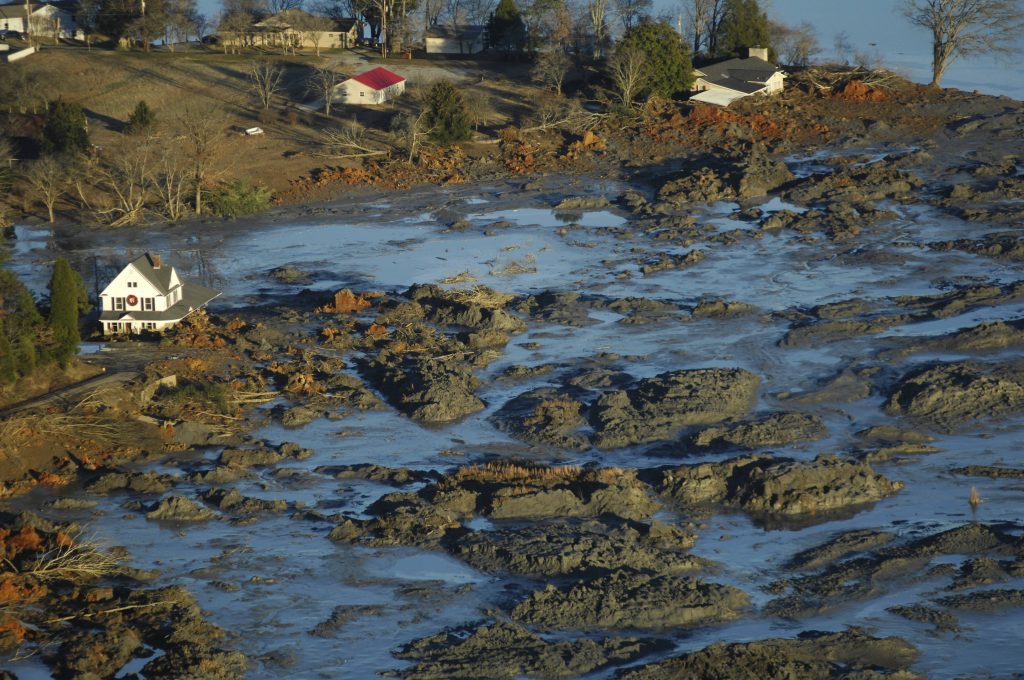
A federal court found that the Tennessee Valley Authority is ultimately liable for the December 2008 coal ash spill. The failed pond at TVA's Kingston Plant released more than one billion gallons of toxic coal ash and covered 300 acres.

This morning, a federal court ruled that the Tennessee Valley Authority is liable for the massive coal ash spill at its Kingston Plant in December 2008. In his written opinion, U.S. District Judge Thomas Varlan ruled that the spill resulted ultimately from TVA’s “negligent nondiscretionary conduct” — far from the unpredictable geologic event that TVA lawyers claimed was the cause during the trial.

In fact, we know more than ever just how preventable the catastrophic spill was. In the months following the event, an engineering firm hired by TVA issued a report that identified the unstable layer of soil beneath the coal ash which had gone undetected for decades as TVA continued to pile on larger amounts of the toxic waste. Subsequent reports revealed internal agency memos that contained warnings that could have prevented the spill. And in his ruling, Varlan was sure to mention that had TVA investigated and addressed the unstable pond, the spill might have been avoided.

Shorty after the coal ash pond failed, it became clear that the Kingston spill would become the worst environmental disaster of its kind in American history. TVA initially estimated that 1.7 million cubic yards burst from the pond and into the Emory and Clinch Rivers. They later had to revise that estimate to more than 5.4 million cubic yards — more than a billion gallons and 100 times larger than the 1989 Exxon Valdez oil spill.

Read more
...


Community Organizing & Water Testing Training


Thursday, July 19th, 2012 | Posted by Pallavi Podapati


Kentuckians for the Commonwealth is hosting an Organizing and Water Testing Training in Whitesburg, KY. This will be a hands-on training about ways to use the tools of community organizing and citizen water testing to protect our water and health. Conductivity meters will be available at the training for use. No prior experience is necessary. We encourage volunteers to invite friends to the training and for later testing to build community ownership.

When: Saturday July 28th, from 10:30 AM – 4:30 PM
Where: Ermine Senior Citizen’s Center, 156 Main St. Whitesburg, KY
If you plan to attend: Please contact Lisa Abbott at (859) 986-1277 or lisa@kftc.org; we want to be sure we have enough equipment for everyone.
Lunch: We will provide soup beans, cornbread, drinks, and snacks, but please feel free to bring another dish to share with everyone.

We will start off the morning by reviewing some principles of organizing and how this can be incorporated with water testing. In this first training we will be learning how to use basic conductivity meters and we will get an understanding of what conductivity is and why is it important. We will also be thinking through and developing skills to involve local communities in water testing, and understanding the implications and uses of the results.

Participants will also learn how to post their test results in an on-line public database, Appalachian Water Watch. This database provides an interactive map of test results, as well as other useful resources for citizens.

Appalachian Voices has been working with KFTC, Southern Appalachian Mountain Stewards (SAMS), and the Sierra Club since the spring of 2011 to collect stream and river water quality data throughout Eastern Kentucky and Southwestern Virginia. These data provide an overview of baseline water quality, as well as indications of where industries may be polluting public water.

If you are interested in learning more about this program, please email aww-admin@appalachianwaterwatch.org or erin@appvoices.org

Speaking Out At EPA Hearings in Kentucky


Thursday, June 14th, 2012 | Posted by Pallavi Podapati


Upon our arrival, we definitely stood out. I wondered if we exuded “tree hugger,” but it’s more likely that the “I Love Mountains” buttons gave us away. While no one approached us directly to ask what we were doing there or to start an argument, the rally cries and fire-and-brimstone speeches in the background gave me pause. On the other hand, my fellow AppVoicers seemed comfortable, even delighted, to approach people participating in the coal rally and engage in dialogue.

The June 4th U.S. Environmental Protection Agency hearings were held at the Eastern Kentucky Expo in Pikeville, a massive stadium that seats 7,000. Individuals gathered to voice their opinions on the EPA’s denial of 36 mine permits because of water quality issues. Following the hearing, the EPA will be receiving comments until June 21st.

While things seemed relatively calm during the rally outside, within the Expo things turned nasty. None of the jeering was too off-putting, but the feeling of tension and the combative tone pro-coal individuals took with EPA officials and environmentalists made everyone in our small group uneasy.

Four members of Appalachian Voices spoke at the hearing, Eric Chance, Erin Savage, Matt Wasson, and myself. We talked about Kentucky’s troubled history of failing to enforce clean water protections, and agreed with the EPA that the permits in question lacked appropriate scientific data and safeguards to protect watersheds. We also commented on the devastating health impacts from water pollution caused by mountaintop removal coal mining, and countered coal industry propaganda with data about the recent rise in the region’s coal employment. A member of the Sierra Club, Alex DeShay, also spoke, and we all received very vocal disapproval from the crowd. I wondered if we were in a precarious situation by being the only people who were openly supportive of the EPA’s initiatives.

This is not the Eastern Kentucky I know.

Read more
...


Front Row Seats at the Political Theater in Abingdon, VA


Wednesday, June 6th, 2012 | Posted by Erin Savage


Last Saturday, June 2nd, FACES of Coal and Americans for Prosperity held the “Rally for Appalachian Coal Jobs” in Abingdon, VA. The flier for the rally touts the usual “War on Coal” rhetoric: “Appalachian Coal Jobs have been under regulatory assault from the bureaucrats in Washington D.C. It’s time we stand up and defend them!”

The event, held at the Washington County Fairgrounds, was open to the public and claimed to be “family friendly,” so we at Appalachian Voices thought we should attend.

Read more
...


KY Supreme Court Rules in Favor of Citizens and Water


Friday, April 27th, 2012 | Posted by Eric Chance


Yesterday the Kentucky State Supreme Court ruled in favor of Appalachian Voices and our partners KFTC, Waterkeeper and the Kentucky Riverkeeper. The ruling upheld lower court rulings allowing us to intervene in a lawsuit between Frasure Creek Mining and the Kentucky Energy and Environment Cabinet.

That case was brought about in October 2010 when we filed a Notice of Intent to Sue against Frasure Creek Mining, and International Coal Group (Now an Arch Coal subsidiary) for 20,000 violations of the Clean Water Act with potential penalties of over $700 million. The bulk of these violations relate to false and potentially fraudulent reporting of water pollution levels. Under the Clean Water Act companies have limits on the amount of pollution they are allowed to release, and they are required to monitor their pollution to make sure they meet these limits.

In an effort to keep us from being able to bring a case in federal court, the coal companies reached settlements with the Kentucky Energy and Environment Cabinet, but those settlements needed to be approved by a state court. The settlements amounted to little more than a slap on the wrist; they have minimal fines and no meaningful measures to ensure that the same problems will not continue. Through the citizen suit provision of the Clean Water Act, citizen are allowed to participate in legal actions to protect public waters. Using this provision, we intervened in the state court case in order to argue that the state’s settlement was not fair, adequate and in the public interest.

Read more
...


Join Us for World Water Day Events and Kick Some Coal Ash


Wednesday, March 14th, 2012 | Posted by Sandra Diaz


World Water Day is on Thursday, March 22. It is a day to not only celebrate the gift of water, but to also learn what we can do to protect this precious resource. In North Carolina, water pollution from coal ash, the residue from burning coal for electricity, is a huge state-wide problem that can no longer be ignored.

In order to educate and activate citizens who care about protecting our water, we have some great events planned in Charlotte and Asheville! We ask that you RSVP here.

Read more
...


Facebook Twitter FlickR YouTube
Front Porch Bloggers Tags
Show/Hide list (-)

15th Anniversary 112th Congress 113th Congress A & G A & G Coal Corporation Acid Mine Drainage Across Appalachia Agriculture Air Pollution air quality Alabama ALEC Alexadra Cousteau Alliance for Appalachia Alpha Natural Resources American Chestnut american dream appalachia Appalachian Appalachian Culture Appalachian history Appalachian Identity Appalachian Legislators Appalachian politics Appalachian Regional Commission Appalachian State University Appalachian Streams Appalachian Transition Appalachian Treasures Appalachian Voices Appalachian Voices board of directors Appalachian Water Watch Appalachia Restoration Act Appalachia Water Watch Appalshop arch coal Arsenic Art Asheville Athens County Avian wildlife Bank of America bark Batson Creek Battle of Blair Mountain Bearwallow Mountain Beyond Coal campaign biodiversity black bears blair mountain blood mountain Blue Ridge Commons: Environmental Activism and Forest History in North Carolina Blue Ridge Escarpment Book Club Boone buffalo creek cancer carbon capture Carolina Mountain Land Conservancy Center for Appalachian Studies Central Appalachia Charlottesville Chattanooga Chimney Rock State Park China citizens united Clean Air Clean Air Act clean energy Clean Water Clean Water Act Clean Water Act 40th Anniversary Clean Water Protection Act Climate Climate Change climate change denial Coal Coal Ash coal ash health effects coal ash ponds coal decline coal electricity coal employment Coal generation Coal mining coal plants coal production Coal Report Coal Waste conductivity Congress Connestee Falls constellation Creation Care Cross-State Air Pollution Rule Cumberland Plateau Cypress creek d.c. Daniel Martin Moore David Brewer David McKinley Democracy dnc Documentaries Don Blankenship Downstream Strategies duke Duke Energy DuPont State Recreation Forest Earth Day EarthJustice Earth Ministry Eastern Band of Cherokee Economic Transition Economy editorial Education efficiency electricity Electric Utilities Elk Knob State Park Emory River Endangered species end mountaintop removal energy Energy Efficiency Energy Information Administration Energy Saving Energy Savings Environment environmental education Environmental Justice environmental literacy Environmental Protection Agency EPA Expedition Blue Planet extinction FArCES of Coal FERC Fish Kill Florence Nature Preserve fly ash Folktales Fontana Lake Foothills Trail forest Forestry Fox Squirrels fracking Frasure Creek Frasure Creek Mining and International Coal Group friends of smokies Gallatin game species gas gas emissions Georgia Georgia Power ghost stories globalization Golden-winged warbler Google Earth Gov. Steve Beshear grandfather mountain Great Smoky Mountains National Park green green-collar green building green economy green energy future GreenFaith and the Evangelical Environmental Network Greenhouse Gases Greenpeace Green River Preserve Hal Rogers Hampton Roads Hampton Roads Coal Plant HB 710 headquarters Health Heifer USA Hickory Nut Gorge Hidden Treasures High Falls hiking Hiking the Highlands hiking trails home improvement and remodeling Hooker Falls houses Hunting hydraulic fracking hydroelectricity ICG iLoveMountains Inside Appalachian Voices Interfaith Power & Light Interior Department Ison Rock Ridge Jay Rockefeller Jeff Goodell Jeff Goodell Jr. Jim Justice Jim Rogers jobs Joe Manchin Joseph Pizarchik Jr. Kathryn Newfont Kathy Mattea Kens Rock Kentuckians for the Commonwealth Kentucky Kentucky Energy and Environment Cabinet Kentucky Litigation Kentucky Riverkeeper Kudzu kudzu bug land Land Conservation Land management land protection LEAF lobbying local farming Marcellus Shale Massey Energy Matt Wasson membership spotlight Mercury Mercury and Air Toxics Standard mercury and air toxic standards Michael Johnathon mine Mine Safety and Health Administration Mining Jobs Molly McGinn mountains Mountaintop Removal Mountaintop removal permits MSHA Mussels N.C. Politics Nally & Hamilton Nantahala National Forest National Mining Association National Resources Defense Council Natural Gas Naturalist's Notebook nature New River Nick Rahall North Carolina NRDC nuclear ODEC Office of Surface Mining offshore wind Ohio Operation Medicine Cabinet opportunities Outdoor Recreation Patriot Coal Pennsylvania Photography Pine Mountain Park Pisgah Forest Politics pollution Possum Jenkins Powder River Basin Prescribed burns President Obama progress Progress Energy Property Rights public lands re-zoning recycling recycling building materials Red Red White and Water Religion in the Environment Renewable Energy Renewable Portfolio Standards Rick Boucher Riverkeeper Rivers Robert F. Kennedy Same Sun Here scenic vistas Scenic Vistas Protection Act Science and Nature science education SELC Selenium selenium pollution Senate settlement sewanee coal seam shale gas Sharyn McCrumb Shelley Moore Capito Sierra Club Silver Slip sludge sludge safety project Solar Solar Energy Solar Homestead Project South Carolina South Cumberland Plateau Southern Appalachian Mountains Southern Appalachian Mountain Stewards Southern Environmental Law Center SouthWings spirituality Sportsman’s Heritage Act spruce pine state environmental policy Stone Mountain stop mountaintop removal Stream Buffer Zone Stream Protection Rule summer camps Sundance Power Systems surface mining Surface Mining Control and Reclamation Act Surry Surry Coal Plant sustainability sustainable agriculture sustainable alternatives sustainable building sustainable farming tax credits and incentives Tennes Tennessee Tennessee Scenic Vistas Protection Act Tennessee State legislature The American Chestnut Foundation The American Legislative Exchange Council The Appalachian Voice the human cost The Voice This Green House Tom Cormons Tom Hansell Tom Kilgore TRAIN Act Transylvania County treasures Triple Falls TVA TVA Kingston coal ash spill U.S. Department of Energy U.S. Representatives from North Carolina U.S. Representatives from Tennessee U.S. Representatives from Virginia U.S. Representatives from West Virginia UMWA Uncle Falls United Mine Workers of America United Mountain Defense united states Upper Watuaga Riverkeeper uranium mining US Forest Service Viewpoint Virginia Virginia General Assembly Virginia ODEC virginia state parks Virginia Tech Wales War on Coal washington Washington DC Watauga Water Waterkeeper Waterkeeper Alliance Water Pollution Water quality weatherization Weed Patch Mountain Week in Washington West Virginia White Squirrel Hiking Challenge Wilderness Society Wildlife Williamson wind energy Wind Power wind turbine Wise County Wise Energy for Virginia Wise Energy for Virginia Coalition wvdep Youngs Mountain

Tags