Get Our RSS Feed!
Front Porch Blog


Tenn Tuesday: Energy Savings! Victories!


Tuesday, May 21st, 2013 | Posted by JW Randolph


…HaslamConnectedLobbyistSellingPublicLandstoCoalCompanies! OH MY!!

Good morning, and welcome to your Tennessee Tuesday, our weekly holler from your Tennessee hills.

Drop us a note in the comments to say hello, let us know a bit about yourself, what you’re interested in and what stories we might be missing. It’s been a busy couple of weeks for the Volunteer State in the world of energy, TVA and Congress, so let’s get right to it.

Victories!
Believe it or not, both houses of Congress, with support from both parties, are moving on important pieces of legislation to protect our mountains, and to promote energy efficiency.

As several Appalachian Tennesseans came to Washington, D.C., the bi-partisan Clean Water Protection Act was introduced by Congressmen Frank Pallone (D-NJ) and Dave Reichert (R-WA), and already has more than 50 cosponsors from both parties and from all across the nation. The Clean Water Protection Act is a simple bill that would make it illegal for coal companies to perform the “valley fills” associated with mountaintop removal coal mining. Congressman Cooper (D-TN-05) and Congressman Cohen (D-TN-09) are both original cosponsors of the bill! You can call them using the Congressional switchboard at 202-224-3121 to say “thanks for cosponsoring the Clean Water Protection Act, and for protecting our mountains.”

We had a fantastic victory in the U.S. Senate, where the Senate Energy Committee passed a bipartisan Energy Savings Bill (S 761) by a vote of 19-3. Senator Alexander sits on this panel and voted AYE, and you can call his office at 202-224-4944 to say “thanks for supporting S 761 and promoting energy efficiency for our country.” This bill, introduced by Senators Shaheen (D-NH) and Portman (R-OH), would save energy by improving building codes, while incentivizing industrial energy efficiency and promoting energy savings at federal buildings. That bill now moves on to the Senate floor while the House counterpart (HR 1616) awaits committee action.

Read more
...


Tennessee Tuesday: What Do We Do Now?


Tuesday, April 30th, 2013 | Posted by JW Randolph


This is a post about how we can improve life for Tennesseans, protect an American culture that has endured for centuries, and promote our beloved Appalachian Mountains that once stood higher than the Himalayas, and are now threatened by mountaintop removal coal mining.

Tennessee Tuesdays is a new weekly feature on the Appalachian Voices Front Porch blog. While our main goal is to end mountaintop removal, we also hope to spread the gospel of hope, bring light to issues facing Tennesseans, and offer solutions on how we can move our state toward a cleaner and more energy efficient future.

Are you from Tennessee or nearby? Introduce yourself in the comments and let us know what you’d like to hear about. For now, welcome! Have a cup of coffee and take a minute to enjoy your Tennessee Tuesday.

What’s been happening in Tennessee lately?

Tennessee Legislature 2013
My home state has been in the national news a lot the last few months and not for the greatest reasons. Our legislature was constant fodder for late night comedians (catch Daily Show and Colbert’s greatest Tennessee hits here, here, and here) and was generally considered a bumbling embarrassment for most Tennesseans who don’t respond to “Senator.”

Read more
...


“I’m Here Because I Love Mountains:” Watch a speech by Appalachian Voices’ JW Randolph


Tuesday, February 12th, 2013 | Posted by


On Feb. 8, Appalachian Voices Tennessee Director, JW Randolph, spoke to members of the state legislature, the media and the environmental community. Below is a video and the transcript of his speech in support of the Tennessee Scenic Vistas Protection Act, a bill to protect the state’s virgin ridgelines from mountaintop removal coal mining.

Hello, my name is JW Randolph, and I’m proud to serve as the Tennessee Director for Appalachian Voices. I’m here to speak with you for a few minutes about efforts to protect Tennessee’s mountains, but first I want to thank the members that have joined us here this morning. Chairman Southerland and Representative Gilmore have both supported the Scenic Vistas Protection Act, and we’re happy you’re here. We’re thankful to you both and look forward to continuing to work with you to pass this important legislation. I would also like to thank those in attendance for engaging in the democratic process, and finally I’d like to thank the Tennessee Environmental Council, Gretchen Hagle, John McFadden and your team. You guys are great leaders in this movement here in Tennessee and for us here on Capitol Hill, we all appreciate you and the work you do.

I’m here because I love mountains. I grew up in a log cabin my father built in the woods, on the banks of the Tennessee River. And like many of you, I got to know my family, my place, and our history through walking the beautiful woods and waters of middle Tennessee, fishing, hiking, and 4-wheeling. The time spent in these mountains taught me about freedom, responsibility and self-reliance. This was where I learned the best of home, the best of our state, and the best of what our country has to offer. As I got older, I learned that not too far away, near our ancestral land, coal companies were blasting apart the mountains, and poisoning the streams that we ran through.

My daughter will turn two years old this month. When I was her age, there were 500 mountains across Appalachia that are no longer there. Since then there have been 2000 miles of streams buried by mining waste, and 125-square miles of The Cumberland Plateau that has been altered irrevocably. That is why its important that Tennesseans join the effort to pass the Tennessee Scenic Vistas Protection Act.

Read more
...


AV, Citizens Groups Oppose TVA’s Rush to Judgement


Friday, October 19th, 2012 | Posted by JW Randolph


>>>Proud to join Sierra and TCWN on this important effort. It’s a simple choice. TVA should be putting money into energy efficiency programs rather than trying to extend the life of an expensive, inefficient, dirty coal plant like Gallatin. – jw<<<

TVA would give the public only thirty days to weigh in on project that could raise bills

Nashville, TN – Yesterday afternoon the Tennessee Valley Authority (TVA) announced it will issue an Environmental Assessment (EA) for proposed upgrades at its Gallatin Fossil Plant outside of Nashville, Tennessee. The Sierra Club, Tennessee Clean Water Network and Appalachian Voices responded by calling on TVA not to sink over $1 billion into the aging plant for new scrubbers without fully considering cleaner and cheaper options and without adequate public input in the process.

The draft EA issued by TVA gives members of the public only thirty days to weigh in on the massive project with no opportunity for a public hearing. Instead, local and national groups are urging TVA to complete a much more comprehensive Environmental Impact Statement, extend the comment period, open up the discussions for public hearings and provide key background documents supporting its assumptions.

“With cleaner, safer, and more affordable energy options available to us, it is vital that the TVA takes steps to fully examine a proposal that affects not just the air we breathe and the water we drink, but also how much money its customers have to pay to fund these unnecessary and hugely expensive upgrades,” said JW Randolph, Tennessee Director of Appalachian Voices. “TVA says it wants to be a leader on energy efficiency but it’s investing in more pollution. This project is taking us in the wrong direction.”

Read more
...


A One-Two Punch in the Fight for Clean Water


Thursday, August 23rd, 2012 | Posted by Brian Sewell


It has been a week of good news in the fight for stronger protections against coal ash pollution. A court settlement in South Carolina and a major decision regarding the 2008 TVA Kingston coal ash spill make for a one-two punch against the poorly regulated toxic waste.

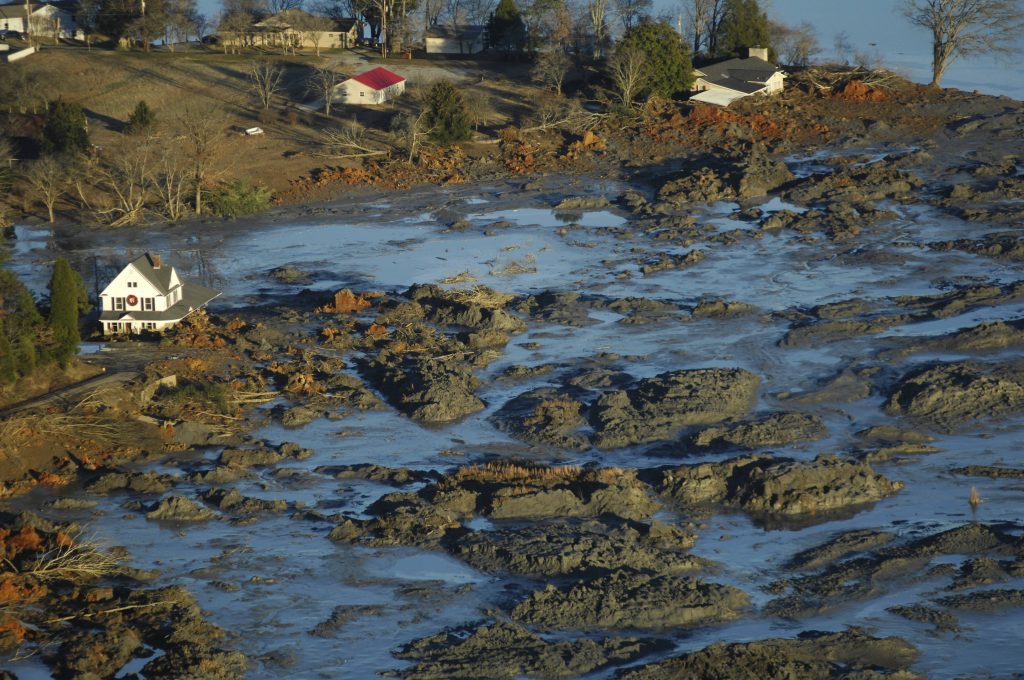
A federal court found that the Tennessee Valley Authority is ultimately liable for the December 2008 coal ash spill. The failed pond at TVA's Kingston Plant released more than one billion gallons of toxic coal ash and covered 300 acres.

This morning, a federal court ruled that the Tennessee Valley Authority is liable for the massive coal ash spill at its Kingston Plant in December 2008. In his written opinion, U.S. District Judge Thomas Varlan ruled that the spill resulted ultimately from TVA’s “negligent nondiscretionary conduct” — far from the unpredictable geologic event that TVA lawyers claimed was the cause during the trial.

In fact, we know more than ever just how preventable the catastrophic spill was. In the months following the event, an engineering firm hired by TVA issued a report that identified the unstable layer of soil beneath the coal ash which had gone undetected for decades as TVA continued to pile on larger amounts of the toxic waste. Subsequent reports revealed internal agency memos that contained warnings that could have prevented the spill. And in his ruling, Varlan was sure to mention that had TVA investigated and addressed the unstable pond, the spill might have been avoided.

Shorty after the coal ash pond failed, it became clear that the Kingston spill would become the worst environmental disaster of its kind in American history. TVA initially estimated that 1.7 million cubic yards burst from the pond and into the Emory and Clinch Rivers. They later had to revise that estimate to more than 5.4 million cubic yards — more than a billion gallons and 100 times larger than the 1989 Exxon Valdez oil spill.

Read more
...


TVA Can Negate Coal Plants, Save Billions


Monday, August 20th, 2012 | Posted by JW Randolph


Energy Efficiency can lead TVA to Cost, Energy, and Emission Reductions. Soon!


An exciting new Synapse study shows us that TVA has much better options than continuing to operate and retrofit its dirty, aging fleet of coal-fired power plants. TVA currently operates 39 boilers, which would cost nearly $12 billion to retrofit. These costs do not reflect potential controls for carbon pollution. If TVA does choose to pursue retrofits on these boilers, the study finds that 33 of those 39 boilers will be “deeply non-economic on a forward going basis.” That is, power from these boilers will be more expensive than market based electricity, thus rendering them uneconomical to operate.

The Tennessee Valley Authority (TVA) must soon decide whether it will, in the next few years, spend nearly $12 billion to retrofit its aging fleet of coal-fired power plants in order to meet modern pollution standards, plus billions more to run those plants into the future. The majority of these plants are far in the red: with the projected required pollution controls, they will cost more to run than they bring in in revenue. Rather than passing billions in expenses to ratepayers to keep these plants online, TVA should be exploring ways to retire these non-economic plants as quickly as possible.

And there are some excellent job-creating, energy reducing retirement strategies for TVA to pursue. In fact, the data suggests that TVA could save billions and curb pollution by making common sense, achievable investments in energy efficiency. TVA themselves identify a 1.2% energy reduction as their “high achievable” energy efficiency reduction. Synapse took this number and applied it to potential cost savings vs coal plant retrofits. It turns out that 1.2% energy reduction could meet all projected demand growth until 2030. The study also looks at particular coal plants in the fleet, such as Galatin. The numbers they found are astounding…

Read more
...


Facebook Twitter FlickR YouTube
Front Porch Bloggers Tags
Show/Hide list (-)

15th Anniversary 112th Congress 113th Congress A & G A & G Coal Corporation Acid Mine Drainage Across Appalachia Agriculture Air Pollution air quality Alabama ALEC Alexadra Cousteau Alliance for Appalachia Alpha Natural Resources American Chestnut american dream appalachia Appalachian Appalachian Culture Appalachian history Appalachian Identity Appalachian Legislators Appalachian politics Appalachian Regional Commission Appalachian State University Appalachian Streams Appalachian Transition Appalachian Treasures Appalachian Voices Appalachian Voices board of directors Appalachian Water Watch Appalachia Restoration Act Appalachia Water Watch Appalshop arch coal Arsenic Art Asheville Athens County Avian wildlife Bank of America bark Batson Creek Battle of Blair Mountain Bearwallow Mountain Beyond Coal campaign biodiversity black bears blair mountain blood mountain Blue Ridge Commons: Environmental Activism and Forest History in North Carolina Blue Ridge Escarpment Book Club Boone buffalo creek cancer carbon capture Carolina Mountain Land Conservancy Center for Appalachian Studies Central Appalachia Charlottesville Chattanooga Chimney Rock State Park China citizens united Clean Air Clean Air Act clean energy Clean Water Clean Water Act Clean Water Act 40th Anniversary Clean Water Protection Act Climate Climate Change climate change denial Coal Coal Ash coal ash health effects coal ash ponds coal decline coal electricity coal employment Coal generation Coal mining coal plants coal production Coal Report Coal Waste conductivity Congress Connestee Falls constellation Creation Care Cross-State Air Pollution Rule Cumberland Plateau Cypress creek d.c. Daniel Martin Moore David Brewer David McKinley Democracy dnc Documentaries Don Blankenship Downstream Strategies duke Duke Energy DuPont State Recreation Forest Earth Day EarthJustice Earth Ministry Eastern Band of Cherokee Economic Transition Economy editorial Education efficiency electricity Electric Utilities Elk Knob State Park Emory River Endangered species end mountaintop removal energy Energy Efficiency Energy Information Administration Energy Saving Energy Savings Environment environmental education Environmental Justice environmental literacy Environmental Protection Agency EPA Expedition Blue Planet extinction FArCES of Coal FERC Fish Kill Florence Nature Preserve fly ash Folktales Fontana Lake Foothills Trail forest Forestry Fox Squirrels fracking Frasure Creek Frasure Creek Mining and International Coal Group friends of smokies Gallatin game species gas gas emissions Georgia Georgia Power ghost stories globalization Golden-winged warbler Google Earth Gov. Steve Beshear grandfather mountain Great Smoky Mountains National Park green green-collar green building green economy green energy future GreenFaith and the Evangelical Environmental Network Greenhouse Gases Greenpeace Green River Preserve Hal Rogers Hampton Roads Hampton Roads Coal Plant HB 710 headquarters Health Heifer USA Hickory Nut Gorge Hidden Treasures High Falls hiking Hiking the Highlands hiking trails home improvement and remodeling Hooker Falls houses Hunting hydraulic fracking hydroelectricity ICG iLoveMountains Inside Appalachian Voices Interfaith Power & Light Interior Department Ison Rock Ridge Jay Rockefeller Jeff Goodell Jeff Goodell Jr. Jim Justice Jim Rogers jobs Joe Manchin Joseph Pizarchik Jr. Kathryn Newfont Kathy Mattea Kens Rock Kentuckians for the Commonwealth Kentucky Kentucky Energy and Environment Cabinet Kentucky Litigation Kentucky Riverkeeper Kudzu kudzu bug land Land Conservation Land management land protection LEAF lobbying local farming Marcellus Shale Massey Energy Matt Wasson membership spotlight Mercury Mercury and Air Toxics Standard mercury and air toxic standards Michael Johnathon mine Mine Safety and Health Administration Mining Jobs Molly McGinn mountains Mountaintop Removal Mountaintop removal permits MSHA Mussels N.C. Politics Nally & Hamilton Nantahala National Forest National Mining Association National Resources Defense Council Natural Gas Naturalist's Notebook nature New River Nick Rahall North Carolina NRDC nuclear ODEC Office of Surface Mining offshore wind Ohio Operation Medicine Cabinet opportunities Outdoor Recreation Patriot Coal Pennsylvania Photography Pine Mountain Park Pisgah Forest Politics pollution Possum Jenkins Powder River Basin Prescribed burns President Obama progress Progress Energy Property Rights public lands re-zoning recycling recycling building materials Red Red White and Water Religion in the Environment Renewable Energy Renewable Portfolio Standards Rick Boucher Riverkeeper Rivers Robert F. Kennedy Same Sun Here scenic vistas Scenic Vistas Protection Act Science and Nature science education SELC Selenium selenium pollution Senate settlement sewanee coal seam shale gas Sharyn McCrumb Shelley Moore Capito Sierra Club Silver Slip sludge sludge safety project Solar Solar Energy Solar Homestead Project South Carolina South Cumberland Plateau Southern Appalachian Mountains Southern Appalachian Mountain Stewards Southern Environmental Law Center SouthWings spirituality Sportsman’s Heritage Act spruce pine state environmental policy Stone Mountain stop mountaintop removal Stream Buffer Zone Stream Protection Rule summer camps Sundance Power Systems surface mining Surface Mining Control and Reclamation Act Surry Surry Coal Plant sustainability sustainable agriculture sustainable alternatives sustainable building sustainable farming tax credits and incentives Tennes Tennessee Tennessee Scenic Vistas Protection Act Tennessee State legislature The American Chestnut Foundation The American Legislative Exchange Council The Appalachian Voice the human cost The Voice This Green House Tom Cormons Tom Hansell Tom Kilgore TRAIN Act Transylvania County treasures Triple Falls TVA TVA Kingston coal ash spill U.S. Department of Energy U.S. Representatives from North Carolina U.S. Representatives from Tennessee U.S. Representatives from Virginia U.S. Representatives from West Virginia UMWA Uncle Falls United Mine Workers of America United Mountain Defense united states Upper Watuaga Riverkeeper uranium mining US Forest Service Viewpoint Virginia Virginia General Assembly Virginia ODEC virginia state parks Virginia Tech Wales War on Coal washington Washington DC Watauga Water Waterkeeper Waterkeeper Alliance Water Pollution Water quality weatherization Weed Patch Mountain Week in Washington West Virginia White Squirrel Hiking Challenge Wilderness Society Wildlife Williamson wind energy Wind Power wind turbine Wise County Wise Energy for Virginia Wise Energy for Virginia Coalition wvdep Youngs Mountain

Tags