Get Our RSS Feed!
Front Porch Blog


A Must-Read Report, Another Reminder It’s Time to Build Something New in Central Appalachia


Tuesday, May 14th, 2013 | Posted by Brian Sewell


An updated and expanded report is a potent reminder that coal's decline isn't going away and policymakers should accept the challenges, just as many people already have. Click through to read the report's key findings.

The litany of voices pointing to the writing on the wall for the Central Appalachian coal industry continues to grow. They’re saying the same thing in almost every way imaginable, and have been for some time.

Watching coal production decline and demand shift as other energy sources out-compete coal domestically, it is vital that policymakers in Central Appalachia begin implementing policies and investments aimed at building a foundation for economic alternatives in coal-producing counties. A report released this morning by the consulting firm Downstream Strategies is a pretty good reminder why.

“The Continuing Decline in Demand for Central Appalachian Coal: Market and Regulatory Influences” expands on a January 2010 study and provides a detailed look at the challenges Central Appalachia faces, further making the case for the urgent need to act.

As the report’s lead author, Rory McIlmoil, who recently joined Appalachian Voices’ staff as energy policy director, points out:

Numerous factors influence demand for Central Appalachian coal, each of which has had — and will continue to have — a significant impact on the local economies where the coal is mined. In 2010, we recommended that state and local leaders take immediate steps to help diversify coalfield economies. To a large extent, that has not happened. However, it is vital that public officials begin making the political and financial investments necessary to build the foundation for new economic development opportunities in coal-producing counties.

Read more
...


Clean Water Protection Act Introduced with 45 Cosponsors


Tuesday, May 7th, 2013 | Posted by Thom Kay


Yesterday, Rep. Frank Pallone (D-NJ) and Rep. Dave Reichert (R-WA) introduced the Clean Water Protection Act in the 113th Congress with 45 original cosponsors.

The Clean Water Protection Act, H.R. 1837, is a bill in the U.S. House of Representatives which would sharply reduce mountaintop removal coal mining by making it illegal to dump mining waste into valleys and streams. To date, more than 2,000 miles of streams have been buried or severely polluted.

As the bill sponsors point out in their Dear Colleague letter to other members of Congress:

An EPA scientific study in 2008 shows that more than 63% of the streams sampled below mountaintop removal coal mining operations exhibited long-term impairments to aquatic organisms. In some large watersheds, more than half of the streams are impaired.

Last Congress, more than 130 representatives, from Kentucky to Hawaii, took a stand against mountaintop removal coal mining by cosponsoring the Clean Water Protection Act.

It is crucial that we carry over the momentum we built during the last Congress by having a large group of cosponsors. For your Representative to sign onto the bill, they need to hear from you.

Take action now and tell your Congressperson you expect their support of this important legislation.

America’s “Sadness Belt”: Appalachian States Worst in U.S. for Health and Happiness


Monday, March 25th, 2013 | Posted by Melanie Foley


Gallup and Healthways recently released their annual Well-Being Index for 2012, and Appalachia was found once again to be home to some of the least healthy and happy Americans. The most striking result of last year’s Well-Being Index is that while the happiest states are spread throughout the country, the lowest ranking states are all clustered in Central and Southern Appalachia, and the region’s neighboring states.

The Well-Being Index compiles surveys taken from all over the country all throughout the year and organizes them by state, community and congressional district. Participants are asked to evaluate their lives according to six categories:

- Life Evaluation: how a person’s current life compares with their expectations

- Emotional Health: deals with the respondent’s experiences and feelings on a given day

- Physical Health: encompasses diseases, physical pain, sick days, body-mass index, etc.

- Healthy Behavior: addresses both positive behaviors (e.g., exercise) and negative (e.g., smoking)

- Work Environment: questions for workers on job satisfaction, treatment from superiors, etc.

- Basic Access: includes access to food, housing, healthcare, etc.

Read more
...


Lesson Learned: The Buffalo Creek Flood


Tuesday, February 26th, 2013 | Posted by Brian Sewell


Inspecting the Aftermath: Residents of Buffalo creek worried constantly about the stability of the slurry dams upstream. Nothing was done. Photo courtesy of West Virginia State Archives.

I woke up this morning to a frozen world. Fog and ice descended on the hills above Boone, N.C., last night and are still waiting around for the thaw. It was silent other than the periodic crack of a branch and the following echo that bounced around the hills. Stepping outside after reading Ken Ward Jr.’s remembrance of the Buffalo Creek Flood, I wondered if this stillness was similar to what the residents of communities in Logan County, W.Va., felt that morning 41 years ago today.

To contain the refuse of a coal preparation plant operated by Buffalo Mining Co., a series of three dams were built upstream from the communities along Buffalo Creek in the 1950s and 60s, as Logan County continued to grow into one of southern West Virginia’s prolific coal-producing counties. Dam No. 3, the largest, stood 60 feet above the pond and downstream dams below. When it gave way on the cold morning of Feb. 26, 1972, the others collapsed instantly.

The poor construction and regulation of coal waste impoundments that precipitated the Buffalo Creek Flood intensified during boom times when coal preparation plants used more water and produced more slurry just to keep up with coal production. As Jack Spadaro, a former superintendent at MSHA’s Mine Health and Safety Academy, told me for a story last year, “All along, as these dams were being built, they weren’t really constructed using any engineering methods. They were simply dumped, filled across the valley.”

Read more
...


A Clearcut Connection Between Mountaintop Removal and Climate Change


Wednesday, February 20th, 2013 | Posted by Melanie Foley


Mountaintop Removal and other destructive land uses could turn the Southern Appalachians from a carbon sink to a carbon source in as little as 12 years.

Scientists from the universities of Kentucky and California recently released a study detailing the climate implications of coal extraction by mountaintop removal. If coal mining continues at its current pace, the authors predict the next 12 to 20 years will see Southern Appalachian forests switch from a net carbon sink to a net carbon source — meaning the area will emit more carbon than it takes in.

Consequently, ending mountaintop removal may have more environmental benefits than originally realized. The long-standing goals of mountaintop removal opponents have been to protect human lives, improve drinking water, and support ecosystem health. This new research shows that ending this destructive mining practice would also be a victory in the fight against climate change — and not just by moving away from dirty coal.

Read more
...


No Longer Hidden in Plain Sight, Thanks to SoutheastCoalAsh.org!


Monday, December 10th, 2012 | Posted by Sandra Diaz


For how large coal ash impoundments can be, they are sure hard to spot.

For example, there are two large earthen dams full of coal ash just north of Charlotte near Mountain Island Lake. Can you spot them?

(Answer: They’re on that long ridgetop to the left of the plant.)

Since Duke Energy is probably not going to place yellow neon signs near the impoundments to alert the public to the dangers that these dams may cause to groundwater or public safety anytime soon, we did the next best thing. Working with Southern Alliance for Clean Energy and other partner organizations like Southern Environmental Law Center and NC Conservation Network, we have helped create Southeastcoalash.org. With just five key strokes (your zip code) you can see where coal ash impoundments are hiding in plain sight near you.

Read more
...


Sustaining Healthy Appalachian Communities


Friday, November 16th, 2012 | Posted by Brian Sewell


Editor’s Note: Wendy Johnston is a sixth generation West Virginian from Mercer County and the granddaughter and great granddaughter of coal miners. Her post is the second in a series of guest blogs coinciding with our “No More Excuses” campaign on iLoveMountains.org, where we ask impacted Appalachians why President Obama should make ending mountaintop removal a priority in his second term. We’re happy to feature her story here.

***

"Our plea is this: please quit pitting neighbor against neighbor in a fabricated war against a finite resource, support our sustainable business ventures, invest in the future of our children so that they can stay in healthy Appalachian communities."

“Oh the West Virginia hills how majestic and how grand, with their summits bathed in glory like our Prince Emmanuel’s land. Is it any wonder then that my heart with rapture fills, as I stand once more with loved ones on those West Virginia hills?”

That is a verse from the state song of West Virginia. As a child I can remember feeling so proud every time I sang this song. As a college student living away from my family this song made me feel closer to the hills that seemed so very far away, and as a young mother just moving home after a long absence I could not wait to teach my children the song that would be their state song. Little did I know that one day the words to this song may not be true, that our majestic mountain summits would someday be destroyed and that even our loved ones gone on before us would have their resting places disturbed.

Mountaintop removal has put in jeopardy more than just those mountain summits though. This form of mining has destroyed entire communities, poisoned water systems, polluted our air and caused one of the largest health emergencies in our nation’s history.

Read more
...


Congratulations to our conservation allies on a major victory in the fight to end mountaintop removal!


Thursday, November 15th, 2012 | Posted by Brian Sewell


Kentucky Side of Black MountainPatriot Coal Co., one of the largest coal companies operating in Central Appalachia, today announced it will phase out mountaintop removal mining coal mining over the next several years, saying its decision is in the “best interests of the company and the communities where it operates.”

The announcement is the result of an agreement between Patriot and environmental and community groups who have won a series of legal victories to force Patriot to clean up selenium pollution from its coal mines.

Appalachian Voices sends a hearty congratulations to Ohio Valley Environmental Coalition, the Sierra Club, West Virginia Highlands Conservancy — and especially to Joe Lovett and Appalachian Mountain Advocates — for this unprecedented victory, which is the result of more than a decade of hard work and brilliant legal strategy.

Credit is also due to Patriot’s President and CEO Ben Hatfield for acknowledging the significant impact that mountaintop removal mines have on nearby communities and the environment.

Despite dozens of scientific studies demonstrating severe environmental and health impacts of mountaintop removal coal mining, this is the first time a major operator of mountaintop removal mines has acknowledged those impacts.

Read more
...


Moving Appalachia Forward!


Thursday, November 8th, 2012 | Posted by Brian Sewell


Editor’s Note: As part of the launch of the “No More Excuses” campaign on iLoveMountains.org, we asked people whose lives have been directly impacted by mountaintop removal coal mining to contribute their thoughts on why President Obama should make ending mountaintop removal a priority in his second term.

The first in the series is a reflection by Nick Mullins, who was born and raised in southwestern Virginia and, until recently, worked at an underground coal mine there. Nick is now studying at Berea College in eastern Kentucky and blogs on the web site he created, The Thoughtful Coal Miner.


What are the Appalachian Mountains? Are they simply huge mounds of dirt and rock covered by forests? Are they containers for vast resources of energy and wealth? To my family — who have called the Appalachian Mountains home for ten generations — the mountains are much, much more. The mountains are our life, our heritage and our happiness. They are our shelters, our providers of clean water. They are a place where community and being a neighbor is more than just living beside someone.

Unfortunately, there are also those who see our mountains only as a source of wealth, rather than as part of our homes and our culture. They see them as obstacles to profit, and the people of Appalachia as the labor resource to harvest it.

Every day more blasts are detonated and more miles of freshwater streams are destroyed by mountaintop removal mining operations in the mountains where I was raised. The clean water that families once depended upon is now and forever stained and polluted.

Read more
...


Big Coal Wins Latest Battle to Blast Historic Blair Mountain


Tuesday, October 9th, 2012 | Posted by Matt Wasson


Is nothing sacred to coal companies in Appalachia?

March on Blair Mountain

In a jaw-dropping display of contempt and disregard for the communities and landscapes where they mine coal, three coal companies back in 2009 challenged the listing of West Virginia’s Blair Mountain on the National Register of Historic Places. The companies, including mining behemoths Alpha Natural Resources and Arch Coal, opposed the listing of Blair Mountain as a historic site because it could interfere with their plans to conduct mountaintop removal mining operations on the Spruce Fork Ridge battlefield, site of the “largest organized armed uprising in American labor history,” and the most important historic landmark in Central Appalachia.

The 1921 Battle of Blair Mountain was the culmination of a three-year struggle to unionize the coal mines of southern West Virginia and ended only when federal troops intervened on behalf of anti-union coal companies. There are few sites as significant as Blair Mountain that commemorate the brave men and women who laid down their lives for a movement that has brought Americans everything from the weekend to child labor laws to the largest and most prosperous middle class the world has ever seen.

Read more
...


Larry Gibson 1946-2012


Monday, September 10th, 2012 | Posted by


UPDATE:

Celebrating Larry Gibson: The Life and Legacy of the Keeper of the Mountains

Friends and family of Larry Gibson, the “Keeper of the Mountains,” will celebrate his life and legacy on Sunday, October 14 from 2 to 6 p.m. at the Charleston Municipal Auditorium, located on the corner of Virginia and Truslow streets, across from the Charleston Town Center Mall in Charleston, W.Va.

The public is encouraged to attend to help celebrate Larry’s life and legacy, RSVP and invite friends by visiting this facebook event page.

The program for “Celebrating Larry Gibson: The Life and Legacy of the Keeper of the Mountains” will feature family, friends, prominent activists, West Virginia residents, musicians and preachers. This event will be preceded by the annual Changing of the Leaves Music Festival that starts at 1:00 PM on Saturday, October 13th on Kayford Mountain.

For more information on this event and donating or volunteering to help make it happen contact Danny Chiotos with the Keeper of the Mountains Foundation at Danny@Mountainkeeper.org or (304) 205-0920.

On September 13, in a private funeral, Larry was laid to rest on the mountain that he loved.

– - -

The Appalachian Voices family was saddened to learn of the passing of our friend and a champion in the fight to end mountaintop removal, Larry Gibson. We cannot express the extent of our gratitude to Larry, nor can his impact on Appalachia’s mountain treasures and communities be measured. Below are a few words from the Keeper of the Mountains Foundation, which Gibson founded in 2004.

Larry Gibson, long-time environmental activist, died of a heart attack Sunday, September 9, while working on Kayford Mountain, the family home in Raleigh County which he spent the last decades of his life protecting from the coal mining practice known as mountaintop removal.

Kayford was the site of Larry’s birth, the final resting place of 300 ancestors stretching back to the 18th century, and the site of Larry’s annual 4th of July festival celebrating life in the mountains. As part of his effort to preserve the mountains, Larry traveled across the country, to schools, churches and a wide range of public gatherings where he spread his simple gospel about the mountains: “Love em or leave em; just don’t destroy em.”

A private funeral is planned, and Larry’s family has requested that persons wishing to express condolences make donations to Keeper of the Mountains Foundation, which Larry founded in 2004 to support mountain communities. A public memorial service will be announced at a later time. Larry is survived by his wife, Carol, two sons Cameron and Larry, Jr. and his daughter, Victoria. He was sixty-six years old.

A Summer of Resistance: Civil Disobedience and the Barriers to Progress


Thursday, August 23rd, 2012 | Posted by Brian Sewell


Photos of RAMPS’ “Mountain Mobilization” courtesy of documentary photographer Mark Schmerling.

On July 28, an action planned and carried out by RAMPS — or Radical Action for Mountain Peoples’ Survival, a group based in West Virginia — led a large group of mostly young protesters to march up the entrance of the Hobet surface mine in Lincoln County, W.Va. Once on the mine site, they climbed trees, chained themselves to heavy machinery and stood with banners that read “COAL LEAVES, CANCER STAYS,” and the optimistic “RESTORE OUR MOUNTAINS, REEMPLOY OUR MINERS.”

The intention of the action, according to RAMPS, was to shut down the mine — and they succeeded. But much of the media attention that resulted from it looked past the point that the protesters were trying to get across: the irremovable mountain of evidence of the devastation caused by mountaintop removal and an industry evading the causes and impacts of its own downturn. Instead, some stories focused on how quickly the situation surrounding the mine escalated which led to confrontations between protesters, counterprotesters and the police.

In a presidential election where everything is made out to be at stake, particularly the future of the coal industry in Appalachia, establishing a dialogue over repeated charges of a so-called “war on coal” has become nearly impossible. The once bright opportunity for collaboration and conversation has not only reached a tipping point, it has fallen off a cliff and is tumbling down a rocky embankment.

Read more
...


Did A Steamed Bun Ask the White House To Label Coal Ash As Non-Hazardous?


Thursday, July 5th, 2012 | Posted by Sandra Diaz


Last week, we escaped another harrowing attempt by Rep. David McKinley (WV) and company to allow coal-fired utilities to keep getting away with polluting our water (and sometimes air) with coal ash, the toxic byproduct of burning coal for electricity.

While a rider to stop the U.S. Environmental Protection Agency from issuing federal standards on coal ash disposal and storage did not make it into the Transportation bill, McKinley is far from throwing in the towel.

In an E&E article about the Transportation bill (reposted on WNCA’s website), McKinley declared, “We’re not finished. I can say that. We’re not finished.”

While opponents of stronger protections on coal ash are not done trying to stop the EPA from issuing final rules, they also aren’t done telling blatant untruths….

Read more
...


Protect Families: Stop Toxic Coal Ash From Polluting the Federal Transportation Bill


Tuesday, April 24th, 2012 | Posted by Sandra Diaz


Keep Coal Ash Out of our Water and the Transportation Bill!

West Virginia Rep. David McKinley is a man on a mission — to save the coal industry from the bullies at the U.S. Environmental Protection Agency. McKinley’s afraid that the EPA may eventually require coal-fired utilities to contain their coal ash so it’s not allowed to continue to pollute our waterways. But McKinley is not alone — he had some help from the American Legislative Exchange Council, or ALEC, the organization currently under fire for providing industry the means to unduly influence our elected officials.

McKinley’s bill, H.R. 2273, would literally prevent the U.S. Environmental Protection Agency from protecting families from the water and air pollution associated with poor storage and disposal of coal ash, the toxic remnants of coal-burning.

Last Wednesday, McKinley attached the entire toxic bill as an amendment to the “must-pass” House version of the Transportation Bill. With the Senate version already passed a few weeks ago, there will now be a conference of House and Senate members to hammer out the final Transportation bill.

Please contact your Senators and ask them to reject any amendments that would gut federal coal ash protections.

The passage of this coal ash bill would have real consequences for real people. Just ask Steven Johnson, Gloria Dorsett, Robert Deveaux and Donna Keiser, whose lives have been forever changed by the toxic menace of coal ash.

Read more
...


Senator Manchin Should Listen to Himself


Tuesday, March 13th, 2012 | Posted by Thom Kay


Joe Manchin

It’s rare to get this upset over someone making a valid statement, but the other day Sen. Manchin (D-WV) said something that I completely agree with, and it’s driving me nuts. When discussing the future of coal in a hearing with Department ofEnergy Secretary Steven Chu, he stated the following:

“It doesn’t make any sense at all that we can’t do it better, cleaner, and work together.”

Coal is inherently dirty, and the extraction process carries safety and environmental risks that cannot be entirely avoided. But we can do it better and cleaner, and if the Senator wants to include a feel-good political platitude, then sure, we can even “work together.”

Read more
...


Blair Community Center and Museum Needs Your Support


Wednesday, February 1st, 2012 | Posted by Madison Hinshaw


If you’ve ever heard of Blair Mountain, you know the turmoil it has been through in the last several decades. Now this historic mountain and its battlegrounds are being threatened by surface strip mining. That’s why the Blair Community Center and Museum needs your support!

The Blair Community Center and Museum is a nonprofit organization working to promote and preserve the history of Blair Mountain. Established in the fall of 2011, the Community Center and Museum has been working to reach out to those unaware of environmental destruction caused by strip mining of Blair Mountain. Despite their tireless efforts, they simply do not have the funds to allow the organization to grow.

The Blair Community Center and Museum sits at the base of historic Blair Mountain in Logan County, WV

The Community Center and Museum is currently working in a large church, which they use as an office, community center and museum. It has a leaky roof, poor heating, and there is no drinkable water nearby. They also need to improve their museum by adding showcases, frames and important museum pieces.

The Blair Mountain Community Center and Museum has a goal of reaching $10,000 by the end of April. The projects, of course, will cost more than the goal they have set for themselves, but this money would aid in planting the seed to get them going.

Blair Mountain, located in Logan County, WV, was once the site of one of the nation’s largest labor conflict, the Battle of Blair Mountain. This battle was only five days long, but was heavily equipped with machine guns, explosives and an estimate of over one million rounds of ammunition.

More than 15,000 coal miners gathered in Charleston, WV, in an attempt to overthrow the control barons of the coal mining companies. Little did they know that a private army led by the Logan County Sheriff and coal operators were awaiting their arrival.

Though the battle was almost a century ago, it is not taught in schools and many people may not have even heard of it.

So please help our friends of Blair Community Center and Museum as they continue their fight to save this historical place they’ve called home for centuries.

To find out more information about this project or to donate, visit: www.indiegogo.com/The-Start-of-A-New-Beginning.

Renewed Call to Revoke Massey Energy’s Corporate Charter


Wednesday, December 7th, 2011 | Posted by


PUBLIC INTEREST GROUPS RENEW CALL TO REVOKE MASSEY ENERGY’S CORPORATE CHARTER

JOINT STATEMENT OF FREE SPEECH FOR PEOPLE, APPALACHIAN VOICES, AND THE RAINFOREST ACTION NETWORK

Dec. 7, 2011

Yesterday, Alpha Natural Resources, the parent company of the Massey Energy coal company, agreed to pay $209 million in criminal penalties, civil penalties, and compensation to the families of the 29 miners who were killed when its Upper Big Branch coal mine in West Virginia exploded on April 5, 2010. The company was also fined an additional $10.8 million yesterday by the U.S. Mine Safety and Health Administration — the largest fine in that agency’s history.

With this admission by the company of criminal liability in those miners’ deaths, we renew our call today on Delaware Attorney General Beau Biden to revoke the corporate charter of Massey Energy.  

Corporations like Massey are artificial entities, granted a right to exist by we the people through our state corporate charter laws. Just as surely as we grant that right, we can also revoke it.  

When a corporation is criminally responsible for killing people — as Massey’s parent company has now agreed that it is — it should lose its right to exist.  

“Massey Energy has shown little regard for the people of Appalachia,” says Appalachian Voices Executive Director Willa Mays. “When people commit grave crimes, we imprison them and take away their rights as citizens. Massey can’t simply pay its way out of culpability in the criminal deaths of 29 miners. We need to stop Massey from doing more dirty business.”

Massey Energy was acquired by Alpha Natural Resources in June 2011. But it cannot merge its way out of responsibility for its actions. Massey still maintains its own charter in Delaware and is a wholly-owned subsidiary of Alpha.

A financial settlement, even for hundreds of millions of dollars, is just not enough to prevent corporations like Massey from abusing their enormous power over our lives. Alpha earned $2.3 billion in the last quarter alone.[1]

It is simply not acceptable for corporations to buy their way out after criminally killing people, any more than it is acceptable for them to buy control over our government.

We urge Attorney General Biden to initiate charter revocation proceedings against Massey Energy.

Join us in asking Attorney General Biden to revoke Massey Energy’s corporate charter today.
###

The groups’ letter issued on June 8, 2011 to Attorney General Biden can be accessed here:

http://www.freespeechforpeople.com/sites/default/files/FSFPAPPVOICESlettertoAGBiden060811.pdf

Related Media:

Reuters: Jail coal execs, says U.S. Rep

Tell Congress We Can’t Afford The Status Quo on Coal Ash!


Thursday, October 13th, 2011 | Posted by


This Friday, the House of Representatives will vote on H.R. 2273, the Coal Residuals Reuse and Management Act, a bill that puts the profits of coal ash polluters above public health. H.R. 2273 subverts public support of the EPA’s proposed federal coal ash rules by leaving coal ash pollution in the hands of states with weak or non-existent regulations.

This bill is one of many designed to effectively weaken our clean water laws and allow Big Coal polluters to keep disregarding our waterways and public health.

Please tell your representatives in Congress to vote NO on H.R. 2273.

Coal ash is the nation’s second-largest waste stream after municipal garbage. Coal ash slurry — a by-product of coal-fired power plants — is highly toxic. People living near an unlined coal ash pond are at a 1-in-50 risk of cancer from arsenic, a rate that is 2,000 times greater than the acceptable level of risk!

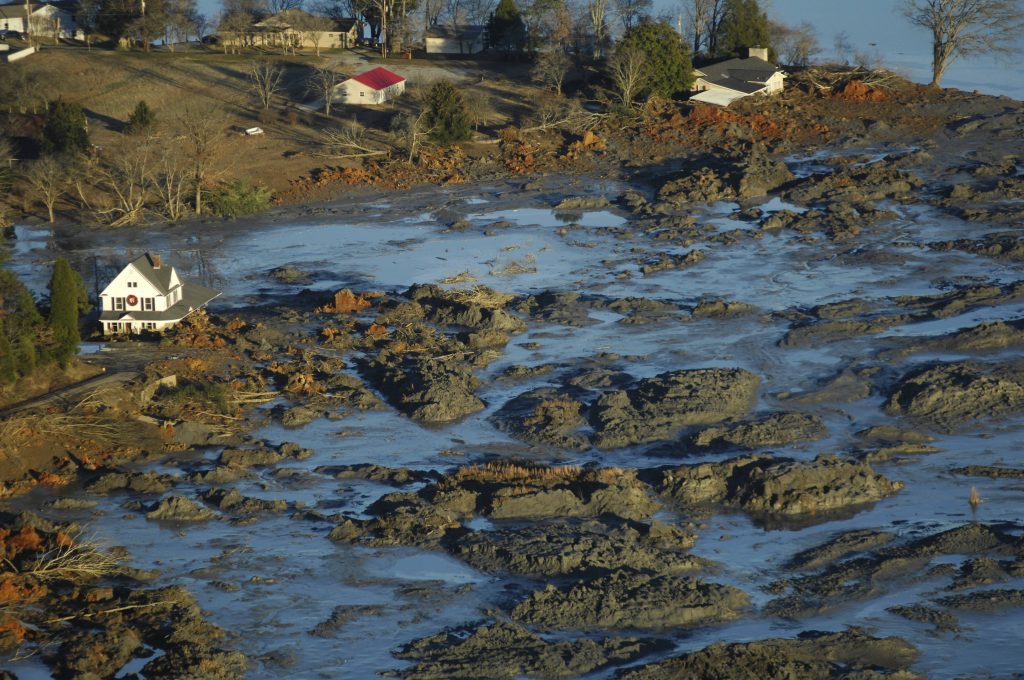
As we approach the third anniversary of the Tennessee Valley Authority coal ash disaster that spilled over a billion gallons of toxic sludge into the Emory River in Harriman, Tenn. and cost over $1 billion to clean up, it’s clear that we’re overdue for basic health and environmental protections from coal ash.

Coal ash slurry buried 300 acres when a coal ash impoundment failed at Tennessee Valley Authority's Kingston plant.

The U.S Environmental Protection Agency has the authority to control hazardous waste from “cradle-to-grave” under the Resource Conservation and Recovery Act. Since beginning the process for coal ash nearly three years ago, the agency has received over 450,000 comments asking for strong protection for coal ash waste.

The EPA’s Subtitle C plan would classify coal ash as “hazardous waste” and provide the strong protection the public demands. The agency’s other proposal, the weaker Subtitle D, would rank coal ash as “non-hazardous waste” but still grant some federal oversight. Rep. David McKinley’s (R-W.Va.) bill, H.R. 2273, takes Subtitle D, the lesser plan, and dramatically weakens it by removing basic federal safeguards. See this chart for a breakdown of proposed coal ash regulations.

H.R. 2273 would leave coal ash disposal standards even weaker than the federal rules that govern household waste. Supposedly, municipal solid waste rules provided the model for this legislation. But household waste standards are centered around protecting public health and the environment — this bill makes no mention of either.

Clearly, a lagoon of toxic slurry laden with metals such as arsenic, chromium, lead and mercury is different than an town dump. Yet H.R. 2273 doesn’t require states to inspect ponds in order to ensure structural stability, detect groundwater leaks, or discover other threats to public health and safety. Municipal waste facilities are bound by federal law to clean up or close dumps that contaminate groundwater, but this bill would let coal ash polluters get away without groundwater cleanup standards. Check out this fact sheet for more information about H.R. 2273′s dangerous shortfalls.

Read more
...


Speaking Truth to Power: Appalachian Women Travel to Delaware To Hold Massey Energy Accountable


Tuesday, September 20th, 2011 | Posted by Sandra Diaz


This summer, Appalachian Voices joined Free Speech for People and Rainforest Action Network to petition Delaware Attorney General Beau Biden to repeal Massey Energy’s corporate charter due to their gross disregard for Appalachian communities. Massey Energy, like many corporations, is legally chartered in Delaware. And though Alpha Resources bought Massey Energy earlier this year, Massey still exists as wholly-owned subsidiary.

Massey Energy has violated the Clean Water Water Act over 60,000 times, has been the biggest perpetrator of mountaintop removal coal mining and is directly responsible for the preventable deaths of 29 miners in the Upper Big Branch mine explosion in April of 2010, according an independent report commissioned by then- West Virginia Governor (now Senator) Joe Manchin.

Willa Mays, Appalachian Voices Executive Director and Lorelei Scarbro prepare to meet with Delaware Attorney General's office

Over 35,000 Americans have joined our call to action to hold Massey Energy accountable for the lives, mountains and waterways they have ruined. Robert F. Kennedy, Jr., also joined the campaign and on a tele-conference implored Attorney General Biden,

“…to be one of the few public officials … who is willing to stand up in this country, to corporate power, to say at some point, corporations do not have the power to dismantle our democracy and violate our laws, willfully and systematically.”

Full audio of tele-conference here:

On Friday, we took the campaign to Delaware. We met with the Attorney General’s office to deliver the petitions and to meet two strong Appalachian women who have been directly impacted by Massey’s various wrongdoings.  Betty Harrah is the sister of Steve “Smiley” Harrah, one of the 29 miners that died during the Upper Big Branch mine disaster.  Lorelei Scarbro has been an advocate of the Coal River Wind project, a campaign to halt Massey Energy from blasting away the top of Coal River Mountain, the last intact mountain in the Coal River Valley. She is the granddaughter, daughter, and widow of coal miners, and has family who currently work at the Upper Big Branch mine.

We then hosted a screening of The Last Mountain, the film that shows the massive destruction that Massey Energy has imposed upon the people of the Coal River Valley and beyond. After the film, we held a forum with Betty Harrah, Lorelei Scarbro, Clara Bingham, producer of The Last Mountain and representatives from Appalachian Voices and Free Speech for People.

Special thanks to Delaware Pacem in Terris, a peace group based in Wilmington and Sarah Culver, founding member of Rising Tide Delaware for help in getting the word about the campaign and the screening. Below is Sarah’s reaction to the evening.

Written by Sarah Culver:
The auditorium in the Delaware Art Museum was standing-room-only, and an audience ranging from high school freshmen to WWII veterans witnessed the utter horror and senseless devastation perpetrated by Massey Energy. The film was as powerful as it was grave, and I could tell from the continued silence after the film had ended and the lights were brought up that each person in that auditorium was still trying to process what they had just seen.

After the screening, an intense public forum was held to discuss the campaign to revoke Massey’s corporate charter.

Since Massey Energy’s corporate charter is issued right here in Delaware, and it is within our Attorney General Beau Biden’s right to revoke that charter as a consequence of their unimaginable number of safety and environmental violations, their reckless abandon of air and water safety standards, and, of course, Massey’s blatant, and unyielding disregard for the culture and communities of Appalachia.

To revoke Massey’s privilege to operate as a company would be a massive step towards the fight to save Coal River Mountain, to educate more people about mountaintop removal, to empower and defend union miners, towards a sustainable economy in Appalachia. Finally, it would bring a sense of closure and justice to the heartbroken people like Betty Harrah and the scores of others who are still struggling to get on, day to day, knowing that it wasn’t an ‘act of God’ but the utter negligence  of Massey Energy that took the lives of their husbands, brothers, sons, and fathers at Upper Big Branch on that senseless day in April 2010.

To hold Massey accountable would be nothing short of the beginning of an ethical and environmental revolution in this country, and the hills and hollows of Appalachia might be able to begin that long, slow road of recovery.

The good news is that you can help. Yes, you. Sign the petition to Delaware Attorney General Beau Biden today and ask him to investigate and revoke Massey Energy’s charter. As Lorelei asked so bluntly during the forum – “If not now, when?”

If the wonderful Appalachians who joined us on Friday night take nothing else back with them from their long trip to Delaware, I hope that it’s this: They have advocates here.

This message is for Betty and Lorelei: We know what’s happening, and we’re fighting for you. We marched with you on Blair Mountain in June, and we’re marching in solidarity with you still. Your sacrifices have not been in vain, and we have been so deeply honored and humbled by your trip over to see us.

Please sign the petition today.

Related Media:

Blair Mountain Community Center and Museum Opens


Wednesday, September 7th, 2011 | Posted by Jeff Deal


A note from Chuck Keeney, Secretary of the Friends of Blair Mountain:

Since the “March on Blair Mountain: Appalachia is Rising” event, some coal industry executives have claimed that if our preservation efforts succeed and Blair Mountain is spared from mountaintop removal, the “fabric of the community” will be destroyed. We at Friends of Blair Mountain disagree and are putting our words into action.

On September 4, we held the grand opening of the Blair Mountain Community Center and Museum. Located two miles north of the historic battlefield, the facility will serve as a catalyst for community revitalization, education and historic preservation. In addition to museum exhibits, we plan to offer a coal heritage archive for research, a library of relevant books, music collection and films. There will be space for musical performances, activist gatherings, workshops, history tours and some good ole’ Appalachian gatherings of fellowship and fun.

The Blair Mountain Community Center and Museum is a place to display the pride of Appalachian culture and the depth of coalfield heritage while building a healthier, cleaner and more economically diverse Appalachia.

For more information or to learn about how you can help our grassroots efforts, go to www.friendsofblairmountain.org or call our Community Center and Museum staff at (304) 369-9800

You can also read the press release here.

Facebook Twitter FlickR YouTube
Front Porch Bloggers Tags
Show/Hide list (-)

15th Anniversary 112th Congress 113th Congress A & G A & G Coal Corporation Acid Mine Drainage Across Appalachia Agriculture Air Pollution air quality Alabama ALEC Alexadra Cousteau Alliance for Appalachia Alpha Natural Resources American Chestnut american dream appalachia Appalachian Appalachian Culture Appalachian history Appalachian Identity Appalachian Legislators Appalachian politics Appalachian Regional Commission Appalachian State University Appalachian Streams Appalachian Transition Appalachian Treasures Appalachian Voices Appalachian Voices board of directors Appalachian Water Watch Appalachia Restoration Act Appalachia Water Watch Appalshop arch coal Arsenic Art Asheville Athens County Avian wildlife Bank of America bark Batson Creek Battle of Blair Mountain Bearwallow Mountain Beyond Coal campaign biodiversity black bears blair mountain blood mountain Blue Ridge Commons: Environmental Activism and Forest History in North Carolina Blue Ridge Escarpment Book Club Boone buffalo creek cancer carbon capture Carolina Mountain Land Conservancy Center for Appalachian Studies Central Appalachia Charlottesville Chattanooga Chimney Rock State Park China citizens united Clean Air Clean Air Act clean energy Clean Water Clean Water Act Clean Water Act 40th Anniversary Clean Water Protection Act Climate Climate Change climate change denial Coal Coal Ash coal ash health effects coal ash ponds coal decline coal electricity coal employment Coal generation Coal mining coal plants coal production Coal Report Coal Waste conductivity Congress Connestee Falls constellation Creation Care Cross-State Air Pollution Rule Cumberland Plateau Cypress creek d.c. Daniel Martin Moore David Brewer David McKinley Democracy dnc Documentaries Don Blankenship Downstream Strategies duke Duke Energy DuPont State Recreation Forest Earth Day EarthJustice Earth Ministry Eastern Band of Cherokee Economic Transition Economy editorial Education efficiency electricity Electric Utilities Elk Knob State Park Emory River Endangered species end mountaintop removal energy Energy Efficiency Energy Information Administration Energy Saving Energy Savings Environment environmental education Environmental Justice environmental literacy Environmental Protection Agency EPA Expedition Blue Planet extinction FArCES of Coal FERC Fish Kill Florence Nature Preserve fly ash Folktales Fontana Lake Foothills Trail forest Forestry Fox Squirrels fracking Frasure Creek Frasure Creek Mining and International Coal Group friends of smokies Gallatin game species gas gas emissions Georgia Georgia Power ghost stories globalization Golden-winged warbler Google Earth Gov. Steve Beshear grandfather mountain Great Smoky Mountains National Park green green-collar green building green economy green energy future Greenhouse Gases Greenpeace Green River Preserve Hal Rogers Hampton Roads Hampton Roads Coal Plant HB 710 headquarters Health Heifer USA Hickory Nut Gorge Hidden Treasures High Falls hiking Hiking the Highlands hiking trails home improvement and remodeling Hooker Falls houses Hunting hydraulic fracking hydroelectricity ICG iLoveMountains Inside Appalachian Voices Interfaith Power & Light Interior Department Ison Rock Ridge Jay Rockefeller Jeff Goodell Jeff Goodell Jr. Jim Justice Jim Rogers jobs Joe Manchin Joseph Pizarchik Jr. Kathryn Newfont Kathy Mattea Kens Rock Kentuckians for the Commonwealth Kentucky Kentucky Energy and Environment Cabinet Kentucky Litigation Kentucky Riverkeeper Kudzu kudzu bug land Land Conservation Land management land protection LEAF lobbying local farming Marcellus Shale Massey Energy Matt Wasson membership spotlight Mercury Mercury and Air Toxics Standard mercury and air toxic standards Michael Johnathon mine Mine Safety and Health Administration Mining Jobs Molly McGinn mountains Mountaintop Removal Mountaintop removal permits MSHA Mussels N.C. Politics Nally & Hamilton Nantahala National Forest National Mining Association National Resources Defense Council Natural Gas Naturalist's Notebook nature New River Nick Rahall North Carolina NRDC nuclear ODEC Office of Surface Mining offshore wind Ohio Operation Medicine Cabinet opportunities Outdoor Recreation Patriot Coal Pennsylvania Photography Pine Mountain Park Pisgah Forest Politics pollution Possum Jenkins Powder River Basin Prescribed burns President Obama progress Progress Energy Property Rights public lands re-zoning recycling recycling building materials Red Red White and Water Religion in the Environment Renewable Energy Renewable Portfolio Standards Rick Boucher Riverkeeper Rivers Robert F. Kennedy Same Sun Here scenic vistas Scenic Vistas Protection Act Science and Nature science education SELC Selenium selenium pollution Senate settlement sewanee coal seam shale gas Sharyn McCrumb Shelley Moore Capito Sierra Club Silver Slip sludge sludge safety project Solar Solar Energy Solar Homestead Project South Carolina South Cumberland Plateau Southern Appalachian Mountains Southern Appalachian Mountain Stewards Southern Environmental Law Center SouthWings spirituality Sportsman’s Heritage Act spruce pine state environmental policy Stone Mountain stop mountaintop removal Stream Buffer Zone Stream Protection Rule summer camps Sundance Power Systems surface mining Surface Mining Control and Reclamation Act Surry Surry Coal Plant sustainability sustainable agriculture sustainable alternatives sustainable building sustainable farming tax credits and incentives Tennes Tennessee Tennessee Scenic Vistas Protection Act Tennessee State legislature Tennessee Valley Authority The American Chestnut Foundation The American Legislative Exchange Council The Appalachian Voice the human cost The Voice This Green House Tom Cormons Tom Hansell Tom Kilgore TRAIN Act Transylvania County treasures Triple Falls TVA TVA Kingston coal ash spill U.S. Department of Energy U.S. Representatives from North Carolina U.S. Representatives from Tennessee U.S. Representatives from Virginia U.S. Representatives from West Virginia UMWA Uncle Falls United Mine Workers of America United Mountain Defense united states Upper Watuaga Riverkeeper uranium mining US Forest Service Viewpoint Virginia Virginia General Assembly Virginia ODEC virginia state parks Virginia Tech Wales War on Coal washington Washington DC Watauga Water Waterkeeper Waterkeeper Alliance Water Pollution Water quality weatherization Weed Patch Mountain Week in Washington West Virginia White Squirrel Hiking Challenge Wilderness Society Wildlife Williamson wind energy Wind Power wind turbine Wise County Wise Energy for Virginia Wise Energy for Virginia Coalition wvdep Youngs Mountain

Tags