Get Our RSS Feed!
Front Porch Blog


Appalachian Voices and Partners Challenge Kentucky’s Backroom Deal With Coal Company


Friday, May 17th, 2013 | Posted by Eric Chance


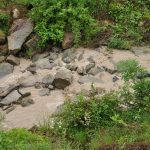
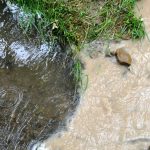
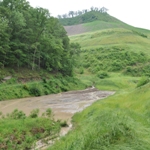
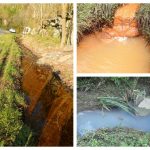
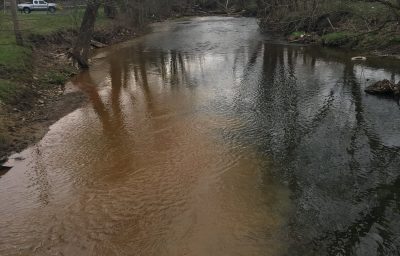
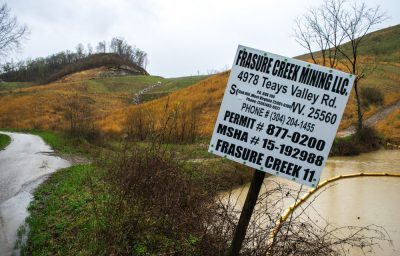
Watercolors by Frasure Creek. State inspector's photos show a variety of colors of water at Frasure Creek mines.

Yesterday, Appalachian Voices and our partner organizations filed a “petition for review”, essentially an appeal of a settlement between Frasure Creek Mining and the Kentucky Energy and Environment Cabinet. This settlement lets Frasure Creek off the hook for thousands of water quality violations over the past two years, while doing little to ensure that the company fixes its water quality problems.

Our challenge of this settlement focuses on the way in which it came about. But first, a bit of background.

We have a separate case that is ongoing against Frasure Creek for submitting false water monitoring data (entire reports were duplicated and only the dates were changed). After we uncovered this problem the company began turning in more accurate reports, which for the first time showed lots of pollution problems. We then filed a second suit against Frasure Creek for thousands of these pollution problems (which had been hidden by reporting problems before our first suit). Then the cabinet also filed a complaint for these pollution violations and more like them in state administrative court (a court run by the cabinet itself).

We intervened in that case and became full parties to it, but were then shut out of it completely. In fact the settlement was entered despite our previous objections, and there is no evidence that our objections were even considered. The cabinet and Frasure Creek negotiated a settlement completely without us. The law and common sense both dictate that an agreement is not valid unless all the parties involved agree to it, and that is the basis for our challenge of this settlement yesterday.

Read more
...


The Appalachian Citizens Enforcement Project


Thursday, May 16th, 2013 | Posted by Erin Savage


Visit www.ace-project.org to learn more about the Appalachian Citizens Enforcement Project and how you can help protect clean water rights.

The Appalachian Citizens Enforcement Project (ACE Project) is a new citizen water monitoring program being launched by The Alliance for Appalachia this summer. Appalachian Voices’ own Appalachian Water Watch team has been working with several Alliance partner organizations over the last two years to recruit and train volunteers to monitor and report water quality data in their area. Now our program is joining this greater water monitoring effort through partnerships in the ACE Project.

In 2011, Appalachian Water Watch launched community-based water testing in eastern Kentucky and southwestern Virginia. Through partnerships with Southern Appalachian Mountain Stewards and Kentuckians for the Commonwealth, we recruited over 50 water monitoring volunteers. Now, the ACE Project will expand water monitoring even farther, into Tennessee and West Virginia. Coal River Mountain Watch and United Mountain Defense have already submitted additional data from West Virginia and Tennessee, more than doubling the amount of data collected.

Read more
...


Kentucky’s Lab Certification- Is it strong enough?


Wednesday, May 1st, 2013 | Posted by Eric Chance


Yesterday, Appalachian Voices submitted public comments on a proposed wastewater lab certification program in Kentucky. To discharge polluted water, coal companies must receive a permit under the Clean Water Act. This permit that requires companies to test wastewater and report the data to ensure it falls within the limits of the permit. In Kentucky, there are currently no standards for labs that do this type of testing.

The proposed certification program is a direct result of the lawsuits for falsified water monitoring data we filed against three of the state’s largest coal mining companies. Our investigation revealed that many coal companies were repeatedly submitting the same data and knowingly leaving out reports of any violations of their permits. After we filed these lawsuits, the Kentucky Energy and Environment Cabinet inspected the labs being used for this monitoring and found that in many cases they were not even capable of correctly performing the required tests.

This graph shows some of the inaccurate data submitted by Frasure Creek Mining before our lawsuits lead them to start using a new lab. Click to enlarge.

We believe that enforcing standards on labs used by coal companies will help ensure that labs report accurate data, and that the regulations meant to protect water and those that depend on it from dangerous pollution are effectively enforced. This proposed rule will be a big step forward and we have applauded the cabinet for its efforts to fix these problems. However, there are several weaknesses in the rule that we hope are fixed before it is finalized.

All too often the cabinet has failed to live up to its obligations to protect the people and environment in Kentucky. That is why our comments suggest that discretionary duties given to the cabinet in this rule be made mandatory. Appalachian Voices will continue to work to require the state agencies to actually enforce these standards.

>>Click here to see our comments
>>Click here to read the proposed lab certification rule
>>Click here to read the draft lab manual

Help Protect Kentucky’s Fish from Toxic Selenium


Wednesday, February 27th, 2013 | Posted by Eric Chance


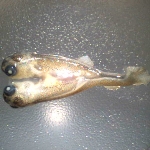
Two headed trout, a result of selenium pollution. Courtesy of USFWS.

The Kentucky Energy and Environment Cabinet is currently attempting to significantly weaken the state’s water quality standards for selenium.

Selenium is a pollutant common at some coal mines that deforms and kills aquatic life. It bioaccumulates, increasing in concentration as it moves up the food chain, affecting larger fish and aquatic birds. At higher levels, selenium is toxic to people. Humans can be exposed to selenium through the water they drink and the fish they eat. Long-term exposure can damage the liver, kidneys, nervous system, and circulatory system.

Selenium pollution is expensive to prevent and to treat. By loosening standards, the cabinet is trying to protect the bottom line of polluters at the expense of the health of the state’s waterways and those that depend on them.

To learn more about selenium and why it is a problem in Kentucky, click here to read our selenium fact sheet (PDF).

Public comments are being accepted through Friday, March 1. Please help protect Kentucky’s fish from the toxic effects of selenium. Take a minute to make your voice heard by submitting a comment.

Even The Daily Show has taken note of the problem of selenium pollution in our nation’s waterways. The clip focuses on pollution from phosphate mines in Idaho, but the similarities between what happened there and what is going on in Kentucky are striking.

Kentucky Attempts to loosen Selenium Standards, Fish Attempt to Leave the State


Friday, February 8th, 2013 | Posted by Eric Chance


Fish deformed by selenium pollution

The Kentucky Energy and Environment Cabinet is in the process of making the state’s water quality standard for selenium less stringent. Selenium is a metal that is especially toxic to fish, and is often released into streams through coal mining.

There will be a hearing before the Administrative Regulation Review Committee on Monday February 11, at 1 p.m. in Room 149 of the Capitol Annex, where, according to the Energy and Environment Cabinet website, the public “may” be able to speak out about this, but we still encourage concerned citizens to attend.

Selenium is a toxic nonmetal that is present in some coal and coal ash. Some of Kentucky’s mines release a lot of selenium because they are mining high-selenium coal seams, while others don’t release any.

Selenium is extremely toxic to fish in very low amounts because of its tendency to bioaccumulate. Selenium builds up in small fish and macro-invertebrates, and it accumulates even more in the fish that eat them. Toxic effects of selenium in fish include reproductive problems, deformities, damage to gills and organs, and death. The most obvious deformities are strangely curved spines, and “pop eye” — a buildup of fluid behind the eyes, causing them to bulge out.

Read more
...


Appalachain Voices and Partners Object to Backroom Deal With Kentucky Coal Company


Monday, February 4th, 2013 | Posted by Eric Chance


Frasure Creek owner, and billionaire, Ravi Ruia's yacht. Note the matching helicopter! Frasure Creek Mining is apparently on the verge of bankruptcy, but it's owners seem to be doing just fine. Click the image to learn more about the boat.

A coalition of citizens’ groups including Appalachian Voices filed objections to a proposed settlement between Kentucky’s Energy and Environment Cabinet and one of the state’s largest coal mining companies, Frasure Creek Mining. The agreement would legally resolve over a thousand water pollution violations from 2011 and 2012 at all of Frasure Creek’s mines across Eastern Kentucky, but the agreement will not fix the pollution problems.

Despite the fact that we are full parties to this enforcement action, this agreement was crafted entirely behind closed doors without us. Over and over again the cabinet has made every effort to exclude us and aid polluters. One of our objections to this settlement is that it has violated our right to due process since our names are on this agreement yet we had no say in it whatsoever.

Some of Frasure Creek's false conductivity values

Even more alarming, we expect that if this agreement is entered the cabinet will likely try to argue that this makes another ongoing case that we are involved in moot. That case is primarily based on blatantly false water monitoring reports submitted by Frasure Creek. Prior to that legal action, Frasure never admitted having pollution problems like the ones at issue in this case. It was not until they came under increased scrutiny, following our initial court filing, that they began reporting more truthful water monitoring data, uncovering the pollution violations at issue in this settlement.

Read more
...


Kentucky Governor Under Suit for Pro-Coal Corruption


Friday, October 19th, 2012 | Posted by Eric Chance


Kentucky Governor Steve Beshear

Former Mine Permits director Ron Mills claims he was fired for failing to sign illegal coal mining permits.

Mills was a political appointee of Kentucky Governor Steve Beshear, whose official website states:

As governor, Beshear has helped restore public trust by creating a culture of integrity in state government that has included rooting out cronyism and implementing stronger ethics standards.

Click below to read the recent Lexington Herald Leader stories:
>>Trial delayed again in case that probes coal’s influence on Beshear
>>Beshear trying to settle lawsuit brought by former mine permits director

Landmark Settlement Proposed in Kentucky Water Pollution Case


Friday, October 5th, 2012 | Posted by Eric Chance


Appalachian Voices, along with a coalition of citizens’ groups, has reached a historic agreement with International Coal Group, Inc. (ICG), and the Kentucky Energy and Environment Cabinet over years of false reporting and water pollution violations in Eastern Kentucky and a failure by the state to enforce the Clean Water Act.

We are very glad to achieve this settlement which will help clean up pollution in streams throughout the coal-impacted region, and we are proud to have worked with our partners in this important case that has already yielded changes in the coal industry and state regulatory agencies. The agreement was filed today in Franklin County Circuit Court and needs to be approved by the judge before taking effect.

Read our press release to find out more about the settlement.

In 2010, we uncovered dozens of pollution monitoring reports submitted by ICG and Frasure Creek Mining to the cabinet that were clearly false. Our analysis showed that some reports included all the same data as previous reports, but the dates had been changed. In other cases, there were multiple and contradictory reports for the same discharge point. Not only were the reports inaccurate, they were masking major pollution problems, as can be seen in the graphs below.

ICG Knott Conductivity

Read more
...


Rivers don’t have a pricetag, so how do we protect what they’re worth?


Thursday, August 16th, 2012 | Posted by Kara Dodson


“After Bonny Blue broke loose the streams been dead…”

“No fishin’, kids can’t play, smells bad… I wouldn’t put a toe in that creek.”

“A lot of people drink tap, but I won’t, I don’t trust it.”

The first visit to St. Charles was alarming, and in many ways familiar. We’ve all read of acid mine drainage or fish kills below mine impoundment breaks. But how many of us have lived with the aftermath, day in and day out? The St. Charles creek receives waste from two massive underground mines, their associated processing plants, and slurry impoundments. Now, older folks long for the days before the mines when you could fish, swim, drink straight from the creek.

Lee County, Va. isn’t heavily mined, unlike Wise County which is right next door. The communities of St. Charles and Keokee are the exceptions in Lee County. The tucked away towns were always comforting when I visited; driving through Virginia backroads over mountains and around tight switchbacks is almost meditative. Despite the lull of summer’s heat and the drive’s beauty I would always be heading to another murky pond, orange seep or dead stream below burdensome surface mines. In St. Charles, I was visiting folks to hear more about the two 1996 slurry impoundment spills and see if I could help by testing the water. After a few hours of stories and a couple of monitoring trips it’s plain to see that coal inevitably hurts those living downstream.

Arch Coal owns the Bonny Blue Mine and Lone Mountain Mine, both of which are a couple miles upstream from St. Charles. As an intern with the Appalachian Water Watch program my main job was to test water quality below mines and train locals how to monitor mining-affected streams. I measured conductivity, temperature, pH and total dissolved solids using our program’s water quality probe. Conductivity and pH are the two most important measurements; both can indicate poor water quality and prompt further testing. For example, conductivity over 500 uS/cm (micro-Siemens per centimeter) can be detrimental to aquatic life and may violate the Clean Water Act’s narrative water quality criteria. Water pH below 6.0 or above 9.0 can’t support aquatic life and is unfit to consume.

Read more
...


Taking Another Coal Company to Court Over Clean Water Act Violations


Thursday, August 2nd, 2012 | Posted by Erin Savage


Local creeks can receive pollution from underground seeps and old sediment ponds long after mining activity has ended. This creek is orange due in part to drainage from several sediment ponds.

On Monday, Appalachian Voices, Sierra Club, and Southern Appalachian Mountain Stewards, represented by Appalachian Mountain Advocates, filed a lawsuit against Penn Virginia Resource Partners for violations of the Clean Water Act (CWA). Unlike other CWA cases filed by Appalachian Voices and its partners, this case addresses water pollution that still exists on former surface mine sites, rather than on active sites. Penn Virginia is an oil and gas company which operates in multiple states across the country. The company owns over 5,500 acres of land in Wise County, Virginia, where the CWA violations in this case are located. In addition to drilling for natural gas, Penn Virginia leases its land to coal mine operators.

This case is an important step toward addressing water pollution that exists after mines are closed down. Too often, abandoned mine land and even reclaimed land that has been released from financial bond continues to release pollutants into the watersheds in which they are located. These sites are often even less well monitored than active surface mines, if they are monitored at all. We believe companies should be responsible for the environmental degradation their resource extraction continues to cause even when production has ended.

To learn more about this case, see the press release.

To learn more about Appalachian Voices’ other Clean Water Act cases, visit our Appalachian Water Watch legal page.

Community Organizing & Water Testing Training


Thursday, July 19th, 2012 | Posted by Pallavi Podapati


Kentuckians for the Commonwealth is hosting an Organizing and Water Testing Training in Whitesburg, KY. This will be a hands-on training about ways to use the tools of community organizing and citizen water testing to protect our water and health. Conductivity meters will be available at the training for use. No prior experience is necessary. We encourage volunteers to invite friends to the training and for later testing to build community ownership.

When: Saturday July 28th, from 10:30 AM – 4:30 PM
Where: Ermine Senior Citizen’s Center, 156 Main St. Whitesburg, KY
If you plan to attend: Please contact Lisa Abbott at (859) 986-1277 or lisa@kftc.org; we want to be sure we have enough equipment for everyone.
Lunch: We will provide soup beans, cornbread, drinks, and snacks, but please feel free to bring another dish to share with everyone.

We will start off the morning by reviewing some principles of organizing and how this can be incorporated with water testing. In this first training we will be learning how to use basic conductivity meters and we will get an understanding of what conductivity is and why is it important. We will also be thinking through and developing skills to involve local communities in water testing, and understanding the implications and uses of the results.

Participants will also learn how to post their test results in an on-line public database, Appalachian Water Watch. This database provides an interactive map of test results, as well as other useful resources for citizens.

Appalachian Voices has been working with KFTC, Southern Appalachian Mountain Stewards (SAMS), and the Sierra Club since the spring of 2011 to collect stream and river water quality data throughout Eastern Kentucky and Southwestern Virginia. These data provide an overview of baseline water quality, as well as indications of where industries may be polluting public water.

If you are interested in learning more about this program, please email aww-admin@appalachianwaterwatch.org or erin@appvoices.org

KY Supreme Court Rules in Favor of Citizens and Water


Friday, April 27th, 2012 | Posted by Eric Chance


Yesterday the Kentucky State Supreme Court ruled in favor of Appalachian Voices and our partners KFTC, Waterkeeper and the Kentucky Riverkeeper. The ruling upheld lower court rulings allowing us to intervene in a lawsuit between Frasure Creek Mining and the Kentucky Energy and Environment Cabinet.

That case was brought about in October 2010 when we filed a Notice of Intent to Sue against Frasure Creek Mining, and International Coal Group (Now an Arch Coal subsidiary) for 20,000 violations of the Clean Water Act with potential penalties of over $700 million. The bulk of these violations relate to false and potentially fraudulent reporting of water pollution levels. Under the Clean Water Act companies have limits on the amount of pollution they are allowed to release, and they are required to monitor their pollution to make sure they meet these limits.

In an effort to keep us from being able to bring a case in federal court, the coal companies reached settlements with the Kentucky Energy and Environment Cabinet, but those settlements needed to be approved by a state court. The settlements amounted to little more than a slap on the wrist; they have minimal fines and no meaningful measures to ensure that the same problems will not continue. Through the citizen suit provision of the Clean Water Act, citizen are allowed to participate in legal actions to protect public waters. Using this provision, we intervened in the state court case in order to argue that the state’s settlement was not fair, adequate and in the public interest.

Read more
...


Kentucky Surface Water: The Good, the Bad, and the Ugly


Thursday, March 22nd, 2012 | Posted by Erin Savage


Depending on what you have heard about eastern Kentucky, or your own experiences there, you may have different impressions of Appalachian streams around the area. Some may envision picturesque creeks running through green valleys, while others may think of bright orange “streams” running over rip-rock.

Unfortunately, bright orange streams are commonplace in eastern Kentucky. The color is indicative of acid mine drainage, which is characterized by the oxidation of sulfide metals — in Appalachia, the compound is usually iron (II) disulfide, also known as pyrite. Fortunately not all streams in eastern Kentucky are contaminated from coal mining; however, if we do not address the main source of surface water contamination in the area — coal mining — in a few years, there may not be clean streams to protect. We must find better ways to address existing acid mine drainage and other water contamination in the area.

Photo credit: KFTC

Last week, I traveled around eastern Kentucky to meet with some of the volunteers for Appalachian Water Watch, a program created in the spring of 2011 to train and equip coal-impacted citizens to test surface water throughout their community. Through surface water testing around coal mines, citizens become better informed about threats to their water and their health, and are empowered to address water pollution issues.

My first stop was in Benham, Ky., to meet with several members of Kentuckians for the Commonwealth who live in the area. Many of them were born in the area, and several have worked as coal miners. They have all worked for many years to protect their communities against threats related to surface mining. While there has been some historical underground mining around Benham and Lynch, the immediate area is currently free of surface mines.

The result of this somewhat unique circumstance in eastern Kentucky is that rivers around Benham and Lynch have unusually high water quality, allowing the two towns to use the local rivers for municipal water. The city of Lynch receives its water from a reservoir supplied by Gap Branch and Looney Creek watersheds, which requires minimal treatment costs. The city of Benham receives its water from Kellioka coal seam to the south of Looney Creek. This source provides economic opportunities through the proposal of a water bottling operation. The water sources for both cities are all located immediately downstream of two proposed surface mines on Looney Ridge, making city-wide water contamination from future mining activities a very real threat.

Read more
...


Nally & Hamilton Case Continues in State Court


Friday, December 9th, 2011 | Posted by Eric Chance


Yesterday Appalachian Voices along with our partners Kentucky Riverkeeper, Kentuckians For The Commonwealth, and Waterkeeper Alliance challenged the recent settlement between Nally & Hamilton and the Kentucky Energy and Environment Cabinet in state court.

Click here to see the press release with more information on this newest development.

Click here to see the how the case has developed.

Click here to view the state court petition.

Several Kentucky news outlets covered this development. Click the links below to see the news articles.
Ronnie Ellis for the Daily Independent
Erica Peterson for WFPL Public Radio
Bill Estep and Beth Musgrave for the Lexington Herald-Leader

Kentucky Energy and Environment Cabinet cuts deal with Nally and Hamilton for Water Pollution Violations


Wednesday, November 23rd, 2011 | Posted by Eric Chance


Last week the Kentucky Energy and Environment Cabinet entered a settlement with Nally and Hamilton Enterprises to resolve tens of thousands of violations of the Clean Water Act. The pending agreed order, originally submitted in September, was signed by the Cabinet Secretary Len Peters, now making it official.

Nally and Hamilton is one of the largest producers of Mountain Top removal Coal in Kentucky. They are also being sued by a number of citizens over flooding caused by one of their mines, which lead to a great deal of property damage and killed two people.

Read more
...


Higher Fines For Big Coal, More Secrecy From The Kentucky Energy And Environment Cabinet


Wednesday, September 21st, 2011 | Posted by Erin Savage


On September 14th, a conference was held with Hearing Officer Blanton in the Office of Administrative Hearing case brought by the Kentucky Energy and Environment Cabinet against Nally & Hamilton. The conference determined whether Appalachian Voices, Kentuckians for the Commonwealth, Kentucky Riverkeeper, and Waterkeeper Alliance, represented by Natural Resources Defense Council attorneys, may continue with legal proceedings as intervenors in the case. Unfortunately for Appalachian Voices and the citizens of Kentucky, the results of the hearing will allow the Cabinet to continue making deals with Nally & Hamilton behind closed doors.

This case is the Cabinet’s response to the Notice of Intent to sue Nally & Hamilton for 12,000 violations of the Clean Water Act, filed in March 2011 by Appalachian Voices and its partners. To address the violations identified by Appalachian Voices, the Cabinet settled with Nally & Hamilton for $507,000 in fines, topping the previous record-setting fines issued in Appalachian Voices’ other on-going cases against big coal in which Frasure Creek and ICG coal companies were fined $310,000 and $350,000, respectively.

Though these fines represent a great step toward holding coal companies accountable for the pollution they create, the fines are still insufficient. Under Kentucky law, Nally & Hamilton could be fined as much as $300 million for the 12,000 violations. The recognition that the Cabinet consistently does not adequately enforce the law is one reason Appalachian Voices and its partners stepped in as intervenors in the Cabinet’s case. Once the Cabinet and Nally & Hamilton proposed a token settlement in the case they then filed a motion for a continuance. In the conference, the Hearing Officer granted the motion for continuance, based on his determination that he did not have authority to require more discovery in our case.

Those of you without a legal degree are probably wondering what all of this means. I’ll do my best to explain – in short, the Cabinet continues to shield the coal companies, without adequate prosecution. The continuance effectively halts legal proceedings – in this case, it halts discovery, or our ability to request further documentation and other evidence from Nally & Hamilton and the Cabinet, which would likely strengthen and clarify our case. We will still be allowed to submit comments on the Agreed Order between the Cabinet and Nally & Hamilton before the order is sent to the Cabinet Secretary for review.

Besides filing the motion for continuance, the Cabinet has attempted to undermine our involvement in other ways as well. The Cabinet failed to respond to any of our discovery requests, despite the responses being due in August. Because of this, we have been unable to determine the facts the Cabinet considered when entering into the settlement with Nally & Hamilton. We do not know how fines were determined, what violations were identified, or how thorough an investigation was conducted.

The Clean Water Act violations that were identified indicate that pollution is being under reported and inaccurately reported. This improper reporting harms Kentucky’s waterways and the health of Kentucky’s citizens. The Cabinet failed to identify most of these violations until they were uncovered by Appalachian Voices. Despite the Hearing Officer’s request to the Cabinet and Nally that they include Appalachian Voices and its partners in the settlement negotiations, the Cabinet completed a closed-door settlement with Nally & Hamilton and is attempting to prevent further action by us. The current settlement provides a relatively low monetary penalty, does not provide for true stipulated penalties for future violations, ignores the potential of intentional fraud, and claims to resolve Nally’s liability for all previous violations of “the same type” despite there being no evidence the Cabinet bothered to identify different types of violations.

It is obvious the Cabinet is taking the side of big coal in this case. The settlement clearly does not provide for effective, ongoing protection of the people of Kentucky from corporate coal abuses. Kentucky citizens deserve better than this from their state officials.

Excel Mining Addresses Pike County Residents’ Flaming Well With A Solution Other Than Just Drilling More Contaminated Wells


Wednesday, September 21st, 2011 | Posted by Erin Savage


In the end of July, Appalachian Voices was contacted by Ted Withrow of Kentuckians for the Commonwealth, who reported a family in rural Pike County, Kentucky, with possible methane contamination of their drinking water well, as indicated by flames shooting more than a foot out of the top of the well. The fire had been reported to local media by friends of the family. The contamination was believed to be the result of underground mining activities by the nearby Excel Number 2 Mine. As we looked into this case further to see how we might help, we realized the problem was more wide-spread and long-term than we originally thought.

Appalachian Voices initially provided heavy metal testing for four families – the Howard family, whose well was on fire, and three nearby families. Next, through the generous donation of 30,000 bottles of water from Keeper Springs Natural Spring Water and Nestle Pure Life Purified Water, KFTC and Appalachian Voices were able to provide safe drinking water to each affected family – 13 families in total.

Upon delivery of the water, we spoke with multiple affected families and collected additional water samples for volatile organic compound testing. We learned that some families had already been purchasing bottled drinking water for 8 years. In a country where we often assume our access to clean drinking water is a right, it was astonishing to realize that this right had been stripped from these families for so long. The families reported recent health problems, including hair loss, skin rashes, and burning sensations while showering. Several families also reported sounds of explosions and rocks falling underneath their homes. Pontiki Coal (an associate of Excel Mining, both subsidiaries of Alliance Resource Partners) reported operating an underground coal mine beneath these homes between 1985 and 1987. We heard anecdotal reports from the residents of recent underground slurry injection, a common use for abandoned underground mines, in the immediate area. The site of the coal waste injection was allegedly far from the road and difficult to relocate, as it may have been covered with brush by heavy machinery. Appalachian Voices is continuing to investigate the possibility of slurry injection in the area, though potentially illegal, unpermitted injection would be difficult to verify after the fact.

We learned of an ongoing history between the families and Pontiki coal. The Howard family had two wells drilled by Pontiki Coal. The first well was determined to be unusable and eventually exploded, burning down the pump house on May 1, 2011. Pontiki Coal had drilled new wells for at least two other families, but these wells were also determined to be unusable by the families. Following the well explosion, Pontiki Coal wanted to cap the burning well, but the family initially refused, fearing this would increase the chance of a methane explosion at their home. The well was tested for methane by Pike County Emergency Management, Mine Safety and Health Administration (MSHA), Kentucky Division of Mine Reclamation and Enforcement (DMRE), and Pontiki Coal on May 3rd and May 10th, 2011, with results ranging widely, from 9.0% to 92.2% methane. The Kentucky Energy and Environment Cabinet tested the composition of the gas emitting from the well and determined it to be similar to that of coal bed methane, a form of natural gas from coal beds, indicating that the gas was likely caused by mining activity. The coal seam in this area is also known for high methane concentrations.

Of the four wells tested for heavy metals by Appalachian Voices and KFTC, two came back with elevated levels of iron and manganese – the levels were above the EPA secondary maximum contaminant levels for drinking water. Not surprisingly, manganese and iron are two metals commonly associated with water pollution from coal mining. The Kentucky Energy and Environment Cabinet also inspected and tested several wells. The Cabinet declared the burning well “mine impacted” due to the methane presence. The Cabinet’s inspection also indicated elevated iron and manganese levels in the Howard’s well, but sulfate levels below those commonly found in mine impacted water. The Cabinet tested the wells of at least three other families for heavy metals. Though they found elevated levels of iron and manganese at a second home and elevated manganese levels at a third home, neither of these wells were declared mine impacted, apparently because the wells contained neither methane nor sufficiently high sulfate levels, nor were they on fire.

Despite only one well being declared mine impacted, it appears all families will soon receive a permanent water solution. With assistance from Excel Mining, the families should be able to connect to Martin County water lines. Though the families live in Pike County, the Martin County lines are closer to the homes – approximately 1.1 miles. Martin County Judge Executive Kelly Callihan met with Excel Mining representatives, persuading the company to pay for the water line extension and water meters. The families will have to pay for lines from the main meter to their homes. Shane Watts, General Manager for Excel, said, “We’re just trying to be good neighbors.” While we thank Excel Mining for addressing this issue, we are disappointed it took intense media coverage of the flaming well and the water donation before they found a permanent solution. According to Ronnie Ellis’s story, neither the families nor the Department of Natural Resources have received any notice of the pending water line extension or funding for the project. Appalachian Voices will continue to monitor this situation to be sure that a permanent solution is implemented. In the words of affected resident, Denise Howard, “When I see it running through my faucets, I’ll believe it.”

Big Coal’s Watergate Hearing Wrap Up


Wednesday, September 7th, 2011 | Posted by Erin Savage


The hearing against the Kentucky Energy and Environment Cabinet, and ICG and Frasure Creek coal companies wrapped up last Friday. Appalachian Voices, Kentuckians for the Commonwealth, Kentucky Riverkeeper, and Waterkeeper Alliance intervened in the settlement between the Cabinet and the coal companies, arguing the settlement was not fair, reasonable or in the public interest. Appalachian Voices has identified more than 20,000 Clean Water Act (CWA) violations committed by the two companies between 2008 and 2009. Additional violations have been identified in 2011, but are the subject of a separate Notice of Intent to sue. Under the CWA, the violations could result in fines of more than $740 million dollars. The Cabinet originally fined the two companies a total of $1.25 million, but negotiated a consent judgment of $660,000 — $310,000 for Frasure Creek and $350,000 for ICG. These fines represent less than 1% of the total possible fines.

Wednesday, the first day of the hearing, began with opening statements, in which our attorney, Mary Cromer, argued the Cabinet’s fines were insufficient and did not account for the financial benefit gained by the companies through inaccurate reporting. The types of violations identified by Appalachian Voices included repeating data in reports from different quarters, and exceeding pollution limits. State employees, Jeff Cummins, Assistant Director of the Division of Environmental Protection, and R. Bruce Scott, Commissioner of Environmental Protection, were questioned to determine how violations were identified and counted, as well as how fines were assessed. Cabinet attorneys objected to many of the questions regarding the Cabinet’s deliberative process. Judge Shepherd, a former Cabinet Secretary, rejected most of the objections, stating that an understanding of the process was necessary to determine whether fines were adequate, and would probably help the Cabinet’s case.

The Cabinet employees reported that they did not know the total number of pollution discharges held between the two coal companies. Mark Cleland, Environmental Control Manager, attributed some of the violations to transcription and administrative errors. Recognizing the implications of inaccurate discharge monitoring reports (DMRs), Judge Shepherd later asked Scott, without accurate data, “how will the cabinet ever determine if there is a water pollution violation?”

On Thursday, the opposing counsel requested summary judgment from Judge Shepherd, but the judge declined. Tom Gabbard, manager of the Cabinet’s Compliance and Technical Assistance branch, was called as a witness. Gabbard testified to inspections of three sediment ponds. Gabbard reported high conductivity readings, as well as red-orange precipitate, indicative of acid-mine drainage, extending as far as 300 feet down a stream exiting one of the ponds. While the Cabinet’s settlement does require corrective action plans, Gabbard stated that, besides remedial action, the plans do not require anything further than what is already required under existing law.

Eric Chance, of Appalachian Voices, testified that he calculated $31,000 per month saved by Frasure Creek and $10,000 saved by ICG through the use of non-certified, and therefore less expensive, labs. Patrick Garrity, the state’s Drinking Water Laboratory Certification Officer, testified the previous day to the inadequacies of one of the labs used by the coal companies. He cited a lack of record keeping, failure to use proper quality control procedures, and disorganized equipment in the lab. The opposing counsel challenged Chance’s data interpretation. When asked by Frasure Creek attorney Jack Bender if he had included the instances of repeating data in his graphs, he replied, “It was not our priority to correct your DMRs.”

In the final day of the hearing, Bruce Scott was called as a witness for a second time, this time in defense of the Cabinet. He testified to the Cabinet’s efforts in addressing the violations of ICG and Frasure Creek, but claimed that the suit was interfering in the ability of the Cabinet to pursue other environmental problems within the state. Nevertheless, Scott also admitted that Appalachian Voices identified violations that had not been noticed by the Cabinet. Furthermore, the Cabinet has only investigated and fined the three coal companies original identified by Appalachian Voices as having violated the CWA. The coal companies each called a witness to assert that the problems were merely a result of substandard lab work and that the companies had quit using the offending lab, S & S Monitoring. ICG has recently hired a new company, East Kentucky Water Monitoring, to collect water samples. The company was founded and operated by the same employees who previously worked at S & S Monitoring.

At the end of the hearing, all parties agreed to submit post-trial findings and conclusions within 30 days, in place of oral closing statements. Judge Shepherd strongly urged all parties to attempt to settle through a second round of mediation. Judge Shepherd stated that he foresees “difficult and novel issues that are likely to keep the problem in litigation for a long time.”

Appalachian Voices is willing to consider a second round of mediation, provided the other parties come to the table in good faith. Any settlement reached must assure that these companies stop polluting Kentucky’s waterways. Barring successful mediation, we look forward to continuing with this precedent-setting litigation. Setting new legal precedents in clean water act litigation is something that makes Waterkeepers very happy. Regardless of the future outcome, we have already succeeded in achieving record-setting Clean Water Act fines against coal companies in Kentucky and changing the way they have to do environmental compliance.

Additional coverage of the hearing can be found in the following news articles:

Wall Street Journal
Courier-Journal
The Lexington Herald-Leader
The Independent: article 1, article 2, article 3

First Day Wrap-up of Kentucky Coal Trials


Thursday, September 1st, 2011 | Posted by Erin Savage


The first day of the hearing against the Kentucky Energy and Environment Cabinet and ICG and Frasure mining companies concluded Wednesday evening. Appalachian Voices, Kentucky Riverkeeper, Kentuckians for the Commonwealth and Waterkeeper Alliance intend to show that the penalties assessed by the Cabinet for the two coal companies are not sufficient to address the severity of the Clean Water Act violations committed by the two companies. If the judge rules in our favor, we will be able to pursue further legal action against both ICG and Frasure Creek for their violations.

Over the course of the day, our attorneys built a case that demonstrated the violations found were not merely administrative violations, but substantive pollution violations that indicated clear disregard for the law. Patrick Garrity, of the Kentucky Department for Environmental Protection, testified to the poor condition of the lab used for many of the coal companies’ discharge monitoring reports, as well as the large discrepancies between testing results from the lab and the state during split sampling. The Cabinet was reluctant to disclose details of the means by which the number of violations and fine amounts were determined. Judge Shepherd acknowledged the need for “protection of the Cabinet’s deliberative process,” but explained that understanding this detail would allow the court to determine the appropriateness of the Cabinet’s actions against the coal companies. Throughout the proceedings, objections came quickly from the opposing counsel. For the most part, these objections were overruled or noted, rather than sustained. We were not allowed to call the Energy and Environment Cabinet Secretary, Len Peters, as a witness, as he was not directly involved with investigation of the companies. We were allowed to ask questions about his op-ed article addressing reasons for the Cabinet’s enforcement failures. You can read more on this in Ronnie Ellis’s story here.

Several interesting facts were revealed during the hearing. The Cabinet admitted to not knowing the total number of NPDES pollution discharges held between the two companies. Given that wastewater discharge pipes from sediment and slurry ponds on surface coal mines are required to be permitted under the Clean Water Act, it is reasonable to believe that an accurate count of such discharges would be known to the regulators. Additionally, the Cabinet acknowledged new, on-going violations by both companies in 2011. Unlike many earlier violations that consisted of repeating “cut and paste” data, the 2011 violations are often permit limit violations of heavy metals and pH levels. This confirms our suspicion that the earlier inaccurate data likely covered up excessive, illegal pollution discharges. The Cabinet has brought new enforcement actions against both companies for the new violations. Additional coverage of the trial can be found in James Bruggers’s article.

Appalachian Voices just received copies of the Notice of Violation (NOV) documents submitted by the Cabinet to both ICG and Frasure for their most recent violations. The violations, listed below, are clearly much more serious than mere administrative violations.

The violations cited for ICG are:

• 75 instances of permit limit violations for manganese, iron, total suspended solids and pH
• 17 instances of failing to report twice a month as required
• failure to submit any DMRs for the Left Fork Processing Waste Impoundment for January, February, and March 2011
• failure to submit iron, manganese and flow results for three outfalls

The violations cited for Frasure Creek are:

• failure to submit any DMRs for 260 outfalls at 32 facilities for January, February and March 2011
• 165 instances of monthly average and daily max permit limit violations for manganese, iron, total suspended solids and pH
• failure to get permit coverage for 9 outfalls (discharging without a valid permit)
• 4 instances of failing to sample twice a month as required

To put these violations in perspective, it would require all wastewater outfalls* from sewage and storm water treatment facilities between Pike, Letcher, Harlan, Martin, Floyd, Knott and Perry counties in eastern Kentucky discharging illegally for 7 months in order to equal the violations from 260 outfalls for which Frasure Creek submitted no DMRs in any one of three total months.

The Cabinet seems to be more stringent in its requirements of Frasure Creek, as compared to ICG. The Cabinet required Frasure to submit 21 corrective action plans to prevent additional pollution discharges above allowable levels; however, even though ICG had 75 pollution exceedences at 18 facilities, they were not required to submit any corrective action plans.

While we are pleased that the Cabinet has continued to investigate both companies for on-going violations, we realize we must not consider our job done. These violations would likely not have been identified had we not put pressure on both the coal companies and the Cabinet through the original notices of intent (NOI) to sue. This most recent set of NOVs came only after we filed our second set of NOIs against Frasure and ICG — the the NOVs were filed just inside the 60 day notice period. Furthermore, the Cabinet has only brought complaints against the companies we have identified. While we certainly hope this fact indicates that all other surface coal mines are operating within the law, we find this possibility unlikely. The fact remains that mountaintop removal mining and valley filling result in tremendous negative impact to water quality, making it both difficult and costly for mining companies to properly control their pollution discharge.

*as calculated from 35 total outfalls mapped by the state of Kentucky for the above mentioned counties.

Appalachian Voices’ First Clean Water Act Trial Beginning This Wednesday in Kentucky


Monday, August 29th, 2011 | Posted by Erin Savage


After much preparation and anticipation, our first day in court will begin in just two short days. Appalachian Voices, along with its partners, Kentucky Riverkeeper, Kentuckians for the Commonwealth, and Waterkeeper Alliance will appear in court in Franklin County, Kentucky this Wednesday to begin the first portion of litigation against ICG, Inc. (now owned by Arch Coal) and Frasure Creek Mining, two of the largest coal mining companies in Kentucky.

We have filed two notices of intent to sue for a combined total of more than 24,000 violations of the Clean Water Act by both companies. This initial hearing serves to determine whether the $660,000 in fines issued by the Kentucky Energy and Environment Cabinet against the two companies are fair, reasonable and in the public interest. The fines were issued as a response by the Cabinet to our initial notice of intent to sue, but the amount represents less than 1% of the more than $700 million in fines allowable under the Clean Water Act. We think the fines are woefully inadequate and we hope the judge will decide the same.

The trial is open to the public. We appreciate any of our supporters in the Frankfort area taking the time to attend this groundbreaking trial. Your presence will show the coal companies that they cannot blatantly break the law and expect it to remain concealed from the public. For those who cannot attend, we will be providing updates via the Appalachian Voices twitter feed.

The trial information:

Date: Wednesday, August 31st, scheduled to continue through September 2nd
Time: 9:00am
Place: Franklin County Courthouse
669 Chamberlain Ave
Frankfort, KY 40601
Courthouse Telephone: (502) 564-7013