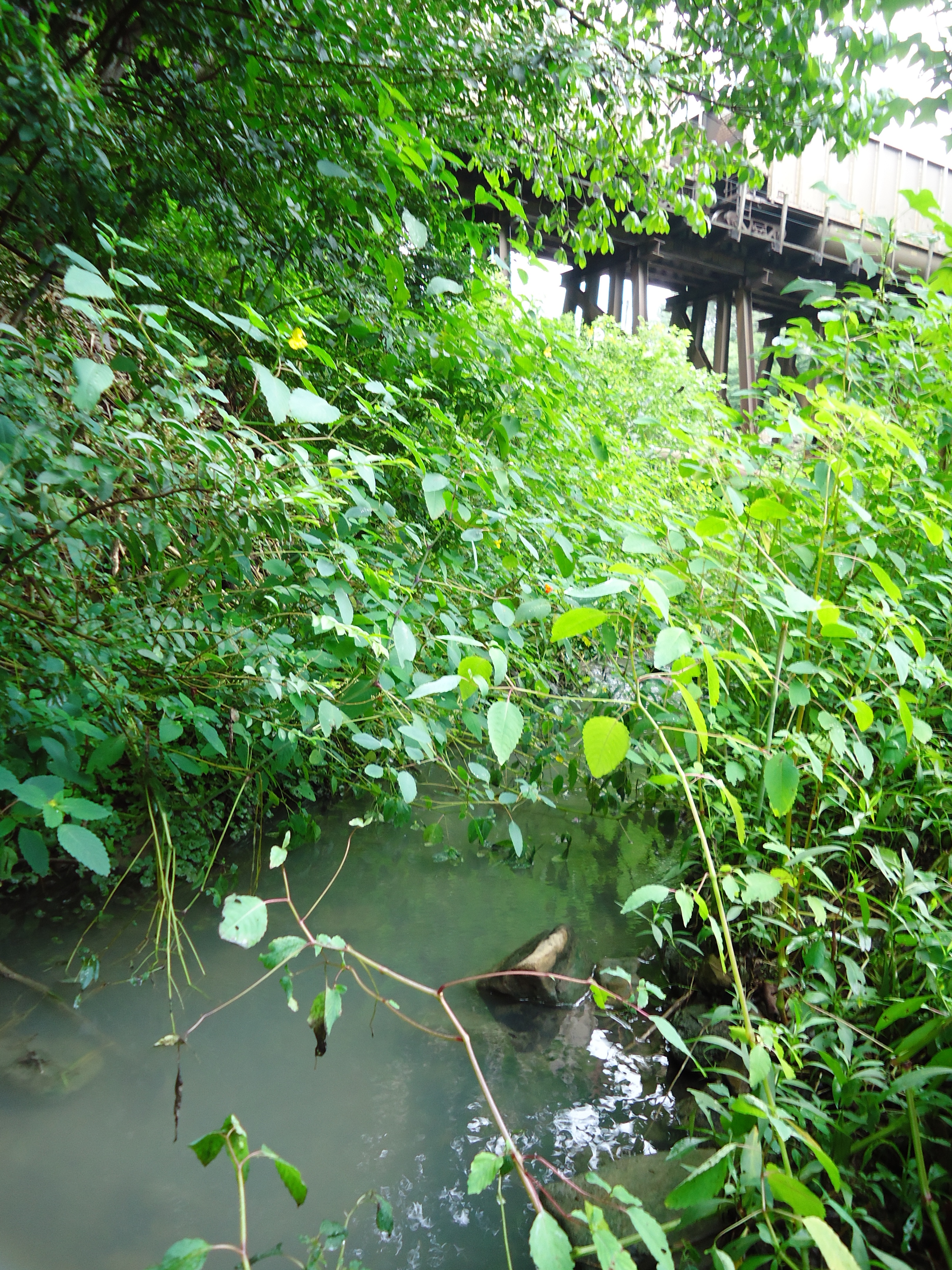
“After Bonny Blue broke loose the streams been dead…”
“No fishin’, kids can’t play, smells bad… I wouldn’t put a toe in that creek.”
“A lot of people drink tap, but I won’t, I don’t trust it.”
The first visit to St. Charles was alarming, and in many ways familiar. We’ve all read of acid mine drainage or fish kills below mine impoundment breaks. But how many of us have lived with the aftermath, day in and day out? The St. Charles creek receives waste from two massive underground mines, their associated processing plants, and slurry impoundments. Now, older folks long for the days before the mines when you could fish, swim, drink straight from the creek.
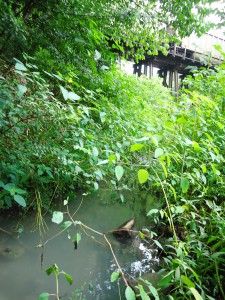 Lee County, Va. isn’t heavily mined, unlike Wise County which is right next door. The communities of St. Charles and Keokee are the exceptions in Lee County. The tucked away towns were always comforting when I visited; driving through Virginia backroads over mountains and around tight switchbacks is almost meditative. Despite the lull of summer’s heat and the drive’s beauty I would always be heading to another murky pond, orange seep or dead stream below burdensome surface mines. In St. Charles, I was visiting folks to hear more about the two 1996 slurry impoundment spills and see if I could help by testing the water. After a few hours of stories and a couple of monitoring trips it’s plain to see that coal inevitably hurts those living downstream.
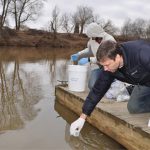
Arch Coal owns the Bonny Blue Mine and Lone Mountain Mine, both of which are a couple miles upstream from St. Charles. As an intern with the Appalachian Water Watch program my main job was to test water quality below mines and train locals how to monitor mining-affected streams. I measured conductivity, temperature, pH and total dissolved solids using our program’s water quality probe. Conductivity and pH are the two most important measurements; both can indicate poor water quality and prompt further testing. For example, conductivity over 500 uS/cm (micro-Siemens per centimeter) can be detrimental to aquatic life and may violate the Clean Water Act’s narrative water quality criteria. Water pH below 6.0 or above 9.0 can’t support aquatic life and is unfit to consume.
(more…)
Read More ...



 Whether you're two days or 20 years deep in environmental or social justice organizing, we all ask ourselves the same question day in and day out: why do I care? Rhiannon Fionn, creator of Coal Ash Chronicles, brings the "Why I Care" video series to the social media scene in the spirit of story-sharing, collaboration, power building and advocacy. Watch a few videos and share your own story.
[ Read More ]
Whether you're two days or 20 years deep in environmental or social justice organizing, we all ask ourselves the same question day in and day out: why do I care? Rhiannon Fionn, creator of Coal Ash Chronicles, brings the "Why I Care" video series to the social media scene in the spirit of story-sharing, collaboration, power building and advocacy. Watch a few videos and share your own story.
[ Read More ]