Get Our RSS Feed!
Front Porch Blog


“I’m Here Because I Love Mountains:” Watch a speech by Appalachian Voices’ JW Randolph


Tuesday, February 12th, 2013 | Posted by


On Feb. 8, Appalachian Voices Tennessee Director, JW Randolph, spoke to members of the state legislature, the media and the environmental community. Below is a video and the transcript of his speech in support of the Tennessee Scenic Vistas Protection Act, a bill to protect the state’s virgin ridgelines from mountaintop removal coal mining.

Hello, my name is JW Randolph, and I’m proud to serve as the Tennessee Director for Appalachian Voices. I’m here to speak with you for a few minutes about efforts to protect Tennessee’s mountains, but first I want to thank the members that have joined us here this morning. Chairman Southerland and Representative Gilmore have both supported the Scenic Vistas Protection Act, and we’re happy you’re here. We’re thankful to you both and look forward to continuing to work with you to pass this important legislation. I would also like to thank those in attendance for engaging in the democratic process, and finally I’d like to thank the Tennessee Environmental Council, Gretchen Hagle, John McFadden and your team. You guys are great leaders in this movement here in Tennessee and for us here on Capitol Hill, we all appreciate you and the work you do.

I’m here because I love mountains. I grew up in a log cabin my father built in the woods, on the banks of the Tennessee River. And like many of you, I got to know my family, my place, and our history through walking the beautiful woods and waters of middle Tennessee, fishing, hiking, and 4-wheeling. The time spent in these mountains taught me about freedom, responsibility and self-reliance. This was where I learned the best of home, the best of our state, and the best of what our country has to offer. As I got older, I learned that not too far away, near our ancestral land, coal companies were blasting apart the mountains, and poisoning the streams that we ran through.

My daughter will turn two years old this month. When I was her age, there were 500 mountains across Appalachia that are no longer there. Since then there have been 2000 miles of streams buried by mining waste, and 125-square miles of The Cumberland Plateau that has been altered irrevocably. That is why its important that Tennesseans join the effort to pass the Tennessee Scenic Vistas Protection Act.

Read more
...


The New Faces and Issues of North Carolina


Tuesday, January 15th, 2013 | Posted by


THE NEW FACES

For the first time since 1870, the Republican party controls both the executive and legislative branches in North Carolina government. With the General Assembly sporting veto-proof majorities in both its chambers, and Pat McCrory’s election making him the state’s first Republican governor in 20 years, the political landscape in North Carolina has morphed.

As the first Republican governor of North Carolina in more than 20 years, Pat McCrory will preside over Republican supermajorities in the state House and Senate.

Whether it’s for the better is undecided, as McCrory has a mixed environmental record. As mayor of Charlotte, he pushed for air quality protection, light rail development, tree preservation and smart urban growth.

McCrory, however, is vocal in his support of bringing offshore drilling and fracking to the state. He sidestepped the sea-level rise debate last year in the state legislature, saying he wanted to wait before “developing harsh regulations against facts that are still being debated.”

His administration will likely cut back on the N.C. Department of Environment and Natural Resources’ regulatory powers. His pick for head of DENR, John Skvarla, has been the CEO since 2005 of Restoration Systems, an environmental firm that restores damaged wetlands and collects credits to offset development elsewhere.

Since his appointment, Skvarla has commented that he wants to find common ground, as soon as possible, with environmentalists and that determining the most cost-effective regulations will be one of his biggest priorities.

During a recent interview with Laura Leslie and WRAL-TV, Skvarla said that North Carolina is “not going to go backward in air and water quality protection.”

Read more
...


The Senate and the L’awful’ Coal Ash Bill


Thursday, September 20th, 2012 | Posted by


To put it mildly, the supposed coal ash regulation bill S. 3512 falls short of our expectations. The bill — proposed last July by Sens. Hoeven (R-SD), Conrad (D-SD), and Baucus (D-MT) — shields utilities from their obligations to upgrade their unsafe ash dumps in a timely fashion, clean up sites that they have contaminated, or close leaking and unstable ponds and landfills.

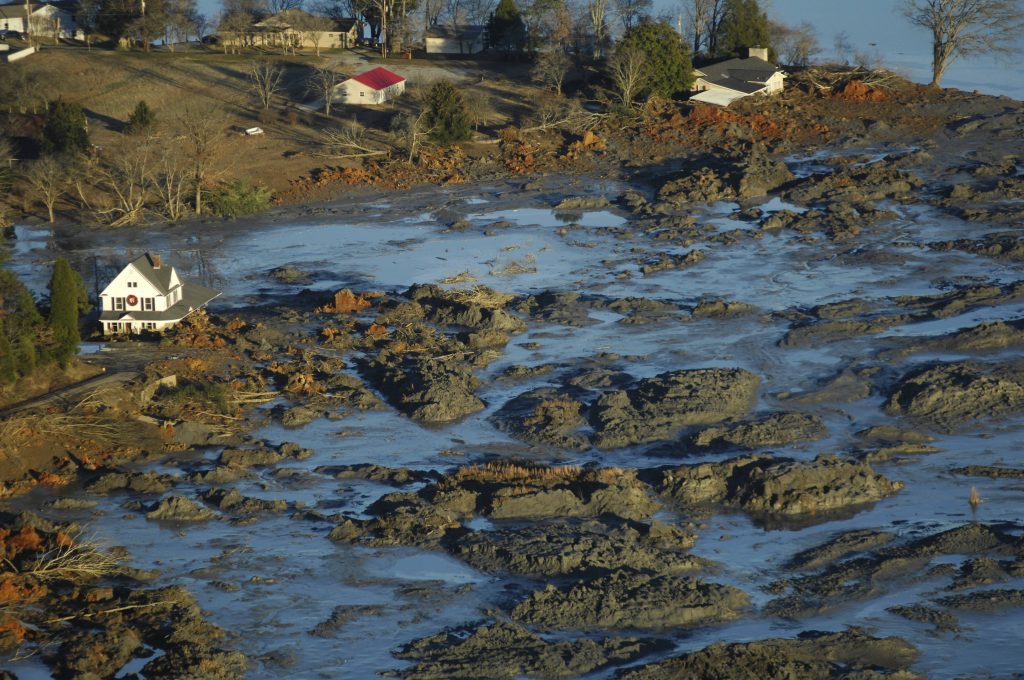
The aftermath of Kingston coal ash spill in 2008

Coal ash ponds are gigantic impoundments that contain the toxic byproducts from burning coal. S. 3512 won’t require deadlines for states to implement a permit program for coal ash ponds. The proposal even prevents the EPA from enforcing any standards contained in this bill, leaving the states free to do whatever they want.

To put it strongly and more correctly, S. 3512 isn’t OK at all. Tell the Senate today that clean water is your right.

Read more
...


Larry Gibson 1946-2012


Monday, September 10th, 2012 | Posted by


UPDATE:

Celebrating Larry Gibson: The Life and Legacy of the Keeper of the Mountains

Friends and family of Larry Gibson, the “Keeper of the Mountains,” will celebrate his life and legacy on Sunday, October 14 from 2 to 6 p.m. at the Charleston Municipal Auditorium, located on the corner of Virginia and Truslow streets, across from the Charleston Town Center Mall in Charleston, W.Va.

The public is encouraged to attend to help celebrate Larry’s life and legacy, RSVP and invite friends by visiting this facebook event page.

The program for “Celebrating Larry Gibson: The Life and Legacy of the Keeper of the Mountains” will feature family, friends, prominent activists, West Virginia residents, musicians and preachers. This event will be preceded by the annual Changing of the Leaves Music Festival that starts at 1:00 PM on Saturday, October 13th on Kayford Mountain.

For more information on this event and donating or volunteering to help make it happen contact Danny Chiotos with the Keeper of the Mountains Foundation at Danny@Mountainkeeper.org or (304) 205-0920.

On September 13, in a private funeral, Larry was laid to rest on the mountain that he loved.

– - -

The Appalachian Voices family was saddened to learn of the passing of our friend and a champion in the fight to end mountaintop removal, Larry Gibson. We cannot express the extent of our gratitude to Larry, nor can his impact on Appalachia’s mountain treasures and communities be measured. Below are a few words from the Keeper of the Mountains Foundation, which Gibson founded in 2004.

Larry Gibson, long-time environmental activist, died of a heart attack Sunday, September 9, while working on Kayford Mountain, the family home in Raleigh County which he spent the last decades of his life protecting from the coal mining practice known as mountaintop removal.

Kayford was the site of Larry’s birth, the final resting place of 300 ancestors stretching back to the 18th century, and the site of Larry’s annual 4th of July festival celebrating life in the mountains. As part of his effort to preserve the mountains, Larry traveled across the country, to schools, churches and a wide range of public gatherings where he spread his simple gospel about the mountains: “Love em or leave em; just don’t destroy em.”

A private funeral is planned, and Larry’s family has requested that persons wishing to express condolences make donations to Keeper of the Mountains Foundation, which Larry founded in 2004 to support mountain communities. A public memorial service will be announced at a later time. Larry is survived by his wife, Carol, two sons Cameron and Larry, Jr. and his daughter, Victoria. He was sixty-six years old.

TN Legislators Miss Another Opportunity to Protect State’s Mountains


Tuesday, March 27th, 2012 | Posted by


House Subcommittee Kills Mountaintop Removal Ban
With Delay Tactic

In yet another act of political cowardice on the issue of mountaintop removal coal mining, a Tennessee House subcommittee voted to kill the Scenic Vistas Protection Act and for the second time to send it to summer study.

Despite a passionate plea by bill sponsor Rep. Michael Ray McDonald, the Conservation and Environment Subcommittee voted 6 to 4 to avoid a direct vote and instead condemn the bill to a summer study session which has no authority to vote on legislation. Representatives Richard Floyd, David Hawk, Ron Lollar, Pat Marsh, Frank Niceley and John C. Tidwell all cast pro-mountaintop removal votes. Representatives who voted to hear the bill were Charles Curtiss, Brenda Gilmore, Mike Kernell and Art Swann.

“When this bill was introduced in 2008 there were 5 mountains permitted for surface coal mining above two thousand feet in Tennessee. Now there are 13,” Rep. McDonald said to the subcommittee. “We have lost eight mountains since 2008 by delaying. If we don’t vote this year, we will lose more mountains. Without our mountains, Tennessee is not Tennessee.”

Read more
...


Tennessee Senate Dodges Historic Vote on Mountaintop Removal


Wednesday, March 14th, 2012 | Posted by


FOR IMMEDIATE RELEASE
March 13, 2012

Tennessee Senate Dodges Historic
Vote on Mountaintop Removal

Scenic Vistas Act Delayed, House Subcommittee Vote Up Next

- – - – - – - – - – - – - – - – - – -
CONTACT: JW Randolph, Tennessee Director, 615-592-6867, jw@appvoices.org
Molly Moore, Public Outreach Associate, 828-262-1500, molly@appvoices.org
- – - – - – - – - – - – - – - – - – -

During a Monday night legislative session, the Tennessee Senate avoided an outright vote on a bill to ban mountaintop removal coal mining in the state, choosing instead to delay.

State senators voted 19-14 to delay a floor vote on the Scenic Vistas Protection Act — a bill that has been active in the Tennessee Assembly for the past five years — until April 2.

“[This] vote was a calculated act of political cowardice,” said J.W. Randolph, Tennessee Director for environmental organization Appalachian Voices. “Senators chose to delay the bill hoping it will die in the House, rather than stepping forward to protect Tennessee’s historic mountains from the destructive practice of mountaintop removal.”

Read more
...


AV Testifies in Congress


Tuesday, March 6th, 2012 | Posted by


Today, Appalachian Voices’ Director of Programs, Dr. Matt Wasson, is testifying before the Congressional Subcommittee on Energy and Mineral Resources.

The hearing begins at 10 a.m. EST, and you can view the hearing homepage and watch the LIVE video feed here.

The majority of this committee has been pushing a coal-industry agenda this session, and we don’t expect this hearing to be much different. The topic is “Effect of the President’s FY 2013 Budget and Legislative Proposals for the Office of Surface Mining on Private Sector Job Creation, Domestic Energy Production, State Programs and Deficit Reduction,” and discussion will center around the Stream Protection Rule.

Matt Wasson will submit testimony as to why a strong Stream Protection Rule is necessary, and will counter industry disinformation about its effect on jobs and domestic energy protection. Rather, he will show data supporting the fact that previous oversight by the U.S. Department of Environmental Protection and the Office of Surface Mining have had no negative impact on jobs or domestic energy prices.

His testimony argues that pro-industry predictions of the impact of the Stream Protection Rule are based on faulty assumptions and non-existent data.

Stay tuned to our twitter feed (visible on our homepage) for more!

URGENT: Don’t Let Big Coal Poison Virginia’s Groundwater!


Monday, March 5th, 2012 | Posted by


A dirty bill in the Virginia General Assembly is bad news for the health of Virginia’s groundwater. We urgently need to show state senators that clean water for the Commonwealth is more important than cost-cutting measures for the coal industry!

A bill, HB 710, has been introduced into the Virginia General Assembly that would allow the coal industry to dispose of toxic mining waste in empty underground mines in Virginia – without the consent of the surface landowners.

From there, the waste can leach into groundwater, wells and streams – a major threat to the health of Virginia groundwater. Because of your support we almost stopped this bill last week in committee, but unfortunately it passed by one vote.

HB 710 will be voted on in the Virginia State Senate either today or tomorrow!

Virginians, we need you to take a moment to call your senator’s office and urge him or her to vote against HB 710.

Look up your senator’s phone number at this link and then you can follow the script below.

Read more
...


Delayed Coal Ash Regulations Put Public Health at Risk


Wednesday, January 18th, 2012 | Posted by


Appalachian Voices issued the following press release to news outlets in North Carolina. A similar version was released nationally by the eleven environmental and public health groups involved in this litigation.

Delayed Coal Ash Regulations Put Public Health at Risk

Groups head to court to force issuance of important national safeguards

Washington, D.C. – Environmental and public health groups announced their intent to sue the U.S. Environmental Protection Agency in federal court to force the release of long awaited public health safeguards against toxic coal ash. The EPA has delayed the first-ever federal protections for coal ash for nearly two years despite more evidence of leaking ponds, poisoned groundwater supplies and threats to public health.

“We have waited long enough for the EPA to act,” says Sandra Diaz, Appalachian Voices’ North Carolina Campaign Coordinator. “In North Carolina, we know for a fact that many coal ash ponds are contaminating groundwater, and we need the EPA to step up and provide strong guidelines to ensure public health and safety.”

This aerial photo of a coal-fired power plant in Asheville, N.C. is provided by the French Broad Riverkeeper.


Earthjustice, on behalf of Appalachian Voices (NC), Chesapeake Climate Action Network (MD), Environmental Integrity Project, French Broad Riverkeeper (NC), Kentuckians For The Commonwealth (KY), Montana Environmental Information center (MT), Physicians for Social Responsibility, Prairie Rivers Network (IL), Sierra Club and Southern Alliance for Clean Energy (TN), sent the EPA a notice of intent to sue the agency under the Resource Conservation and Recovery Act (RCRA). The law requires the EPA to ensure that safeguards are regularly updated to address threats posed by wastes. However, the EPA has never undertaken any action to ensure safeguards address the known threats posed by coal ash, a toxic mix of arsenic, lead, hexavalent chromium, mercury, selenium, cadmium and other dangerous pollutants that result from burning coal at coal-fired power plants.

More than 5.5 million tons of coal ash is created each year in North Carolina, the ninth highest in the country. There are 26 active ponds in the state, 12 of which have been rated “high-hazard” by the EPA, meaning that if the ponds were to break, it would probably cause a loss of human life. The state has not moved to create state-specific standards on coal ash, though utilities have been required to do additional groundwater monitoring

“As we witness a state legislature intent on weakening the ability of state agencies like the Department of Environment and Natural Resources to do its job, we need the EPA to move forward with strong federally-enforceable guidelines that will protect communities from the dangers of coal ash,” said Pricey Harrison, a state legislator who represents Guilford County.

Read more
...


Renewed Call to Revoke Massey Energy’s Corporate Charter


Wednesday, December 7th, 2011 | Posted by


PUBLIC INTEREST GROUPS RENEW CALL TO REVOKE MASSEY ENERGY’S CORPORATE CHARTER

JOINT STATEMENT OF FREE SPEECH FOR PEOPLE, APPALACHIAN VOICES, AND THE RAINFOREST ACTION NETWORK

Dec. 7, 2011

Yesterday, Alpha Natural Resources, the parent company of the Massey Energy coal company, agreed to pay $209 million in criminal penalties, civil penalties, and compensation to the families of the 29 miners who were killed when its Upper Big Branch coal mine in West Virginia exploded on April 5, 2010. The company was also fined an additional $10.8 million yesterday by the U.S. Mine Safety and Health Administration — the largest fine in that agency’s history.

With this admission by the company of criminal liability in those miners’ deaths, we renew our call today on Delaware Attorney General Beau Biden to revoke the corporate charter of Massey Energy.  

Corporations like Massey are artificial entities, granted a right to exist by we the people through our state corporate charter laws. Just as surely as we grant that right, we can also revoke it.  

When a corporation is criminally responsible for killing people — as Massey’s parent company has now agreed that it is — it should lose its right to exist.  

“Massey Energy has shown little regard for the people of Appalachia,” says Appalachian Voices Executive Director Willa Mays. “When people commit grave crimes, we imprison them and take away their rights as citizens. Massey can’t simply pay its way out of culpability in the criminal deaths of 29 miners. We need to stop Massey from doing more dirty business.”

Massey Energy was acquired by Alpha Natural Resources in June 2011. But it cannot merge its way out of responsibility for its actions. Massey still maintains its own charter in Delaware and is a wholly-owned subsidiary of Alpha.

A financial settlement, even for hundreds of millions of dollars, is just not enough to prevent corporations like Massey from abusing their enormous power over our lives. Alpha earned $2.3 billion in the last quarter alone.[1]

It is simply not acceptable for corporations to buy their way out after criminally killing people, any more than it is acceptable for them to buy control over our government.

We urge Attorney General Biden to initiate charter revocation proceedings against Massey Energy.

Join us in asking Attorney General Biden to revoke Massey Energy’s corporate charter today.
###

The groups’ letter issued on June 8, 2011 to Attorney General Biden can be accessed here:

http://www.freespeechforpeople.com/sites/default/files/FSFPAPPVOICESlettertoAGBiden060811.pdf

Related Media:

Reuters: Jail coal execs, says U.S. Rep

A Wham-Bam Double Win for Hampton Roads Locals Fighting Largest Proposed Coal Plant in Va


Monday, November 21st, 2011 | Posted by


NoCoalPlantIt has been an exciting week for those of us at Appalachian Voices and for the citizens of Hampton Roads who have been fighting what would be the largest coal-fired power plant in Virginia for just shy of three years. Months of pressure from Isle of Wight County citizens paid off as their County Board of Supervisors adopted an official resolution of opposition to the proposed coal plant. The county shares their western border with Surry County and is worried about the effect a massive coal plant would have on their crops, economy and the lungs of children and elderly in their county and the region. Click here to learn more. This comes nearly two years after Surry County snubbed Isle of Wight’s request for a third party study of potential negative effects on the region be commissioned on the applicant’s behalf, as is common with large polluting projects. Isle of Wight joins several communities, conservation organizations and local, regional and national health groups in opposing the proposed plant. Wham!

Then, over the weekend came the news that the applicant, the Old Dominion Electric Cooperative, lost an important court case. A state judge has ruled in favor of four local citizens and invalidated the town of Dendron’s zoning approval for the project. Late on Friday, Surry County Circuit Judge Sam Campbell ruled that the zoning for the power plant is void, and agreed with the plaintiffs’ position that ODEC had rushed the approvals through and that the town’s public notice violated Virginia law. The court ruled that Dendron had failed to provide the public with fair notice. The citizens—Michael Drewry, Helen Eggleston, John Pond and Willie Richardson, Jr.—were represented by Drewry. Click here for the judge’s opinion. Bam!

Read more
...


Isle of Wight County in Va Officially Opposes Coal Plant


Monday, November 21st, 2011 | Posted by


Isle of Wight County, located in the Hampton Roads region of Virginia, adopted an official resolution of opposition to what would be the largest coal-fired power plant in Virginia, if permitted. Click here for the Wise Energy Press release.

Isle of Wight County is downwind of and direct neighbors to the would be host Surry County. The hearings leading up to local zoning approval in Surry lasted for over a year during which my colleagues and I worked with the county residents who were and are overwhelmingly opposed. Together we watched the Surry Board of Supervisors ignore the mountain of evidence continually presented to them that showed that the coal plant proposed was dangerous and ill conceived.

Click here to send a letter of thanks to the Isle of Wight Board of Supervisors.

The video below is of the debate among the Isle of Wight Board of supervisors before adopting the resolution of opposition to the coal plant. The story continues below the video.

Board of Supervisors Joann Hall, Al Casteen, and Stan Clark debate the merits of opposing the proposed coal plant.


Get Microsoft Silverlight


Read more
...


Robert F. Kennedy, Jr.: The Real Deal


Monday, October 31st, 2011 | Posted by


Guest blog by Jim Deming

Something good happened in Cleveland, Ohio this past Friday. In a city that has symbolized urban pollution since the 60’s and has taken some blows in the current economic recession, Bobby Kennedy came to town to celebrate.

He was here at a press conference on the banks of the Cuyahoga River to help launch journalism website EcoWatch as the national voice of the grassroots environmental movement. At the place where the rivers once burned from oil and debris, Bobby Kennedy, the founder of Waterkeeper Alliance, told us how individual private citizens banded together to form a movement that eventually resulted in the Clean Water Act and 28 more environmental legislative victories, even under a Republican president with bi-partisan support.

In his speech at the press conference, he told us how ordinary people – a mixture of plumbers, veterans, carpenters, and others – used a once-obscure law to collect bounties for nailing polluters on the Hudson River, now one of the cleanest waterways in the country. He told us that we could do the same in our towns and cities and mountains, that we could enforce the law.

Robert F. Kennedy, Jr. announces the launch of the EcoWatch and Waterkeeper Alliance news service website—www.ecowatch.org—at a press event in Cleveland, Ohio. The website works to unite the voice of the grassroots environmental movement and mobilize millions of Americans to engage in democracy to protect human health and the environment. Photo by Marianne Mangan

And that reminded me of what the Waterkeepers in Kentucky and all through the southern Appalachians are doing now with the support of Appalachian Voices and other partners: seeking to enforce the law. Bobby Kennedy was eloquent, passionate and committed, and we are fortunate to have him come speak at the annual Appalachian Voices meeting planned for Charlottesville, Virginia in May. You don’t want to miss one of the best voices in the country for fighting the corporate pillaging of our mountains and our communities.

But his speech is not what I will remember most about the day. You see, I arrived, and like the old geezer I am, I knew that the speeches would last long and I better find the facilities beforehand. As I exited the relief station, Bobby stood there with only two other people, so I stopped to talk. He shook my hand with his left hand, and I commented that I knew he had just had rotator cuff surgery on his right arm, and I told him of my experience with the same ailment. I told him some of us were working in the faith community for environmental justice, and we welcomed his support. He said he would do almost anything for Appalachian Voices because we do such a good job standing up for what is right, and that he was happy the Pope has even started talking about economic injustice and corporate greed. I thought my few minutes were up, but he wanted to talk more about rotator cuffs and recovery, so we stood there like two aging jocks discussing our wounds.

Bobby Kennedy at Appalachian Voices Boone office

Bobby Kennedy speaks at an Appalachian Voices open house in 2008.

And I saw him differently after that. Here was a guy with presidents and senators in his family history talking to a guy who has east Texas sharecroppers in his family history. No pretense. No airs.

Maybe the Occupy Wall Street folks should include guys like Bobby Kennedy, Jr. in their ranks. For the change we need is not just about shifting money around from the haves to the have nots, it’s about justice and creating sustainable communities for all people, even those not yet born. So I really like Bobby, and I don’t want you to miss hearing him. He’s one of us.

Jim Deming, Minister for Environmental Justice
Justice and Witness Ministries, United Church of Christ
Honored member of the Board of Directors of Appalachian Voices

Check out a video from EcoWatch’s press event here.

On Thursday, November 3, 2011 at 7 pm Wake Forest University’s Center for Energy, Environment and Sustainability, in partnership with the Yadkin Riverkeeper, will welcome Robert F. Kennedy, Jr. for a lecture titled Green Gold Rush: A Vision for Energy Independence, Jobs, and National Wealth. This event is free and open to the public and will be held in Wait Chapel. Visit the Center’s web page for more information.

Lisa Jackson has had enough!


Friday, October 21st, 2011 | Posted by


In this editorial, published by the Los Angeles Times, Environmental Protection Agency Administrator Lisa Jackson makes her case for protecting our clean air and water from an unprecedented congressional attack on basic environmental and health safeguards. Join the movement to save our clean water here.

‘Too dirty to fail’?

House Republicans’ assault on our environmental laws must be stopped.

By Lisa P. Jackson
October 21, 2011

Americans must once again stand up for their right to clean air and clean water.

Since the beginning of this year, Republicans in the House have averaged roughly a vote every day the chamber has been in session to undermine the Environmental Protection Agency and our nation’s environmental laws. They have picked up the pace recently — just last week they voted to stop the EPA’s efforts to limit mercury and other hazardous pollutants from cement plants, boilers and incinerators — and it appears their campaign will continue for the foreseeable future.

Using the economy as cover, and repeating unfounded claims that “regulations kill jobs,” they have pushed through an unprecedented rollback of the Clean Air Act, the Clean Water Act and our nation’s waste-disposal laws, all of which have successfully protected our families for decades. We all remember “too big to fail”; this pseudo jobs plan to protect polluters might well be called “too dirty to fail.”

The House has voted on provisions that, if they became law, would give big polluters a pass in complying with the standards that more than half of the power plants across the country already meet. The measures would indefinitely delay sensible upgrades to reduce air pollution from industrial boilers located in highly populated areas. And they would remove vital federal water protections, exposing treasured resources such as the Gulf of Mexico, Lake Erie, the Chesapeake Bay and the Los Angeles River to pollution.

How we respond to this assault on our environmental and public health protections will mean the difference between sickness and health — in some cases, life and death — for hundreds of thousands of citizens.

This is not hyperbole. The link between health issues and pollution is irrefutable. Mercury is a neurotoxin that affects brain development in unborn children and young people. Lead has similar effects in our bodies. Soot, composed of particles smaller across than a human hair, is formed when fuels are burned and is a direct cause of premature death. Nitrogen oxides and volatile organic compounds contribute to the ozone alert days when seniors, asthmatics and others with respiratory problems are at serious risk if they do nothing more dangerous than step outside and breathe the air.

“Too dirty to fail” tries to convince Americans that they must choose between their health and the economy, a choice that’s been proved wrong for the four decades that the EPA has been in existence. No credible economist links our current economic crisis — or any economic crisis — to tough clean-air and clean-water standards.

A better approach is the president’s call for federal agencies to ensure that regulations don’t overburden American businesses. The EPA has already put that into effect by repealing or revising several unnecessary rules, while ensuring that essential health protections remain intact.

We can put Americans to work retrofitting outdated, dirty plants with updated pollution control technology. There are about 1,100 coal-fired units at about 500 power plants in this country. About half of these units are more than 40 years old, and about three-quarters of them are more than 30 years old. Of these 1,100 units, 44% do not use pollution controls such as scrubbers or catalysts to limit emissions, and they pour unlimited amounts of mercury, lead, arsenic and acid gases into our air. Despite requirements in the bipartisan 1990 Clean Air Act amendments, these facilities have largely refused to control their emissions — creating an uneven playing field for companies who play by the rules and gaming the system at the expense of our health.

If these plants continue to operate without pollution limits, as a legislative wish list from House Majority Leader Eric Cantor (R-Va.) would allow, there will be more cases of asthma, respiratory illness and premature deaths — with no clear path to new jobs.

By contrast, the nation’s first-ever standards for mercury and other air toxic pollutants which the EPA will finalize this fall — and which the Republican leadership aims to block — are estimated to create 31,000 short-term construction jobs and 9,000 long-term jobs in the utility sector through modernizing power plants. And the savings in health benefits are estimated to be up to $140 billion per year by 2016.

Contrary to industry lobbying, this overhaul can be accomplished without affecting the reliability of our power grid.

Our country has a long tradition of treating environmental and public health protections as nonpartisan matters. It was the case when President Nixon created the EPA and signed into law the historic Clean Air Act, when President Ford signed into law the Safe Drinking Water Act and when President George H.W. Bush oversaw important improvements to the Clean Air Act and enacted the trading program that dramatically reduced acid rain pollution.

Our environment affects red states and blue states alike. It is time for House Republicans to stop politicizing our air and water. Let’s end “too dirty to fail.”

Lisa P. Jackson is the administrator of the U.S. Environmental Protection Agency

Tell Congress We Can’t Afford The Status Quo on Coal Ash!


Thursday, October 13th, 2011 | Posted by


This Friday, the House of Representatives will vote on H.R. 2273, the Coal Residuals Reuse and Management Act, a bill that puts the profits of coal ash polluters above public health. H.R. 2273 subverts public support of the EPA’s proposed federal coal ash rules by leaving coal ash pollution in the hands of states with weak or non-existent regulations.

This bill is one of many designed to effectively weaken our clean water laws and allow Big Coal polluters to keep disregarding our waterways and public health.

Please tell your representatives in Congress to vote NO on H.R. 2273.

Coal ash is the nation’s second-largest waste stream after municipal garbage. Coal ash slurry — a by-product of coal-fired power plants — is highly toxic. People living near an unlined coal ash pond are at a 1-in-50 risk of cancer from arsenic, a rate that is 2,000 times greater than the acceptable level of risk!

As we approach the third anniversary of the Tennessee Valley Authority coal ash disaster that spilled over a billion gallons of toxic sludge into the Emory River in Harriman, Tenn. and cost over $1 billion to clean up, it’s clear that we’re overdue for basic health and environmental protections from coal ash.

Coal ash slurry buried 300 acres when a coal ash impoundment failed at Tennessee Valley Authority's Kingston plant.

The U.S Environmental Protection Agency has the authority to control hazardous waste from “cradle-to-grave” under the Resource Conservation and Recovery Act. Since beginning the process for coal ash nearly three years ago, the agency has received over 450,000 comments asking for strong protection for coal ash waste.

The EPA’s Subtitle C plan would classify coal ash as “hazardous waste” and provide the strong protection the public demands. The agency’s other proposal, the weaker Subtitle D, would rank coal ash as “non-hazardous waste” but still grant some federal oversight. Rep. David McKinley’s (R-W.Va.) bill, H.R. 2273, takes Subtitle D, the lesser plan, and dramatically weakens it by removing basic federal safeguards. See this chart for a breakdown of proposed coal ash regulations.

H.R. 2273 would leave coal ash disposal standards even weaker than the federal rules that govern household waste. Supposedly, municipal solid waste rules provided the model for this legislation. But household waste standards are centered around protecting public health and the environment — this bill makes no mention of either.

Clearly, a lagoon of toxic slurry laden with metals such as arsenic, chromium, lead and mercury is different than an town dump. Yet H.R. 2273 doesn’t require states to inspect ponds in order to ensure structural stability, detect groundwater leaks, or discover other threats to public health and safety. Municipal waste facilities are bound by federal law to clean up or close dumps that contaminate groundwater, but this bill would let coal ash polluters get away without groundwater cleanup standards. Check out this fact sheet for more information about H.R. 2273′s dangerous shortfalls.

Read more
...


Test


Saturday, May 9th, 2009 | Posted by


Carolina Wren

Thryothorus ludovicianus


ORDER: PASSERIFORMES


FAMILY: TROGLODYTIDAE

IUCN Conservation Status: Least Concern

Carolina Wren Photo

Singing one of the loudest songs per volume of bird, the Carolina Wren’s “tea-kettle, tea-kettle, tea-kettle” is familiar across the Southeast. It is a common bird in urban areas, and is more likely to nest in a hanging plant than in a birdhouse.

NestWatch

For complete information on this species, visit
The Birds of North America Online.

  • Identification
  • Life History
  • Sound
  • Video
  • Jump to recent:

Calls

  • Songs, calls
  • Courtesy of Macaulay Library
    &copy Cornell Lab of Ornithology.

Song a loud, repeated series of several whistled notes: “tea-kettle, tea-kettle, tea-kettle.” Calls include a loud chatter and a rising and falling “cheer.”

NestCams

Search the Macaulay Library online archive for more sounds and videos


Test


Friday, December 5th, 2008 | Posted by


Test


Friday, December 5th, 2008 | Posted by


Test

Test


Monday, November 24th, 2008 | Posted by


asdf

Test


Friday, October 10th, 2008 | Posted by


Test

<== Older Posts    
Facebook Twitter FlickR YouTube
Front Porch Bloggers
Show/hide list (+)
Tags
Show/Hide list (+)
Tags