Follow Us on Twitter: Appalachian Voices | iLoveMountains.org

Archive for the ‘Inside Appalachian Voices’ Category

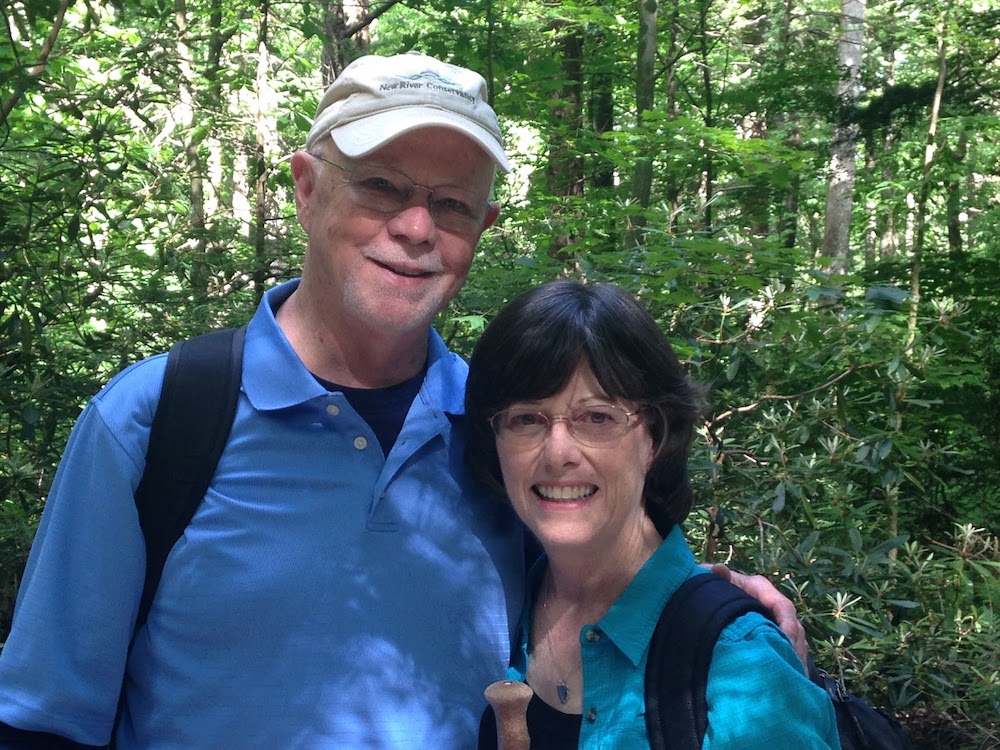
Brenda Sigmon: Long-Time Volunteer Takes Action to Get Kids Outside

Tuesday, April 16th, 2013 - posted by Jil
By Davis Wax

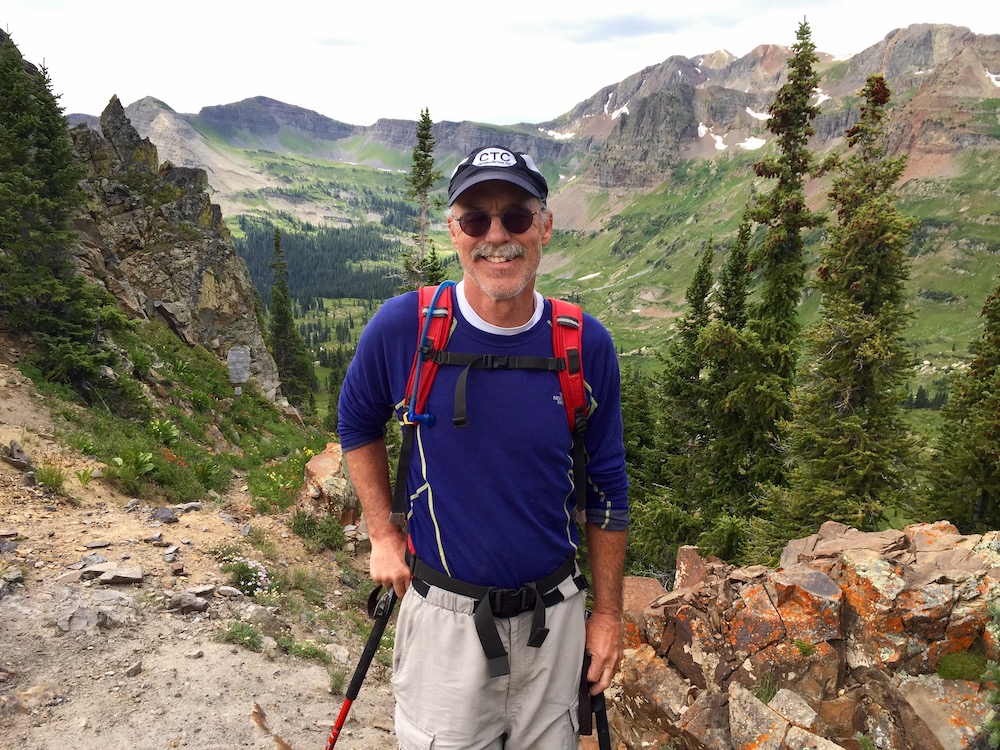
Brenda Sigmon

Growing up on a farm in Lincoln County, N.C., Brenda Sigmon intimately knew the outdoors and understood her natural surroundings as a part of everyday life. “I think I didn’t like it at the time because of the chores I had to do,” says Brenda fondly, “but looking back, it was an idyllic experience.”

A “childhood outside,” as she puts it, is something Brenda feels she is lucky to have had, and it’s something she hopes today’s children can experience as well.

An avid hiker, Brenda spends much of her efforts getting children outside and on trails to combat “nature deficit disorder,” an issue she became more aware of through Richard Louv’s 2005 book, “The Last Child in the Woods.” Brenda emphasizes that getting kids outside not only lets them appreciate their natural surroundings, it helps prevent childhood obesity and diabetes.

Brenda aids in the building of the Blue Ridge Parkway Foundation’s “TRACK Trails,” often extensions to existing trails which emphasize family and adolescent-use. She is helping now to extend such a trail on Elk Knob.

While on a hiking trip years ago, Brenda picked up an issue of The Appalachian Voice. She became a member of Appalachian Voices 1999, began actively volunteering in 2002, and served on the organization’s board from 2006 to 2012. “When I first came there were five staff members and only the Boone office,” she says. “The fact that three of those five are still with the organization today after more than a decade speaks volumes.”

Brenda attributes the organization with making local health and environmental concerns into national issues. Ten years ago “mountaintop removal” was just words, she says, but now much of the country knows about the devastation in the region’s coal-bearing states “thanks to Appalachian Voices and its allies.”

She is inspired by the team’s level of commitment and offers that she’s “never met more dedicated or talented people.” Appalachian Voices is always grateful for volunteers like Brenda who keep us motivated.

Brenda lives in Conover, N.C., where she is a volunteer distributor for The Voice in Burke and Catawba counties. She avidly hikes and continues to champion ways for children to pursue and draw joy from nature. “Children who learn to love the outdoors,” she says, “will be the people who grow up to protect it.”

Policy Expert to Steer New Energy Savings Program

Tuesday, April 16th, 2013 - posted by Jil

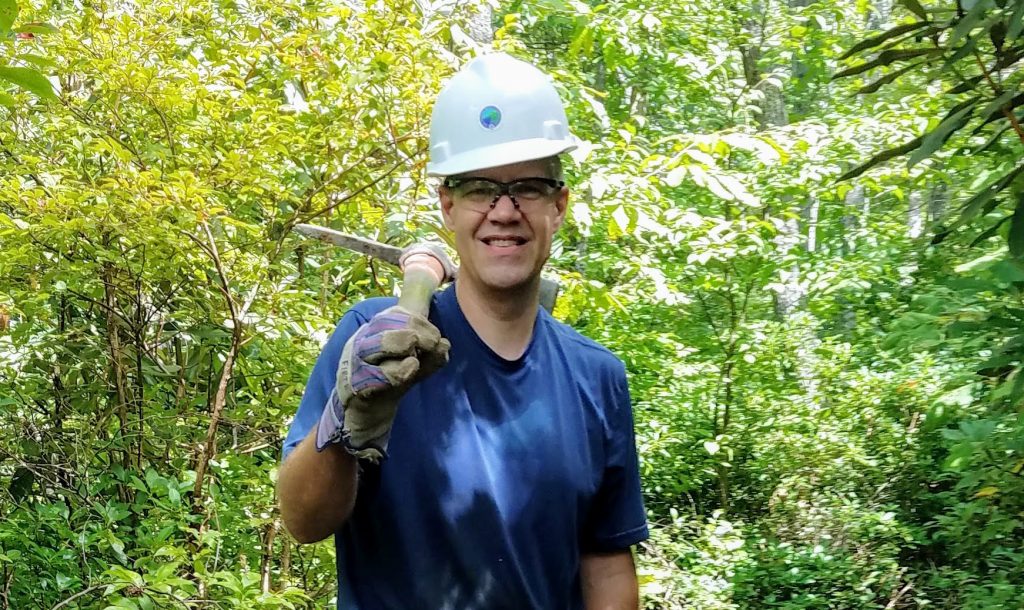
Rory McIlmoil, Appalachian Voices’ new energy policy director, is descended from West Virginia pioneers and feels a strong connection to the Appalachian mountains.

The Southeast possesses some of the greatest resources for making energy use more efficient, and Appalachian Voices has a plan to help unleash that potential.

This spring, we are launching a new program focused on promoting energy savings and reducing the use of coal-fired power in rural Appalachia and the Southeast. Rory McIlmoil, a long-time advocate for Appalachia with a background in environmental science and policy, is joining the Appalachian Voices team to lead our Energy Savings for Appalachia program.

“I’m excited to join Appalachian Voices to help kickstart the energy efficiency industry in Appalachia as a way to develop new economic opportunities for the Southeast, something that state and federal leaders have not focused on,” says Rory. “At the same time, this work will help residents protect their communities, health, and the environment by reducing demand for coal-fired electricity.”

Rory interned with Appalachian Voices in 2007, and has spent the past five years heading the energy program at the West Virginia-based environmental consulting firm Downstream Strategies. He will be working closely with our North Carolina, Tennessee and Virginia programs to educate electric cooperatives (member-owned utilities) and their customers on the multiple economic and environmental benefits that saving energy can have.

“Appalachian Voices has crafted a common-sense, strategic plan to reduce residential electricity demand, and therefore electric bills, and to accelerate the growth of an energy efficiency services industry in Appalachia,” says Director of Programs Dr. Matt Wasson. “Rory’s knowledge of the science of energy issues in Appalachia and his in-depth analysis of economics data give him an edge in understanding how we can advance these solutions.”

“Very few financing programs exist for electric co-op members in our region,” says Matt. “In addition to grassroots outreach, one of our goals will be to help develop and build public support for state and federal energy savings and clean energy policies.”

One of the program’s first goals will be to launch an online Energy Savings Action Center to provide residents with information about making their home more efficient and their electric bills cheaper. The site will point consumers to programs offered by their electric provider, and connect them with small businesses that offer energy audits, weatherization and other services that result in savings on electric bills while supporting a clean, local economy.

The action center will also track how Appalachia’s congressional representatives vote on clean energy bills and will help citizens send messages to their elected officials and hold them accountable.

“Building these relationships is critical for helping communities develop forward-thinking solutions at a time when politicians seem to be looking backwards,” Rory says. “Joining the terrific staff at Appalachian Voices to lead the new energy savings program is a great opportunity and I’m excited to be a part of such a progressive organization.”

Rory received his B.S. in Earth and Environmental Science from Furman University and a master’s in Global Environmental Policy from American University. It was in graduate school that he learned about the devastation of mountaintop removal coal mining and coal’s impact on citizens throughout the Southeast. “As I became more aware of those problems, I began thinking of ways I could help make a difference.”

In addition to his policy and research work with Downstream Strategies, Rory has served as the Campaign Director for the Coal River Wind Project and conducted climate change science through a U.S. Department of Energy and National Science Foundation research project.

A descendant of West Virginia pioneers, Rory lived throughout the Southeast before settling back in the Appalachian Mountains. He enjoys backpacking, beekeeping, growing his own food and woodworking.

“These are some of the oldest, most biologically diverse mountains in the world,” Rory says. “When you have lived in Appalachia and have learned how these communities are connected to the mountains, you become part of it and you can’t do anything else but try to protect it.”

To contact Rory and our new Energy Savings in Appalachia program, visit appvoices.org/energysavings or email rory@appvoices.org.

Tom Cormons: A Leader With a Purpose

Tuesday, April 16th, 2013 - posted by Jil

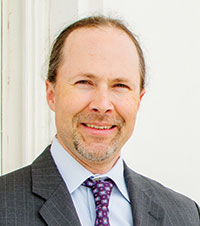
Tom Cormons, new executive director for Appalachian Voices, (right) leads a discussion during an organizational staff retreat. “We are very fortunate to have a man of his vision and talent at the helm as we embark on the next chapter of Appalachian Voices’ journey,” says Board of Directors Chair Christina Howe.

When Tom Cormons left the East Coast to attend college in Charlottesville, Va., it didn’t take him long to fall in love with the mountains.

Every opportunity he had during his time at the the University of Virginia, he hiked, paddled and climbed in the rugged mountains of Appalachia.He eventually met his wife, Heather, while working as a whitewater guide on West Virginia’s Gauley River. Even through his years of pursuing an environmental law degree at UCLA and working in Washington, D.C., for the U.S. Justice Department, Tom’s passion for the mountains — and a desire to protect them — never wavered.

That desire, combined with an extensive background in wildlife research and energy policy as well as six years of leadership experience at Appalachian Voices, is what led Tom to become the organization’s new executive director.

Tom joined Appalachian Voices as a member 12 years ago, inspired by the mission to protect the mountains he had grown to love. In 2007, he joined the staff to establish the organization’s Virginia office and program. In the past few years, he has expanded the Virginia office to a staff of five, and positioned Appalachian Voices in a leading role in the efforts to bring cleaner energy to the commonwealth.

“I am honored to now lead this organization, whose staff, board, members and partners continue to inspire me every day,” Tom says. “I’m very motivated to help our region transition to cleaner energy and to ways of supporting people’s livelihoods that respect our natural heritage.

“What we do to the mountains, forests, and creeks has tremendous implications for people living here now, as well as for what we’ll be passing on to our children and their children,” Tom continues. “With three young kids myself, this is always on my mind.”

Established 15 years ago, Appalachian Voices has evolved from a small organization focused mostly on forest and air quality into a regional force tackling major issues like ending mountaintop removal coal mining, reducing air and water pollution associated with the coal cycle, and transitioning Appalachian states to clean energy. The organization now has 20 full-time staff members and four offices, and works mainly in Kentucky, North Carolina, Tennessee, Virginia and West Virginia.

“As I’ve worked with Tom over the years, I have witnessed his thoughtful, contemplative, and intelligent work mature and shine,” says Kathy Selvage, a coal miner’s daughter from Wise County, Va., who has worked to end mountaintop removal, and currently serves on Appalachian Voices’ board. “His love of the Appalachians, its flowers and fauna, and its people and culture, will be the lynchpin of his leadership. Appalachian Voices is in good hands.”

Tuesday, April 16th, 2013 - posted by Jil

Tennessee Legislators Dodge Vote on Mountaintop Removal

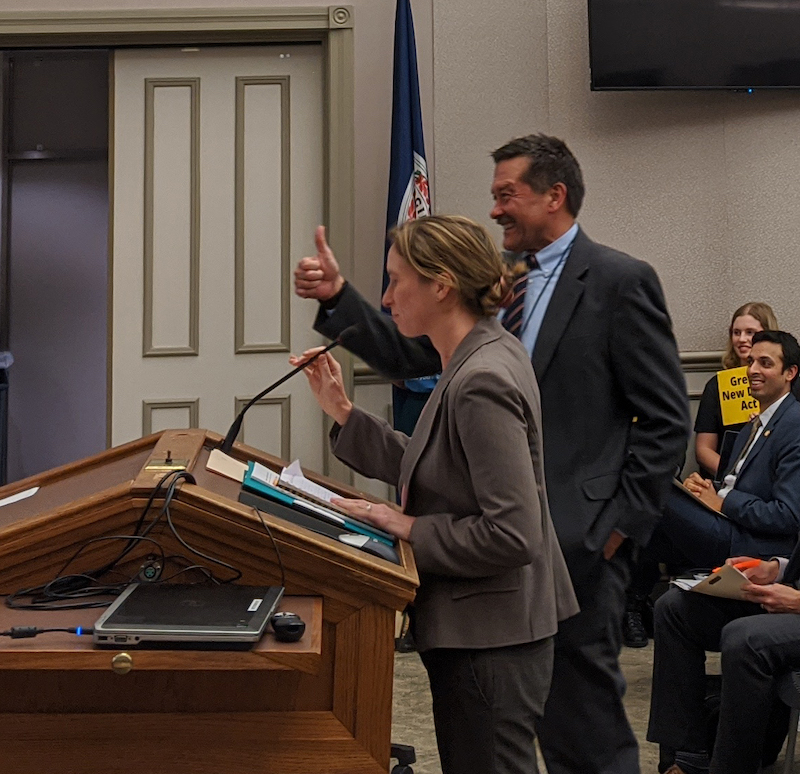
Although a bill to protect Tennessee’s mountains received broad citizen and political support — and media attention from around the world — state legislators chose to deny public testimony on the measure and instead let the Scenic Vistas Protection Act die without a vote. Appalachian Voices Tennessee Director J.W. Randolph worked long hours in the halls of the state legislature to introduce and promote the bill, and was scheduled to testify along with Ann League, a good friend of our organization and a resident in Tennessee’s coal-bearing region. Just as they were called up to speak, however, the chairman stopped them short and declared the bill dead. Bill sponsors Rep. Gloria Johnson (D-Knoxville) and Senator Lowe Finney (D-Jackson) vowed to continue to build on this year’s efforts and bring the bill back in 2014 with even more grassroots support. To stay up-to-date on our work in Tennessee, visit appvoices.org/tn.

Building A Bridge Over Troubled Waters

The Red, White and Water team is working to find out what residents living around coal-fired power plants have to say about water pollution in their communities.

Belmont, N.C., was the first stop. There, as with other coal-burning facilities, the G.G. Allen Steam Station contaminates the groundwater, usually from coal ash pond seepage. The plant also discharges toxic heavy metals into nearby Lake Wylie.
This March, our crew canvassed those living in the shadow of the G.G. Allen Plant. One resident, Archie Dixon, has a driveway that is stained with coal ash and keeps a stack of bottled water in his garage, saying he refuses to drink the well water.

Looking ahead, the RWW team will encourage more residents living near coal plants to tell their stories. Follow the latest at appvoices.org/red-white-and-water.

A Fond Farewell for a Fantastic Leader

Wednesday, February 13th, 2013 - posted by Jil

Christina Howe and Willa Mays

In October of 2008, I met an extraordinary person at the Appalachian Voices headquarters in Boone, N.C. She’d been hired as an organizational consultant, and I was a new member of the board. It was immediately clear that Willa Mays was a consummate professional — diplomatic, extremely smart, a person of great presence, and a joy to be with.

As her contract work with us drew to a close, we realized we couldn’t let her get away. We appealed to her to assume the newly vacated role of executive director of Appalachian Voices, and the success story began.

On the March for Blair Mountain

Willa speaking at Artists for Appalachia


For four years, Willa has been an exemplary leader, both within Appalachian Voices and in the broader environmental community. She re-energized our staff and board with her enthusiasm, hard work and vision, challenging us all to do our very best. She traveled frequently to our other offices to make sure all Appalachian Voices staff had input and were solidly a part of our team. With grace and humor, she cultivated friends of Appalachia from all backgrounds — volunteers, members and partners. She put our fundraising house in order and developed relationships with funding partners that will last for years to come. She dove into the nitty-gritty of our legal cases, water quality monitoring program and legislation efforts to become a well-versed spokeswoman for our work. The passion she already possessed in spades.

Like the seasons change across the Appalachian mountains, life, too, brings transitions. It is with utmost gratitude and esteem that I, on behalf of the Appalachian Voices board, bid Willa adieu as she moves on to her next chapter with the Blue Ridge Parkway Foundation, where she worked before coming to us. Thank you, Willa, for your caring custodianship.
We wish you the very best!

Clockwise from top left: Willa with advisory board member Van Jones, Willa emceeing at Riverfest 2011, With Senator Ben Cardin at the Democratic National Convention, Willa With Amanda Starbuck of Rainforest Action Network

When one door closes, another opens … It is my great pleasure to welcome Tom Cormons as our new executive director. Five years ago, Tom joined Appalachian Voices to open our Virginia office. He came with an impressive pedigree – an undergraduate degree from the University of Virginia, a UCLA law degree and stints at several other organizations learning the ropes. Under his leadership, our Virginia office has grown to six staff, and Appalachian Voices is front-and-center in some of the most pressing environmental issues in Virginia. For the last two years, Tom has been our deputy programs director, working closely with Willa and Director of Programs Matt Wasson to oversee operations and map out our strategic work plan for the next several years.

In his younger years, Tom was a rafting guide on West Virginia’s New and Gauley rivers, ably navigating the rapids and shoals of two of the most wild rivers in the country. We are delighted and excited to have Tom as our new executive director, fully confident in his ability to now guide Appalachian Voices as our journey continues.

For the mountains,
Christina Howe
Chair, Appalachian Voices
Board of Directors

Membership Spotlight: Michael Elchinger

Wednesday, February 13th, 2013 - posted by Jil

By Kayti Wingfield


Michael Elchinger learned about mountaintop removal coal mining early on in his quest to make a difference in the energy sector. He received his undergraduate degree from the University of Virginia, but it wasn’t until he was pursuing dual masters degrees in business and natural resources and environment at the University of Michigan that he read an article about mountaintop removal.
“I was bitter that businesses could hide something so hideous and consumers could be so uninformed and disengaged,” says Michael. “And even if [consumers] did know – they wouldn’t, maybe couldn’t, care.”

Soon he became acquainted with the work of Appalachian Voices through the organization’s Global Awareness layer in Google Earth, and was galvanized into action. He sported the I Love Mountains sticker on his laptop, hosted screenings of documentaries such as “The Last Mountain,” kept tabs on the website and subscribed to the e-mail notices while he was formulating a “plan to pursue a career geared toward a transformation to a more sustainable energy system.”
When a pig roast that he and three of his friends hold annually for their department morphed into a charity fundraiser — with each friend picking a charity and partygoers “voting” for their favorite by putting money into a jar — Michael’s charity, Appalachian Voices, won.

“I could think of no better organization to support, and more importantly, no better way to increase awareness,” he says.
Thanks to Michael, his friends, and some folks at a pig roast, more than $1,000 was raised for our work to stop mountaintop removal.
“Though my friends in the School of Natural Resources and Environment might feel that business has no part in the solution, that is where I felt I could be effective and also where most of the impact is,” Michael explains. “I also believe that activism and awareness is another powerful tool for change, so I choose to put my talents where they are best spent and give when I can to organizations that match my beliefs and are effective in their cause.”

Happy Birthday, Clean Water Act!

Thursday, December 13th, 2012 - posted by meghan

The Clean Water Act celebrated 40 years of protecting America’s waterways on Oct. 18. Appalachian Voices’ Red, White and Water campaign celebrated the success of this landmark legislation with the report, “The Clean Water Act at 40: Real People, Real Successes, Real Threats.”

The report highlights examples from around the Southeast that show how Clean Water Act programs have helped communities restore water quality in local waterways. The report also analyzes the voting record of the southern congressional delegations on recent anti-clean water bills.

“The Clean Water Act is creating jobs and economic benefits, restoring impaired fisheries and cleaning up famed whitewater tourism destinations,” says Sandra Diaz, coordinator of the Red, White and Water campaign with Appalachian Voices.

Highlights from the report include an oyster farm on the Chesapeake Bay, dairy farms in the Carolinas and a watershed polluted by coal mining in West Virginia.

When the Clean Water Act passed in 1972, all but one of 65 representatives from the southeastern states voted in support. But in the last two years, the region’s representatives have voted more often than not in favor of weakening clean water laws, as tallied in the report.

Through our Red, White and Water campaign, Appalachian Voices co-hosted a birthday party on Oct. 18 on Capitol Hill in conjunction with the Clean Water Network and others. Rep. Jim Moran of Virginia, a champion of protecting clean water laws, was on hand to cut the birthday cake.

Also present was Mike King, who was featured in the report; he spoke about how the Clean Water Act enabled him and his community to revive a waterway that runs behind his home in Montgomery, W. Va. Morris Creek went from being “orange and sometimes white, depending on what the coal company was doing, with a horrible smell of rotten eggs,” to a creek that now supports trout and other fish.

“We wanted to show that the Clean Water Act is helping real people so that decision-makers understand the consequences of weakening the Act,” says Diaz.

Membership Spotlight: Silas House

Wednesday, December 5th, 2012 - posted by meghan

Award-winning writer Silas House was born and raised in Appalachia, in the rural mountains of Kentucky. He drew from his childhood memories of Laurel and Leslie counties for the basis of his first three novels, and has composed press kits for some of Nashville’s top musical artists. Among his other accomplishments, Silas created the Mountain Heritage Literary Festival, served as the NEH Chair in Appalachian Studies at Berea College, acted as contributing editor for No Depression magazine, and was chosen as Appalachian Writer of the Year by Shepherd University in 2010.

In his “free” time, Silas also serves on the board of directors for Appalachian Voices, and it is in his activism where his love of Appalachia truly shines. We caught up with Silas to talk to him about his work to stop mountaintop removal coal mining and protect the mountains of Appalachia, and here is what he had to say:

What makes you an Appalachian?
I think what makes a person Appalachian is if they care about this place, if they work to preserve and protect it, if they strive to understand it in all of its complexities. I was born and raised here and I believe the mountains and their people are in my bones and blood. But I also know plenty of people who are not from here originally but care deeply about the place and work hard for it … I’d call them Appalachians, too.

What inspires you to protect the region and be an advocate?
One of the main tenants of being an Appalachian is preservation. We like to preserve everything: stories, quilts, photographs, relationships … even our food, since we take such great pride in canning and such. Appalachians have been told for over a hundred years now that we’re “a vanishing people” or “a disappearing culture.” So I think that makes us hold on with white knuckles. I think being told that we are fading away as a culture compels us to preserve as much as we can.

So it seems only natural to me that we preserve that most obvious of things: the land, particularly the mountains with which we identify so strongly. I’ve heard people say, “We will tear down these mountains to be able to stay in them.” That logic is so foolish. So if we are going to call ourselves Appalachians then we must preserve the Appalachian mountains. Without them, we WILL vanish.

What do you love about being part of the AV family?
I love being part of an organization that is really and truly doing something every single day to save this land and its people. I am incredibly proud to be a part of the AV family and I tell everyone I can about the great work AV is doing throughout the region and the country. I know of no other group so committed to this fight and I think that AV really understands the region in a way few others do, especially the aspects of preservation in all of its forms, whether that be its mountains or its literature or its dialect.

Seeing is Believing

Wednesday, December 5th, 2012 - posted by meghan

The coal industry is fond of saying that there is no mountaintop removal taking place in Tennessee, so we wanted to see for ourselves. Appalachian Voices recently teamed up with the filming crew from “Coal Country” and SouthWings’ award winning pilot Susan Lapis to take an aerial tour of coal-mining counties in the Volunteer State. What we saw, and photographed, was shocking. Using the images we captured, we’ve created a new online resource where you can judge for yourself whether or not the mountains of Tennessee are having their tops removed. Flying over the Cumberland Plateau in October during peak leaf week, we were also able to capture some stunningly beautiful views of Elk Valley, TVA’s 29 MW wind farm on Buffalo Mountain, and some of the most beautiful and biodiverse ecosystems in the United States. Visit AppVoices.org/TNMTR, and we invite questions and submissions to TN@Appvoices.org.

AV and iLoveMountains Launch No More Excuses Campaign

Wednesday, December 5th, 2012 - posted by meghan

Appalachian Voices, in conjunction with iLoveMountains.org, recently launched a two-pronged campaign to solicit reelected President Obama to end the devastating practice of mountaintop removal coal mining.

With our new report summarizing the human cost of mountaintop removal coal mining and a nationwide campaign through iLoveMountains.org, we are telling the Obama Administration, “No More Excuses — End Mountaintop Removal Now.”

Since the president took office, more than 20 peer-reviewed studies have concluded that mountaintop removal contributes to significantly higher rates of birth defects, cancer, and cardiovascular and respiratory diseases among individuals in the region where the destructive form of mining occurs.

The No More Excuses campaign features children who are already campaigning against mountaintop removal through various groups, including some children that have lived in or near areas impacted by mountaintop removal.

Shortly after winning the election in 2008, President Obama said: “Science holds the key to our survival as a planet and our security and prosperity as a nation… It’s about listening to what our scientists have to say, even when it’s inconvenient – especially when it’s inconvenient.” During his first administration, the U.S. Environmental Protection Agency made steps to curtail the rubber-stamping of permits, which made it more difficult for companies to obtain mountaintop removal mining approval, but the measure was struck down by a federal court.

Our special report, “Mapping The Human Cost of Mountaintop Removal,” is also a companion piece to an interactive mapping page unveiled last spring on iLoveMountains.org and designed by Appalachian Voices’ technology team. To read the report, visit appvoices.org/the-human-cost.
Please join us in telling the Obama Administration that there are no excuses to legitimize the destruction of the Appalachian Mountains: visit ilovemountains.org/no-more-excuses to send a letter today.